When I see poison symbols on bottles, chemical containers, or household products, I know these warning signs are important for my safety. They help me identify toxic substances and understand the dangers they may cause. Different symbols, such as the skull and crossbones, communicate specific warnings that you should never ignore.
Have you ever wondered what different poison symbols mean or why they appear on certain products? If you understand these signs, you can recognize dangerous substances and avoid accidental exposure. They also help you make better decisions when handling chemicals at home, school, or work.
In this guide, I’ll introduce you to common poison symbols, explain their meanings, and show you where they are used. You’ll also learn how to recognize toxic warning labels and understand the risks behind them. With this knowledge, you can make safer choices, avoid common mistakes, and protect yourself and others from potential dangers.
What Are Poison Symbols?
Poison symbols are visual warning signs used to identify substances that may cause harm to human health, animals, or the environment. They communicate important safety information through recognizable images, shapes, and colors.
The most familiar poison symbol is the skull and crossbones, which indicates acute toxicity. However, not every hazardous chemical carries this symbol. Different pictograms communicate different types of hazards, including irritation, corrosion, environmental damage, and serious long-term health effects.
Many chemical hazard symbols are part of the Globally Harmonized System of Classification and Labelling of Chemicals (GHS). This international system provides standardized pictograms and labeling requirements to help people understand chemical hazards across different countries.
Why Are Poison Symbols Designed as Pictures?
Visual warnings make hazard information easier to recognize, especially when people speak different languages or have limited time to read product labels.
Poison symbols are designed to:
- Communicate chemical dangers quickly.
- Reduce accidental exposure to toxic substances.
- Help workers identify hazardous materials.
- Support safe chemical storage and transportation.
- Provide important information during emergencies.
- Encourage responsible handling and disposal.
The symbol is only one part of a chemical label. Product names, signal words, hazard statements, precautionary statements, and safety instructions provide additional information.
Different Types of Poison and Chemical Hazard Symbols
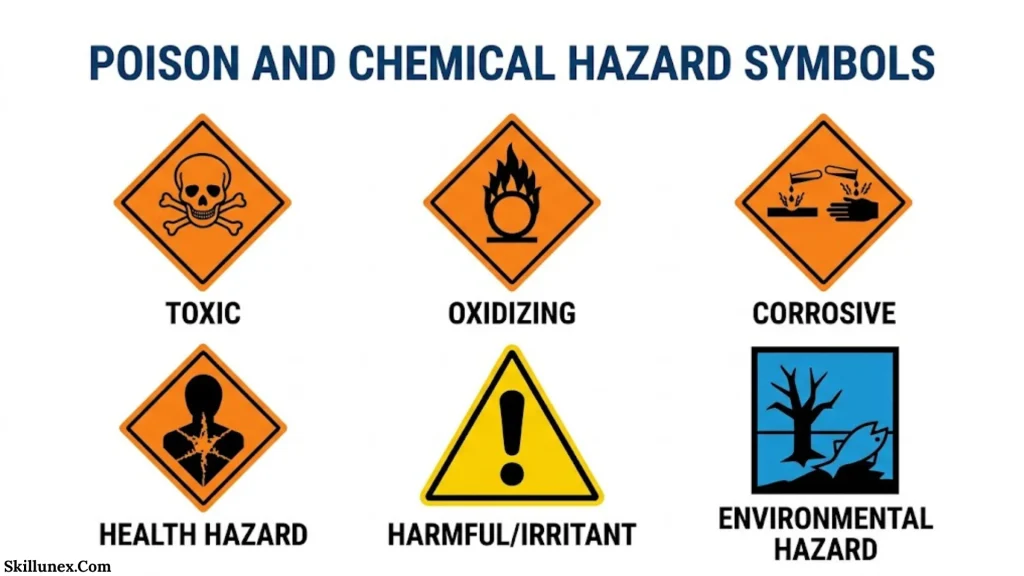
Several internationally recognized pictograms identify different categories of chemical hazards. Understanding their meanings helps people recognize potentially dangerous products and respond appropriately.
Skull and Crossbones Symbol
The skull and crossbones is one of the most recognizable poison symbols in the world. It consists of a human skull positioned above two crossed bones.
Meaning: Acute toxicity.
This symbol warns that a substance can cause severe poisoning or death following short-term exposure. Depending on the chemical, exposure may occur through swallowing, inhalation, or contact with the skin.
Where it is commonly found:
- Highly toxic industrial chemicals.
- Certain pesticides.
- Laboratory reagents.
- Some toxic chemical products.
Safety precautions:
- Avoid direct contact with the substance.
- Never taste or intentionally inhale it.
- Follow the instructions on the product label.
- Use the protective equipment specified by the safety data sheet.
- Store it securely in its original labeled container.
Not every poisonous substance carries the skull and crossbones symbol. The pictogram is used for chemicals meeting specific acute-toxicity classification criteria.
Exclamation Mark Symbol
The exclamation mark is displayed inside a red diamond-shaped border with a white background.
Meaning: Harmful effects or irritation.
This symbol may indicate that a chemical can cause skin irritation, eye irritation, allergic skin reactions, or harmful effects following exposure. It can also identify certain substances that may cause drowsiness or dizziness.
Where it is commonly found:
- Household cleaning products.
- Certain detergents.
- Solvents.
- Chemical mixtures.
- Some industrial products.
Safety precautions:
- Avoid unnecessary skin contact.
- Prevent splashes from entering the eyes.
- Follow the recommended handling instructions.
- Wash exposed skin as directed by the product label.
- Keep the product away from children and pets.
The exclamation mark does not always mean a substance is poisonous. Its exact meaning depends on the hazard classification.
Environmental Hazard Symbol
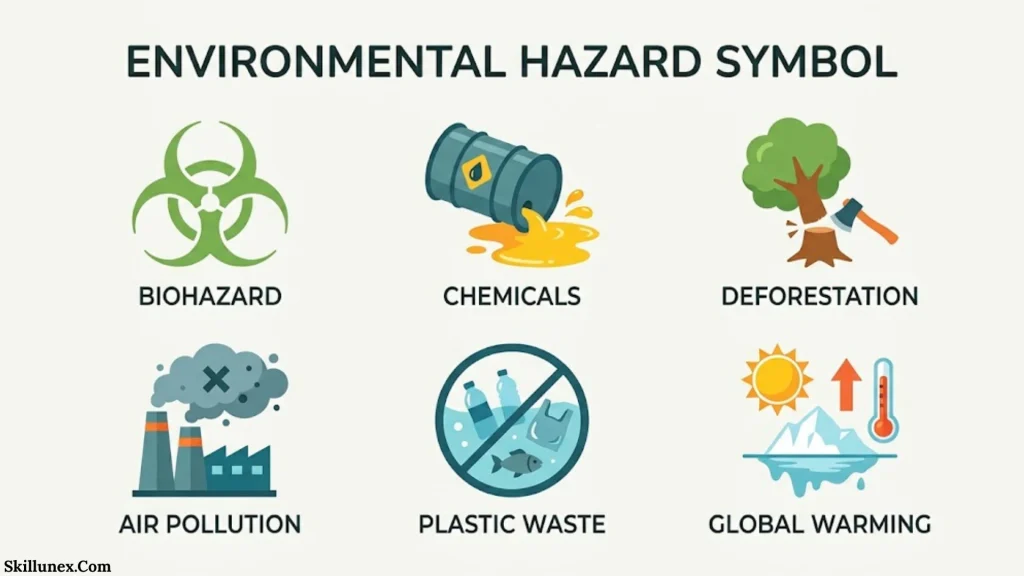
The environmental hazard pictogram shows a dead tree and a dead fish inside a red diamond.
Meaning: Hazardous to the aquatic environment.
This symbol warns that a chemical may harm fish, aquatic organisms, or other forms of aquatic life. Some substances can remain in the environment and cause damage even after they have been released.
Where it is commonly found:
- Certain pesticides.
- Agricultural chemicals.
- Industrial chemicals.
- Some cleaning and treatment products.
Safety precautions:
- Never pour hazardous chemicals into rivers, lakes, or drains.
- Avoid releasing chemicals into the soil.
- Follow local hazardous-waste disposal requirements.
- Prevent chemical spills from reaching waterways.
- Follow product-specific environmental protection instructions.
Protecting the environment requires responsible chemical handling from purchase and use to final disposal.
Corrosive Symbol
The corrosive pictogram shows liquid from test tubes damaging a hand and a metal surface.
Meaning: Skin corrosion, serious eye damage, or corrosion of metals.
Corrosive substances can destroy living tissue and damage materials. Exposure may cause severe chemical burns, permanent eye injuries, and serious tissue damage.
Where it is commonly found:
- Strong acids.
- Strong alkalis.
- Certain industrial cleaning chemicals.
- Metal treatment products.
- Laboratory chemicals.
Safety precautions:
- Avoid direct contact with the chemical.
- Wear suitable protective gloves and eye protection.
- Follow the product’s handling and storage instructions.
- Keep incompatible chemicals separated.
- Follow emergency instructions immediately if exposure occurs.
Never assume that a household chemical is harmless simply because it is commonly used. Some cleaning products contain highly corrosive ingredients.
Health Hazard Symbol
The health hazard pictogram shows a human silhouette with a star-shaped mark on the chest.
Meaning: Serious or chronic health hazards.
This symbol can identify substances associated with serious health effects, including certain carcinogenic, mutagenic, reproductive, respiratory, and organ-specific hazards. It may also indicate an aspiration hazard.
Where it is commonly found:
- Certain industrial solvents.
- Some laboratory chemicals.
- Chemical manufacturing materials.
- Products containing classified hazardous substances.
Safety precautions:
- Read the product’s safety information carefully.
- Avoid unnecessary or prolonged exposure.
- Follow ventilation requirements.
- Use appropriate protective equipment.
- Follow workplace exposure-control procedures.
Some health effects may develop over time, which makes this warning particularly important.
Flame Symbol
The flame pictogram represents substances that can easily catch fire.
Meaning: Flammable or self-reactive chemical hazards, among other fire-related classifications.
Depending on the classification, this symbol may appear on flammable liquids, gases, solids, or other substances that present a fire hazard.
Where it is commonly found:
- Certain solvents.
- Flammable liquids.
- Aerosol products.
- Fuel-related chemicals.
- Some industrial materials.
Safety precautions:
- Keep the substance away from flames and sparks.
- Follow the specified storage-temperature requirements.
- Use it in appropriately ventilated areas.
- Keep containers properly closed.
- Follow fire-safety instructions on the label.
Flame Over Circle Symbol
This pictogram shows a flame above a circle inside a red diamond.
Meaning: Oxidizing substances.
Oxidizers can cause or intensify fires by supporting combustion. They may make other materials burn more intensely, even when they are not themselves classified as flammable.
Where it is commonly found:
- Certain industrial oxidizers.
- Laboratory chemicals.
- Some chemical manufacturing materials.
Safety precautions:
- Keep oxidizers away from incompatible combustible materials.
- Follow the manufacturer’s storage requirements.
- Prevent contamination.
- Use appropriate protective equipment.
- Observe all fire-prevention instructions.
Exploding Bomb Symbol
The exploding bomb pictogram represents substances that may explode or present certain explosive or severe reactivity hazards.
Meaning: Explosive, certain self-reactive, or certain organic peroxide hazards.
Where it is commonly found:
- Certain industrial chemicals.
- Some specialized laboratory materials.
- Products classified as explosive or highly reactive.
Safety precautions:
- Do not handle unknown reactive materials.
- Follow authorized workplace procedures.
- Keep unauthorized individuals away.
- Avoid exposure to heat, shock, or other conditions identified on the label.
- Follow specialist instructions for storage and transportation.
Gas Cylinder Symbol
The gas cylinder pictogram shows a horizontal gas cylinder inside a red diamond.
Meaning: Gases under pressure.
It warns that a container holds compressed, liquefied, or refrigerated liquefied gas. Such containers may present risks associated with pressure, cold temperatures, or heating.
Where it is commonly found:
- Compressed gas cylinders.
- Industrial gas containers.
- Medical gas supplies.
- Laboratory gas systems.
Safety precautions:
- Secure gas cylinders against falling.
- Protect them from excessive heat.
- Use suitable regulators and equipment.
- Follow storage and ventilation requirements.
- Handle refrigerated gases with appropriate protective equipment.
What Do the Colors and Shapes of Poison Symbols Mean?
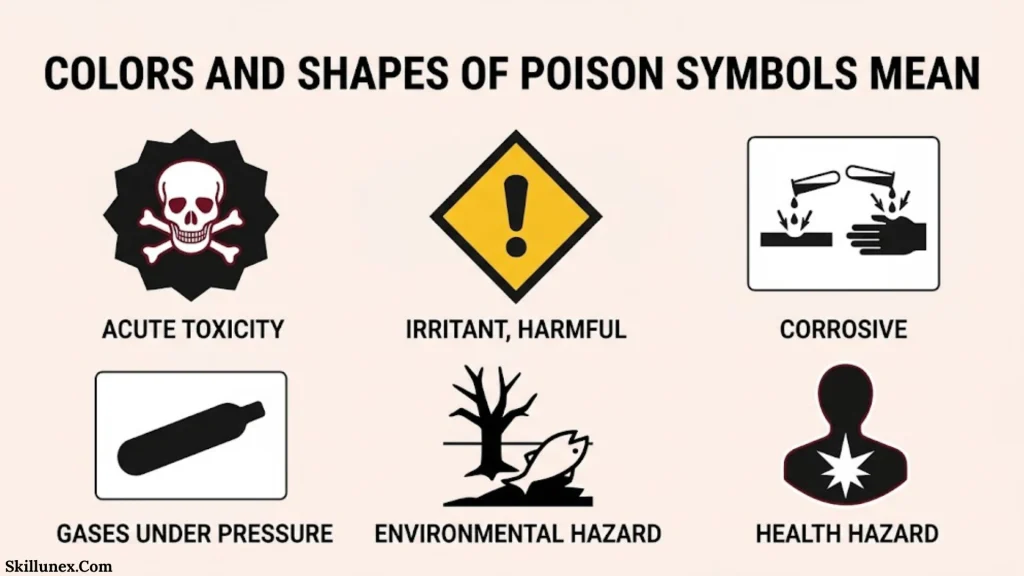
The design of chemical hazard pictograms helps people recognize warnings quickly. Under the GHS system, standard chemical hazard pictograms generally use a white background, a red diamond-shaped border, and a black hazard illustration.
Red Diamond Border
The red diamond-shaped border identifies a standardized chemical hazard pictogram. The image inside communicates the specific type of hazard.
Black Warning Illustration
The black illustration represents the hazard category, such as toxicity, corrosion, fire, or environmental damage.
White Background
The white background provides contrast so the warning illustration remains visible and recognizable.
It is important to understand that colors and shapes do not replace the written information on a chemical label. Always read the complete label before using a hazardous product.
Where Are Poison Symbols Commonly Used?
Poison and chemical hazard symbols appear in many everyday and professional environments. Their purpose is to warn users about potential risks before they handle or come into contact with hazardous substances.
Household Cleaning Products
Some household cleaning products contain substances that can irritate the skin, damage the eyes, or cause serious injuries if swallowed.
Warning symbols may appear on certain drain cleaners, disinfectants, chemical detergents, and other cleaning products.
Pesticides and Agricultural Chemicals
Pesticides and insecticides may contain ingredients that are harmful to humans, animals, or the environment.
Hazard labels help farmers, agricultural workers, and consumers understand the precautions required when using these products.
Laboratories and Research Facilities
Laboratories use chemicals with different toxicity, flammability, corrosivity, and reactivity classifications.
Hazard pictograms help researchers and laboratory personnel identify risks and follow appropriate handling procedures.
Industrial and Manufacturing Facilities
Manufacturing facilities often store and use large quantities of chemical materials.
Poison symbols and other hazard pictograms help workers identify hazardous substances and follow workplace safety requirements.
Hospitals and Healthcare Facilities
Healthcare environments may use hazardous cleaning chemicals, disinfectants, laboratory reagents, and compressed gases.
Appropriate labels help healthcare workers recognize chemical hazards and follow safety procedures.
Chemical Transportation and Storage
Hazard labels are also important when chemicals are stored or transported. Depending on the material and applicable regulations, additional transport hazard labels may be required.
These labels help workers, storage personnel, and emergency responders recognize potential dangers.
Why Are Poison Symbols Important?
Poison symbols are more than simple warning pictures. They are an important part of chemical safety and risk communication.
Preventing Accidental Poisoning
Clear warning signs help people identify dangerous substances before using them. This reduces the risk of accidental swallowing, inhalation, or skin exposure.
Protecting Children and Families
Children may not understand written chemical warnings. Recognizable hazard symbols can help adults identify products that require secure storage and careful supervision.
Improving Workplace Safety
Employees who recognize chemical hazards can follow appropriate handling procedures and use the required protective equipment.
Supporting Emergency Responders
Hazard labels and accompanying safety information help emergency personnel identify chemical risks and determine suitable response procedures.
Protecting Animals and the Environment
Environmental hazard warnings encourage proper chemical storage, spill prevention, and responsible disposal.
Supporting International Chemical Communication
The GHS framework promotes standardized chemical hazard communication across participating countries, making chemical labels easier to understand in different workplaces and markets.
How to Read a Poison or Chemical Hazard Label
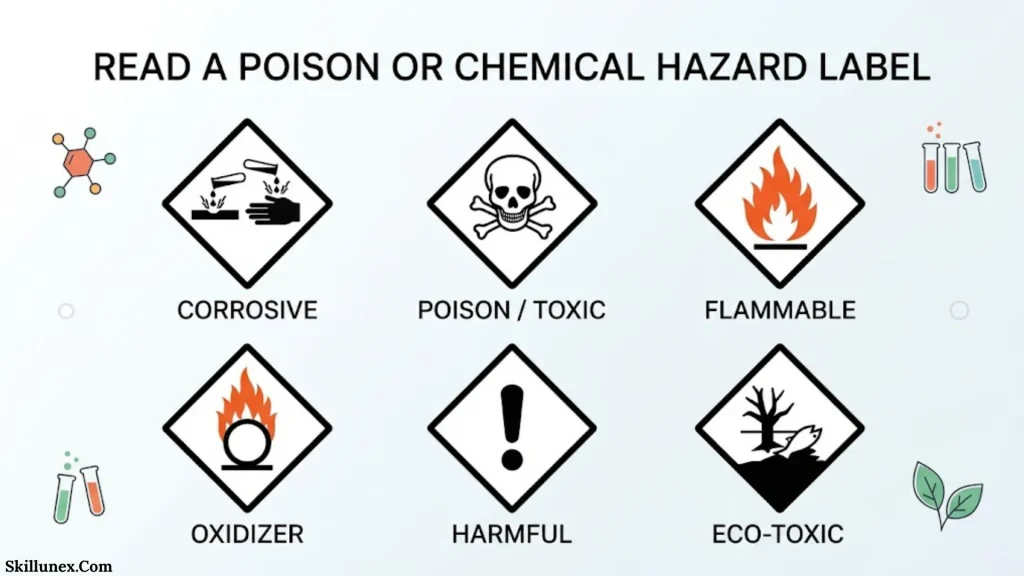
Recognizing a pictogram is important, but understanding the entire chemical label provides more complete safety information.
A typical GHS chemical label may contain the following elements:
Product Identifier
This identifies the chemical or mixture and helps users distinguish it from other products.
Signal Word
The signal word communicates the relative severity of the hazard.
The two standard GHS signal words are:
- Danger: Used for more severe hazard categories.
- Warning: Used for less severe hazard categories.
Some labels do not require a signal word, depending on the classification.
Hazard Statements
Hazard statements describe the nature of the chemical hazard and, where appropriate, its severity.
Precautionary Statements
These statements explain how to prevent or reduce harmful exposure. They may cover prevention, response, storage, and disposal.
Supplier Information
Chemical labels may include the supplier’s name, address, and contact information.
Reading all these elements together provides a clearer understanding of the substance’s risks than relying on a symbol alone.
Safety Precautions When Handling Poisonous Substances
Safe handling is essential whenever you encounter a chemical carrying a poison or hazard warning symbol.
Read the Label Before Use
Always read the product label and follow its instructions. Never assume that two products with similar appearances have the same chemical properties.
Wear Appropriate Protective Equipment
Depending on the chemical, suitable protection may include gloves, safety goggles, protective clothing, or respiratory protection. The correct equipment should be selected according to the product label and safety data sheet.
Store Chemicals Safely
Keep hazardous substances in their original, properly labeled containers. Store them according to the manufacturer’s instructions and keep them away from children, pets, food, and incompatible materials.
Avoid Mixing Unknown Chemicals
Never mix cleaning products or chemicals unless their instructions explicitly confirm that the combination is safe. Some combinations can release dangerous gases or cause violent reactions.
Maintain Proper Ventilation
Use chemicals in well-ventilated areas when required by the label or safety data sheet. Certain substances can produce harmful vapors that may affect breathing.
Dispose of Chemicals Responsibly
Do not pour hazardous chemicals into drains, soil, or waterways unless disposal instructions specifically permit it. Follow local hazardous-waste requirements.
Keep Emergency Information Available
Know where to find product safety information and emergency contact details before handling hazardous materials.
What Should You Do If Someone Is Exposed to Poison?
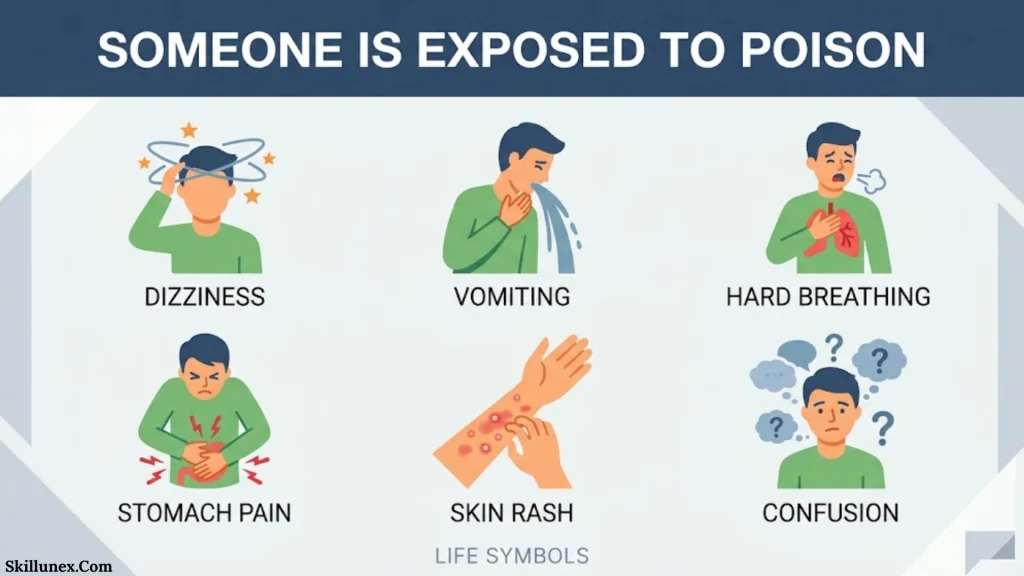
Suspected poisoning or chemical exposure should always be taken seriously. The correct response depends on the substance, the route of exposure, and the person’s symptoms.
If Poison Is Swallowed
- Seek emergency medical assistance or contact a poison information service immediately.
- Do not induce vomiting unless instructed by a medical professional.
- Do not give food, drinks, or home remedies unless a qualified professional advises you to do so.
- Keep the product container or label available for medical personnel.
If a Chemical Gets on the Skin
- Remove contaminated clothing when it is safe to do so.
- Rinse the affected skin with plenty of running water, following the product’s emergency instructions.
- Seek medical assistance for serious exposure, burns, or persistent symptoms.
If a Chemical Enters the Eyes
- Immediately rinse the eyes with clean, gently flowing water.
- Continue rinsing according to the product’s emergency instructions.
- Seek urgent medical assessment, especially if pain, irritation, or vision problems continue.
If Poisonous Vapors Are Inhaled
- Move to fresh air if you can do so without putting yourself in danger.
- Avoid entering a contaminated area without appropriate training and protective equipment.
- Contact emergency services immediately if the person has breathing difficulties, confusion, or other serious symptoms.
Never delay emergency medical assistance while trying home remedies. If possible, provide healthcare professionals with the product name, ingredient information, and exposure details.
Poison Symbols vs. Other Hazard Warning Symbols
Not all chemical hazard symbols specifically represent poisoning. Some identify other dangers, such as fire, explosions, pressure, or environmental damage.
Understanding the difference helps prevent confusion.
| Symbol | Main Warning |
| Skull and crossbones | Acute toxicity |
| Exclamation mark | Irritation or harmful effects |
| Health hazard | Serious or chronic health effects |
| Corrosion | Skin burns, eye damage, or metal corrosion |
| Flame | Fire-related hazards |
| Flame over circle | Oxidizing substances |
| Exploding bomb | Explosive or certain reactive hazards |
| Gas cylinder | Gases under pressure |
| Environment | Aquatic environmental hazards |
A substance may carry more than one pictogram because it can present several different hazards at the same time.
Frequently Asked Questions About Poison Symbols
What Is the Most Common Poison Symbol?
The skull and crossbones is the most widely recognized poison symbol. It warns about substances that can cause severe or fatal acute poisoning through certain types of exposure.
What Does a Skull and Crossbones Symbol Mean on a Bottle?
It indicates that the substance is classified as acutely toxic. Depending on the chemical and its classification, swallowing, inhaling, or skin exposure may cause serious harm or death.
Are All Poison Symbols the Same?
No. Different pictograms represent different hazards. Some warn about acute toxicity, while others identify corrosive, flammable, explosive, environmental, or long-term health hazards.
What Does a Red Diamond Mean on a Chemical Label?
In the GHS system, a red diamond-shaped border surrounds standardized chemical hazard pictograms. The illustration inside identifies the specific hazard.
Are Poison Symbols Used on Household Products?
Yes. Certain household cleaning products, pesticides, solvents, and other chemical products carry hazard pictograms when their ingredients and classifications require them.
What Is the Difference Between Danger and Warning?
Danger and Warning are GHS signal words used to communicate hazard severity. Danger generally identifies more severe hazard categories, while Warning identifies less severe categories.
Can a Chemical Be Dangerous Without a Poison Symbol?
Yes. Not every hazardous substance requires a poison pictogram. Some hazards may be communicated through other label elements, while certain products may be subject to different labeling requirements.
What Should I Do If I Find an Unknown Chemical With a Poison Symbol?
Avoid touching, opening, smelling, or moving the container unnecessarily. Keep other people away and seek advice from an appropriate safety professional or local emergency service if the substance presents an immediate risk.
Conclusion
Poison symbols play an important role in keeping you safe from toxic and dangerous substances. When I understand these warning signs, I can recognize potential risks and take the right precautions. From the skull and crossbones to other toxic warning labels, each symbol provides useful information that helps prevent accidental exposure and poisoning.
I hope this guide has helped you understand different poison symbols and their meanings. Now, whenever you see these warning signs, you’ll know why they are important and how to respond safely. Always read product labels carefully, follow safety instructions, and keep poisonous substances away from children and pets.

Isla Kensington
I’m Isla Kensington, a writer with a passion for research, culture, nature, and the fascinating meanings behind everyday things. I enjoy taking topics that may seem simple at first and discovering the history, facts, and ideas that make them more interesting.
I write with readers in mind. My aim is to provide clear explanations, useful information, and interesting details without making a topic unnecessarily complicated.
I believe learning should feel like discovering something rather than simply reading facts. That philosophy guides the content I create and the topics I choose to explore.
## Books by Isla Kensington
* Symbols Around the World: A Guide to Meaning & Culture
* Nature’s Beautiful Places: Lakes, Landscapes & Natural Treasures