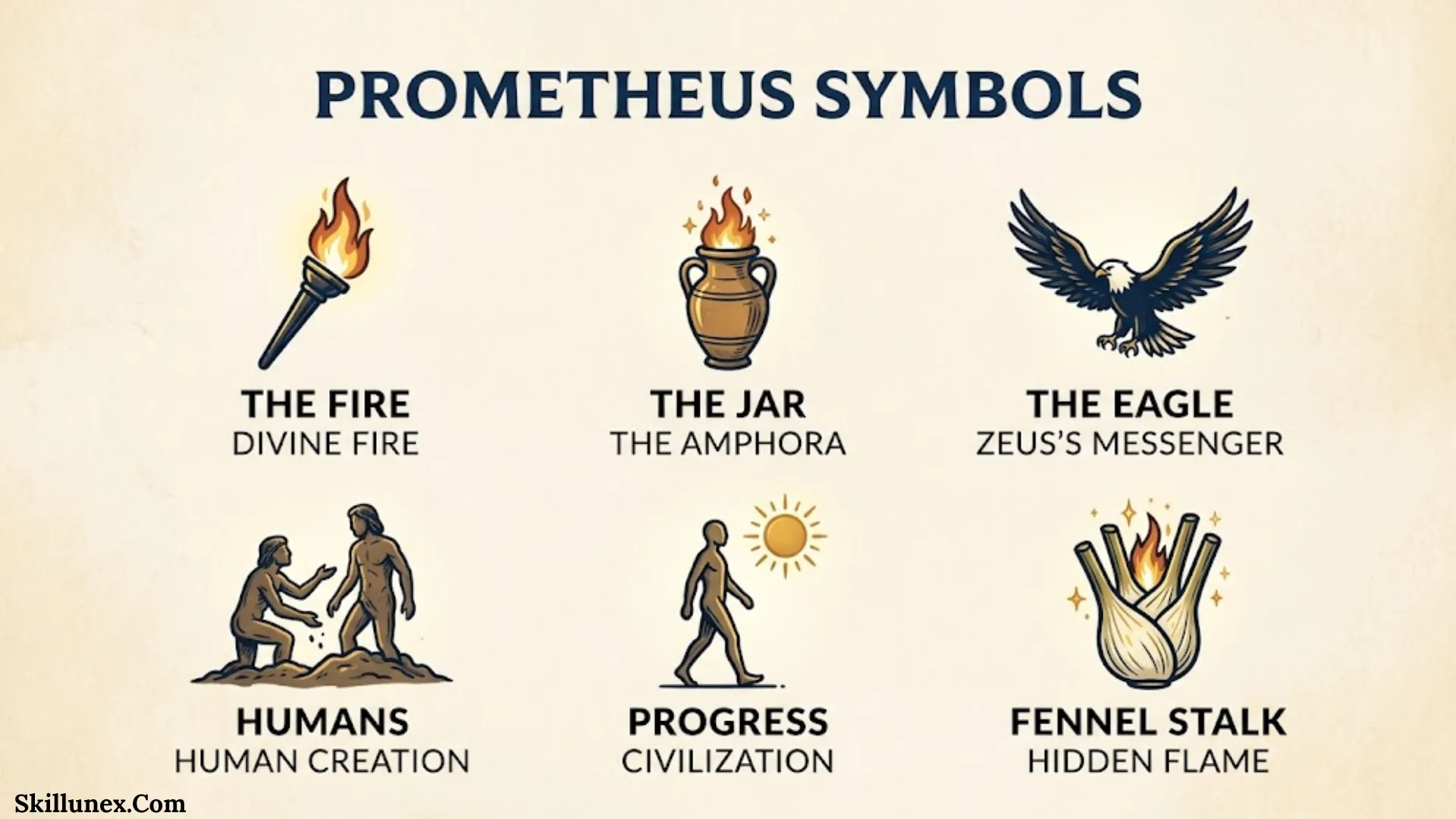
When you explore Prometheus symbols, you discover a fascinating story of courage, knowledge, sacrifice, and rebellion. In Greek mythology, Prometheus is best known for stealing fire from the gods and giving it to humanity. This act made him a powerful symbol of hope, intelligence, and the desire for freedom.
If you look closely at Prometheus’s story, you’ll find that each symbol carries a deeper meaning. Fire represents knowledge and enlightenment, chains symbolize punishment and suffering, and the eagle reflects Zeus’s eternal punishment. Understanding these symbols helps you connect ancient Greek mythology with modern ideas about human progress, courage, and independence.
In this guide, you’ll discover the most important Prometheus symbols, their meanings, and what they teach us about life. If you’re studying mythology or simply curious about ancient symbolism, you’ll find it easy to understand why Prometheus remains an enduring symbol of human ambition and freedom.
Who Was Prometheus in Greek Mythology?
Prometheus was a Titan in Greek mythology, traditionally identified as the son of Iapetus and the Oceanid Clymene or Asia, depending on the ancient source. His name is commonly associated with forethought, reflecting his intelligence, wisdom, and ability to anticipate future events.
Unlike many figures in Greek mythology who supported the authority of Zeus, Prometheus frequently acted in the interests of humanity. He became known as a benefactor of humankind because he helped people survive, develop skills, and establish civilization.
One of the most famous stories about him concerns his theft of divine fire. According to the myth, Prometheus took fire from Olympus and delivered it to humans, allowing them to develop cooking, metalworking, craftsmanship, and other essential technologies.
This action angered Zeus, who considered it a challenge to divine authority. As punishment, Prometheus was chained to a rock, where an eagle repeatedly consumed his liver. Because he was immortal, his liver regenerated, causing his suffering to continue.
His story eventually became a powerful representation of rebellion, sacrifice, knowledge, and the human desire for progress.
The Most Important Prometheus Symbols and Their Meanings
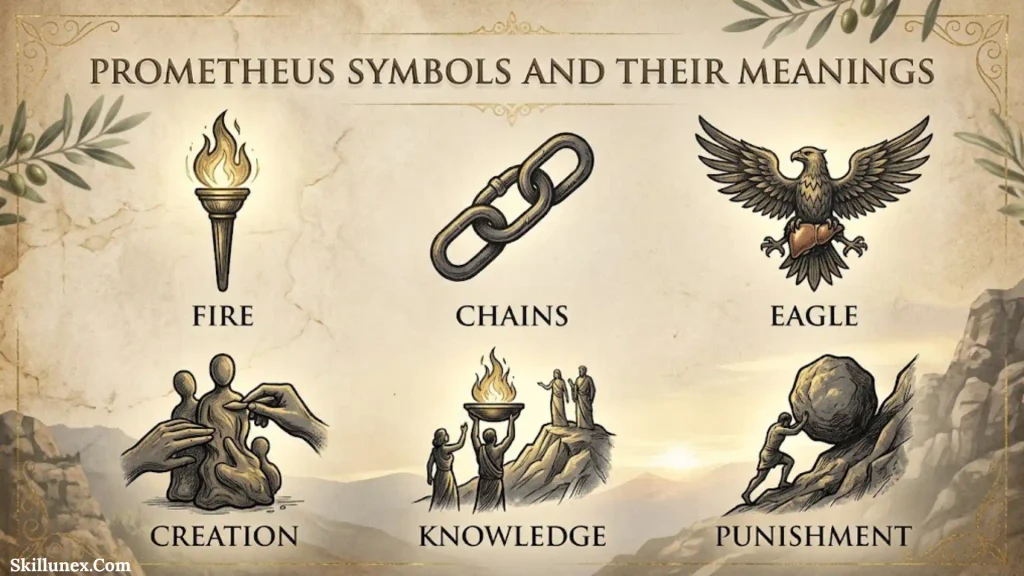
The symbols connected with Prometheus communicate different aspects of his mythology. Some represent the positive effects of knowledge and civilization, while others illustrate the suffering and punishment associated with challenging powerful authorities.
Fire: The Symbol of Knowledge and Human Progress
Fire is the most important and recognizable symbol of Prometheus. In Greek mythology, he stole fire from the gods and gave it to humanity, transforming the lives of ordinary people.
Before receiving fire, humans were vulnerable to cold, darkness, and many environmental dangers. Fire provided warmth, protection, and the ability to prepare food. It also made metalworking and numerous technological developments possible.
Beyond its practical benefits, fire carries several deeper symbolic meanings.
Knowledge and enlightenment: Fire represents the discovery of knowledge and the ability to understand the world. Just as light makes darkness disappear, knowledge helps people overcome ignorance.
Human civilization: Fire symbolizes the beginning of technological development and the advancement of society. It represents humanity’s ability to use natural resources to improve living conditions.
Innovation and creativity: The gift of fire reflects the human capacity to experiment, invent, and develop new solutions.
Freedom and independence: By giving fire to humanity, Prometheus helped people become less dependent on divine power and natural conditions.
In modern interpretations, Promethean fire often represents scientific discovery, education, technological innovation, and intellectual freedom.
The Torch: A Symbol of Enlightenment and Hope
The torch is closely associated with the fire myth and is frequently used in artistic representations of Prometheus.
Although the ancient myth focuses on the gift of fire rather than establishing the torch as a separate sacred attribute, it has become a familiar visual representation of his contribution to humanity.
The torch symbolizes the ability of knowledge to illuminate the unknown. It represents the search for truth and the importance of sharing discoveries with others.
Its symbolic meanings include:
- Education: The torch represents learning, intellectual development, and the transmission of knowledge.
- Hope: Light provides direction during darkness, making the torch a symbol of optimism.
- Discovery: It represents exploration, experimentation, and the search for new possibilities.
- Leadership: Carrying a torch can symbolize guiding others toward understanding and progress.
The torch is particularly relevant in educational and intellectual contexts because it represents the idea that knowledge should be shared rather than kept hidden.
The Eagle: A Symbol of Zeus’s Power and Prometheus’s Punishment
The eagle is one of the most dramatic symbols in the Prometheus myth.
After Prometheus stole fire, Zeus ordered him to be chained to a mountain. An eagle was sent to consume his liver every day, while the organ regenerated during the night.
The eagle represents the authority and power of Zeus. It illustrates the consequences faced by those who challenge the established divine order.
However, its meaning can also be interpreted through the suffering of Prometheus.
The eagle symbolizes:
- Divine authority and control.
- Punishment for rebellion.
- The consequences of defying powerful institutions.
- The continuous struggle between freedom and oppression.
The eagle also creates a contrast between physical power and moral courage. Although it could repeatedly injure Prometheus, it could not make him regret helping humanity.
This contrast contributes to the enduring interpretation of Prometheus as a symbol of resistance and determination.
Chains: A Symbol of Oppression and the Struggle for Freedom
Chains represent the punishment imposed on Prometheus by Zeus. They physically restrained him and prevented him from escaping his suffering.
However, their symbolic meaning extends beyond physical imprisonment.
In literature and philosophy, Prometheus’s chains are frequently interpreted as representations of oppression, censorship, injustice, and restrictions on individual freedom.
They can represent:
- Political or social oppression.
- Restrictions on knowledge and intellectual freedom.
- The consequences of challenging authority.
- Personal sacrifice for the benefit of others.
- The struggle to overcome limitations.
An important aspect of this symbolism is that Prometheus was imprisoned because he acted to help humanity.
His chains therefore represent the price of doing what one believes is morally right, even when powerful individuals or institutions oppose those actions.
The Rock: A Symbol of Endurance and Isolation

Prometheus was bound to a rock, traditionally associated with the Caucasus Mountains, where he endured his punishment.
The rock is not simply the location of his suffering. It also carries symbolic meaning.
It represents isolation, helplessness, endurance, and the difficult conditions faced by individuals who challenge established power.
The rock can be understood through several interpretations:
Isolation: Prometheus’s imprisonment separated him from the freedom he had once enjoyed.
Endurance: His continued survival demonstrates his ability to withstand extreme suffering.
Resistance: Despite being physically restrained, he remained mentally and morally determined.
Injustice: His punishment illustrates the suffering that can result from actions intended to benefit others.
The rock also creates a powerful contrast between physical confinement and intellectual independence. Prometheus could be chained physically, but Zeus could not easily destroy his determination.
The Regenerating Liver: A Symbol of Immortality and Repeated Suffering
One of the most unusual details in the Prometheus myth is his regenerating liver.
According to the traditional story, an eagle consumed his liver during the day, but because Prometheus was immortal, it grew back overnight.
This process continued repeatedly as part of his punishment.
The regenerating liver represents several important ideas.
Immortality: Prometheus’s ability to survive the punishment reflects his divine nature as a Titan.
Resilience: The repeated regeneration can symbolize the ability to recover after experiencing suffering.
Endurance: His punishment demonstrates the extraordinary duration and intensity of his sacrifice.
Recurring hardship: The daily cycle of injury and recovery represents suffering that repeatedly returns without an immediate resolution.
The regenerating liver also emphasizes the cruelty of Zeus’s punishment. Prometheus was not simply injured once; he was forced to experience the same suffering repeatedly.
Prometheus Himself: A Symbol of Rebellion and Intellectual Freedom
Beyond individual objects and elements of the myth, Prometheus himself has become a powerful symbol.
He represents the willingness to challenge established authority when doing so may benefit others.
His character combines intelligence, courage, compassion, and defiance.
Prometheus is often associated with:
- Intellectual independence.
- Scientific curiosity.
- Human advancement.
- Resistance against injustice.
- Courage in the face of punishment.
- Self-sacrifice for a greater purpose.
His story suggests that progress often requires questioning accepted beliefs and exploring possibilities that others consider forbidden.
For this reason, Prometheus is frequently described as a symbol of the rebellious human spirit.
What Does the Prometheus Myth Teach Us?
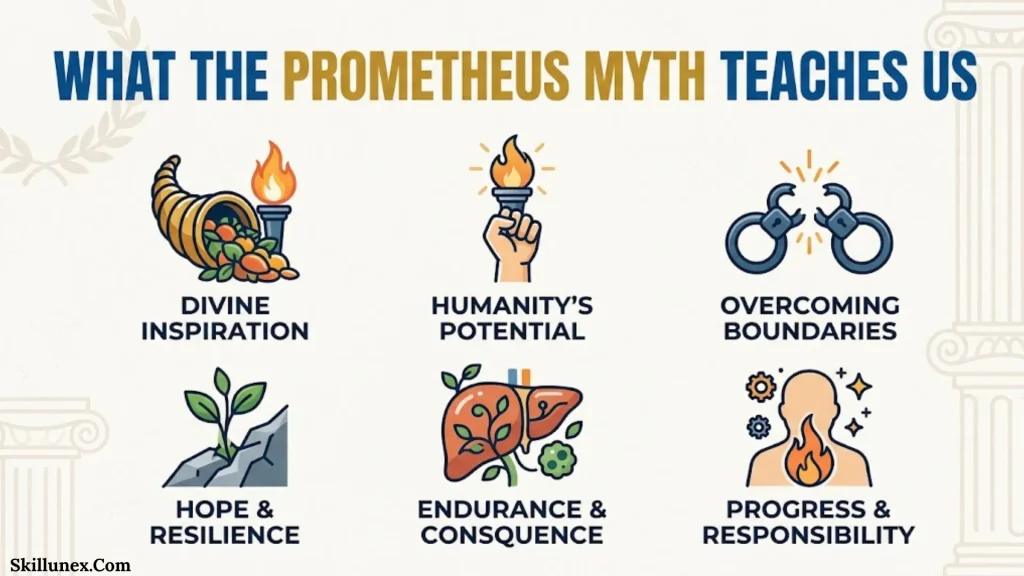
The Prometheus myth contains several lessons that remain relevant in modern society. Although the story originated in ancient Greek mythology, its central themes continue to influence discussions about knowledge, morality, freedom, and responsibility.
Knowledge Can Transform Human Civilization
The gift of fire represents the importance of knowledge in human development.
Throughout history, major discoveries have changed the way people live. From the discovery of agriculture to the development of electricity, medicine, and digital technology, knowledge has allowed humanity to overcome limitations.
Prometheus represents this desire to understand the world and use discoveries to improve human life.
Progress Often Comes With Consequences
Prometheus’s punishment demonstrates that innovation and progress can involve risks.
His story raises an important question: Should people avoid discovering new things simply because powerful authorities oppose them?
The myth encourages readers to consider the relationship between progress, responsibility, and the consequences of challenging established systems.
Sacrifice Can Benefit Others
Prometheus knew that helping humanity could anger Zeus, yet he still chose to give people fire.
His suffering therefore represents self-sacrifice and the willingness to accept personal consequences for the benefit of others.
This theme makes him an enduring symbol of generosity and moral courage.
Freedom Requires Courage
The chains of Prometheus illustrate the restrictions imposed by powerful authorities.
His refusal to surrender his principles represents the importance of intellectual and personal freedom.
The myth suggests that freedom is not always obtained easily and may require determination in the face of opposition.
Prometheus Symbols in Art, Literature, and Modern Culture
Prometheus has influenced artists, writers, philosophers, and thinkers for centuries. His symbols have developed meanings that extend far beyond their original mythological context.
Prometheus in Classical and Renaissance Art
Artists have frequently portrayed Prometheus as a powerful figure suffering punishment for giving fire to humanity.
One famous example is Peter Paul Rubens’s painting Prometheus Bound, which depicts the Titan suffering under the attack of an eagle.
Such artistic representations emphasize the contrast between physical suffering and extraordinary courage.
The fire, eagle, chains, and human figure are frequently used to communicate the central themes of the myth.
Prometheus in Literature
Prometheus has inspired numerous literary works, particularly those exploring rebellion, knowledge, and the consequences of ambition.
The ancient Greek tragedian Aeschylus wrote Prometheus Bound, a famous tragedy depicting Prometheus’s punishment and his conflict with Zeus.
Another important example is Mary Shelley’s Frankenstein; or, The Modern Prometheus. Published in 1818, the novel connects the mythological figure with scientific ambition and the creation of life.
The subtitle suggests a parallel between Prometheus giving fire to humanity and Victor Frankenstein attempting to acquire extraordinary creative power through science.
Prometheus in Philosophy
Prometheus has become an important philosophical symbol of human independence and intellectual progress.
Different thinkers have interpreted him as a figure representing resistance against oppression, the development of civilization, and the pursuit of knowledge.
His story encourages philosophical discussions about whether challenging authority is justified when the goal is to improve human life.
It also raises questions about the ethical responsibilities that accompany scientific and technological advancement.
Prometheus in Science and Technology
In modern discussions, the term Promethean is frequently used to describe ambitious innovation, extraordinary creativity, or the pursuit of knowledge that challenges existing limitations.
The myth is particularly relevant to discussions about artificial intelligence, biotechnology, space exploration, and other developing technologies.
Like the gift of fire, modern discoveries can create tremendous opportunities while introducing new ethical and social responsibilities.
Prometheus therefore represents both the promise of innovation and the need to consider its consequences.
Prometheus and Other Important Figures in Greek Mythology
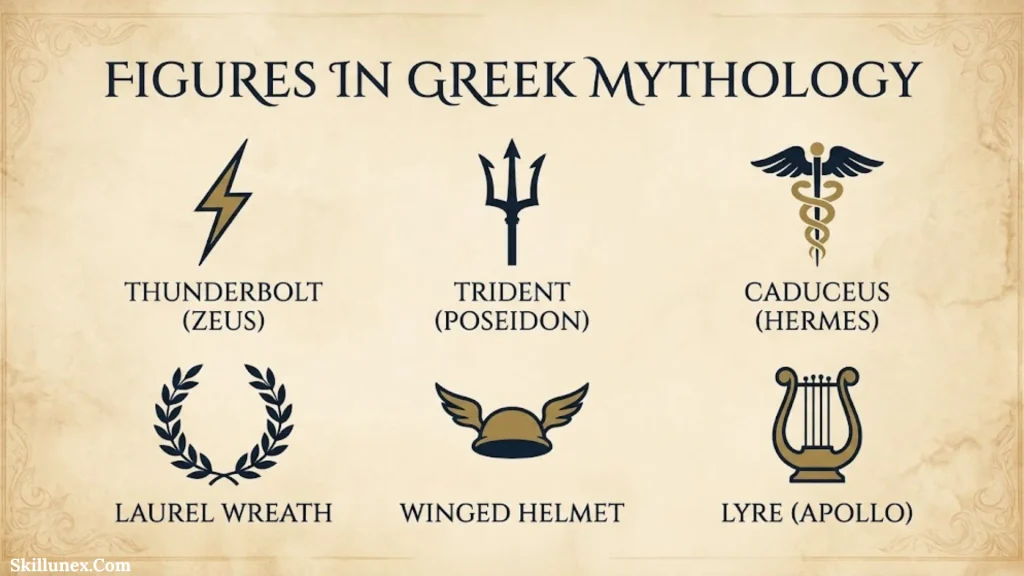
Understanding Prometheus becomes easier when comparing his role with other important figures in Greek mythology.
Prometheus and Zeus
Prometheus and Zeus represent opposing approaches to power and authority.
Zeus represents the established divine order and the authority of the Olympian gods. Prometheus represents independent thinking, resistance, and the desire to help humanity.
Their conflict is central to the mythology because Prometheus’s gift of fire directly challenges Zeus’s control.
Prometheus and Epimetheus
Epimetheus was Prometheus’s brother. Their names are traditionally interpreted as contrasting concepts: Prometheus is associated with forethought, while Epimetheus is associated with afterthought.
In the story of Pandora, Prometheus warns his brother not to accept gifts from Zeus. Epimetheus ignores the warning and accepts Pandora, setting the stage for the release of troubles into the human world.
Their contrasting personalities reinforce the importance of foresight, judgment, and careful decision-making.
Prometheus and Pandora
Pandora is another important figure connected with the Prometheus myth.
According to a famous version of the story, Zeus arranged for Pandora to be created and sent to Epimetheus as part of a punishment associated with Prometheus’s actions.
Pandora’s jar, commonly called Pandora’s box, became a symbol of the unexpected consequences of curiosity and human vulnerability.
Together, the stories of Prometheus and Pandora explore the relationship between divine punishment, human curiosity, knowledge, and suffering.
Why Are Prometheus Symbols Still Relevant Today?
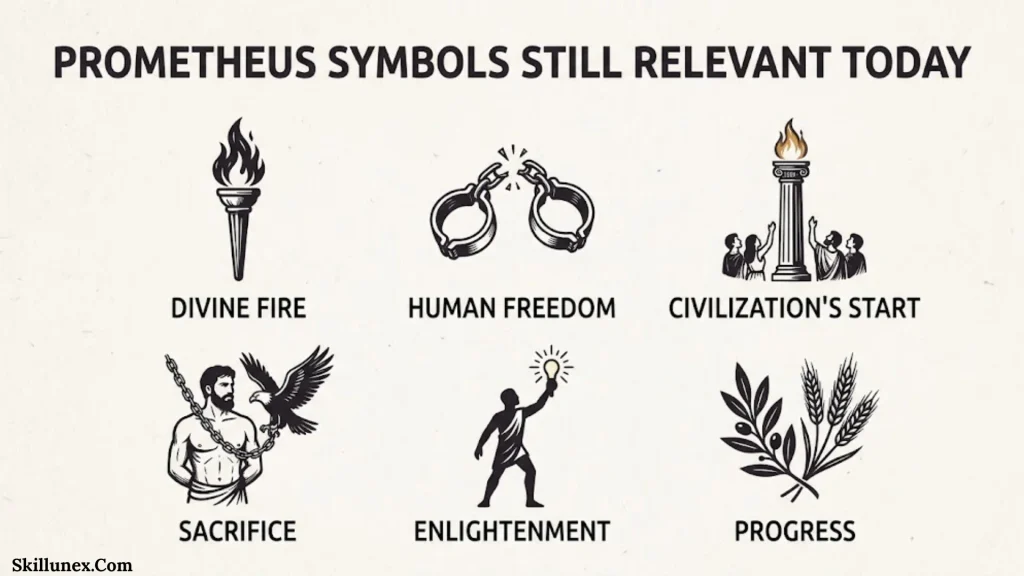
Prometheus symbols remain relevant because the ideas behind them are universal.
Modern societies continue to face questions about who controls knowledge, how innovation should be used, and whether individuals should challenge established authority.
The symbolism of Prometheus can be connected with several contemporary issues.
Education and intellectual freedom: Fire and the torch represent the importance of accessible education and independent thinking.
Scientific innovation: Prometheus represents the ambition to explore new possibilities and expand human understanding.
Political resistance: His chains represent the struggle against oppression, censorship, and unjust restrictions.
Technological responsibility: His story reminds us that powerful discoveries should be accompanied by careful consideration of their consequences.
Human resilience: His punishment illustrates the strength required to endure hardship while remaining committed to personal principles.
Ultimately, Prometheus continues to represent humanity’s desire to move beyond limitations and create a better future.
Frequently Asked Questions About Prometheus Symbols
What is the main symbol of Prometheus?
Fire is the main symbol of Prometheus. It represents knowledge, enlightenment, technological development, and human progress. In Greek mythology, Prometheus stole fire from the gods and gave it to humanity, helping people develop civilization.
What does the Prometheus torch symbolize?
The Prometheus torch symbolizes enlightenment, hope, education, discovery, and the spread of knowledge. It represents the ability to illuminate darkness through learning and intellectual development.
Why is fire important in the Prometheus myth?
Fire is important because it represents the gift that transformed human civilization. It provided warmth, protection, cooking, and opportunities for technological development. Its theft also created the central conflict between Prometheus and Zeus.
What does the eagle symbolize in the Prometheus story?
The eagle represents Zeus’s authority and the punishment imposed on Prometheus. It consumed his liver every day as part of his eternal suffering, symbolizing divine power and the consequences of rebellion.
What do the chains of Prometheus represent?
The chains represent oppression, imprisonment, injustice, and restrictions on freedom. They also symbolize the personal sacrifice Prometheus endured because he chose to help humanity.
What does the rock symbolize in Greek mythology?
The rock represents isolation, endurance, suffering, and the consequences of challenging authority. It is the place where Prometheus was chained and forced to endure his punishment.
Why did Prometheus’s liver regenerate?
Prometheus was immortal, so his liver regenerated after the eagle consumed it. This allowed Zeus’s punishment to continue repeatedly without killing him.
What does Prometheus symbolize in modern society?
In modern society, Prometheus symbolizes innovation, scientific discovery, intellectual freedom, rebellion against injustice, and the pursuit of knowledge. His story is often used to represent the benefits and risks of human progress.
What is the connection between Prometheus and Frankenstein?
Mary Shelley’s novel Frankenstein; or, The Modern Prometheus draws a parallel between Prometheus giving fire to humanity and Victor Frankenstein attempting to create life through science. Both stories explore ambition, knowledge, creation, and the consequences of exceeding established boundaries.
Is Prometheus a symbol of rebellion?
Yes. Prometheus is widely interpreted as a symbol of rebellion because he challenged Zeus’s authority by stealing fire and giving it to humanity. His actions represent independence, resistance, and the courage to challenge powerful institutions.
Conclusion
Prometheus symbols carry powerful meanings that connect ancient Greek mythology with modern life. From fire representing knowledge and enlightenment to chains symbolizing suffering and the eagle reflecting punishment, each symbol tells an important part of Prometheus’s story. Together, they highlight themes of courage, sacrifice, freedom, and the pursuit of knowledge.
When you understand these symbols, you can see why Prometheus remains an inspiration across generations. His story reminds you to value knowledge, challenge limitations, and stand up for what you believe is right. If you study mythology or explore deeper symbolic meanings, Prometheus’s legacy offers timeless lessons about human strength, ambition, and independence.

I’m Adrian Holloway, a writer and researcher who enjoys exploring the stories, meanings, and interesting facts behind the subjects people search for every day. I’m especially interested in symbols, nature, lakes, places, and cultural topics that help readers understand the world from a different perspective.
I believe useful content should be simple, accurate, and enjoyable to read. When I research a topic, I focus on finding meaningful details and presenting them in a way that makes information easy to understand.
My goal is to create helpful articles that answer real questions while encouraging readers to discover something new with every visit.
Books by Adrian Holloway
The Language of Symbols: Meanings, Stories & Traditions
Hidden Wonders of Nature: Lakes, Landscapes & Discovery