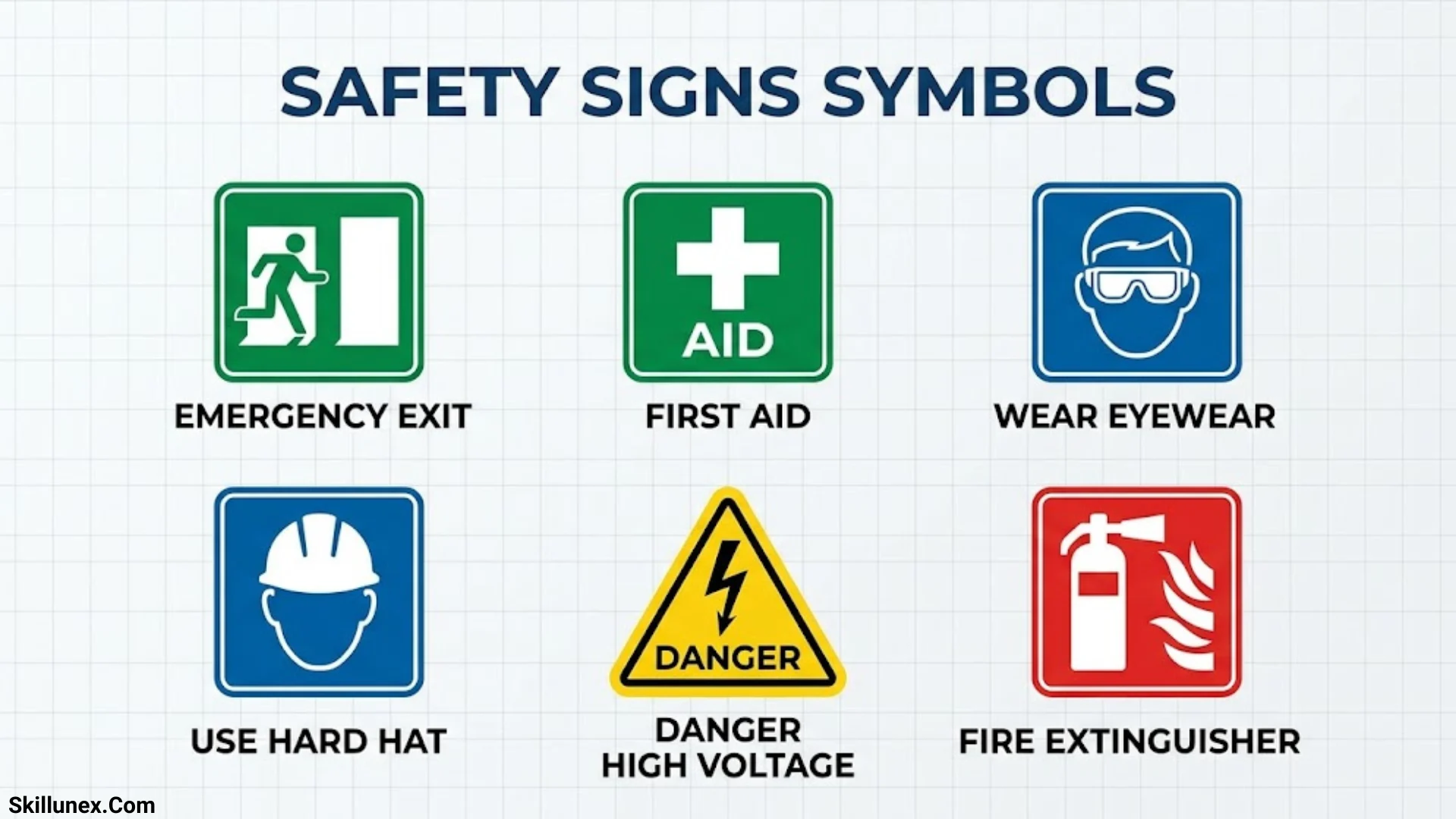
Safety signs symbols play an important role in protecting you from potential hazards at workplaces, public places, schools, and construction sites. These signs use colors, shapes, and simple images to communicate important safety information quickly. When you understand their meanings, you can recognize dangers and make safer decisions in everyday situations.
If you work in an office, factory, or construction area, knowing safety signs symbols can help you avoid accidents and follow essential safety rules. You may see warning signs, prohibition signs, mandatory signs, and emergency signs in different environments. Each type has a specific purpose, helping you identify risks, understand instructions, and respond correctly when needed.
In this guide, you will learn about common safety signs symbols, their meanings, colors, and practical uses. If you are a student, employee, business owner, or simply someone who wants to stay safe, this information will help you recognize important signs with confidence. By understanding these symbols, you can protect yourself and others while creating a safer environment.
What Are Safety Signs and Symbols?
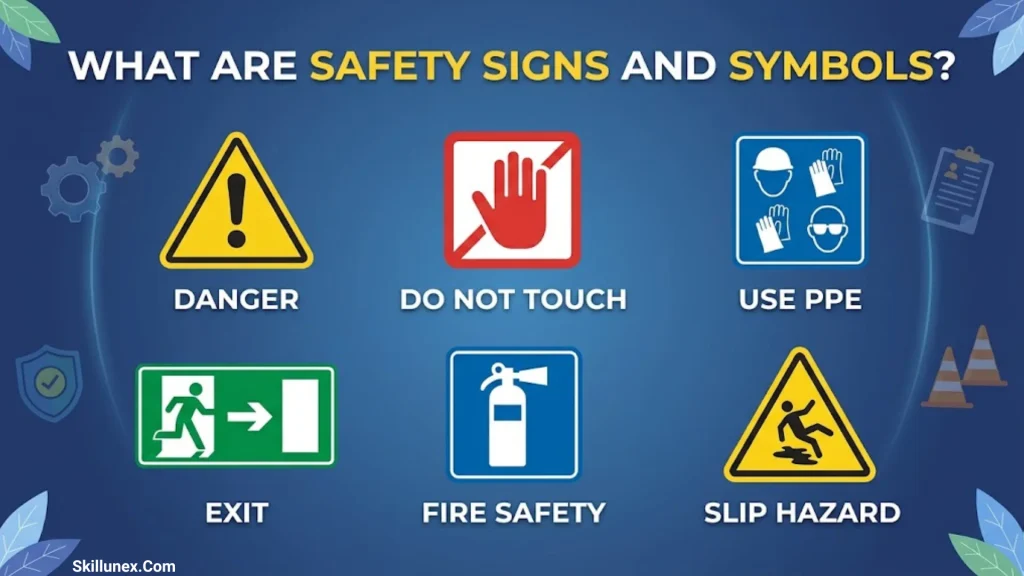
Safety signs are visual messages designed to communicate hazards, prohibited activities, mandatory actions, emergency information, and the locations of safety equipment. They help people understand what to avoid, what precautions to take, and where to go when an emergency occurs.
Safety symbols are the graphical elements used on these signs. A symbol may represent a hazard, such as a flame or electrical bolt, or an instruction, such as wearing a helmet or following an emergency exit route.
For example, a sign showing a person slipping warns people about a potential slipping hazard. A sign showing a crossed-out cigarette indicates that smoking is prohibited in the designated area.
Why Are Safety Signs Important?
Safety signs are an important part of accident prevention and hazard communication.
- Hazard identification: They alert people to dangers before they enter or work in hazardous areas.
- Accident prevention: They communicate precautions that may reduce the risk of injuries and property damage.
- Emergency response: They help people identify exits, fire equipment, first-aid facilities, and assembly points.
- Clear communication: Recognizable pictograms can communicate essential information across language barriers.
- Workplace compliance: Appropriate signs help organizations meet applicable safety regulations and standards.
- Protection of visitors: Signs inform people who may be unfamiliar with the hazards or procedures in a building.
- Consistent safety practices: They reinforce workplace rules and required protective measures.
Safety signs do not eliminate hazards by themselves. They should be combined with suitable equipment, training, safe work procedures, and effective hazard controls.
Where Are Safety Signs Used?
Safety signs are used in many environments where people need information about risks or safe behavior.
Common locations include:
- Factories and manufacturing plants
- Construction sites and building projects
- Hospitals, clinics, and laboratories
- Schools, colleges, and universities
- Offices and commercial buildings
- Warehouses and distribution centers
- Chemical storage and processing facilities
- Roads, parking areas, and transport terminals
- Shopping centers and public buildings
- Electrical rooms and power facilities
- Hotels, restaurants, and food processing areas
The appropriate signs depend on the activities performed, the hazards present, the people who may be exposed, and the safety requirements that apply to the location.
Five Main Types of Safety Signs and Their Meanings
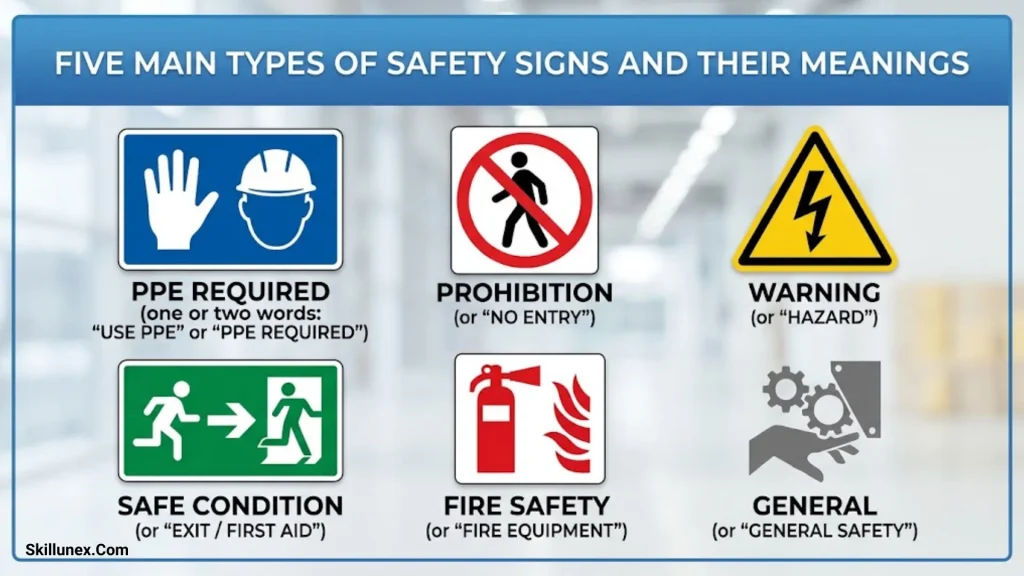
Workplace safety signs are commonly divided into five main categories: prohibition, warning, mandatory action, safe condition, and fire safety. Each category has a distinct purpose and commonly uses a recognizable color and shape.
1. Prohibition Safety Signs
Prohibition signs indicate actions that are not allowed because they may create danger or violate a safety rule.
In many ISO-style systems, these signs feature a circular red border and diagonal red bar over a black pictogram on a light background.
| Sign or symbol | Meaning | Common location |
| No Smoking | Smoking is prohibited | Fuel storage areas, hospitals, and workplaces |
| No Open Flames | Matches, lighters, and other open flames are prohibited | Flammable-material storage areas |
| No Entry | Entry is prohibited under the conditions stated by the sign | Restricted areas and hazardous work zones |
| Do Not Touch | Contact with the identified object or surface is prohibited | Dangerous machinery and electrical equipment |
| No Drinking | Drinking is prohibited in the designated area | Certain industrial and laboratory areas |
| No Mobile Phones | Mobile phone use is prohibited where the sign applies | Areas with specific equipment or site restrictions |
| No Pedestrians | Pedestrian access is prohibited in the designated area | Vehicle-only routes and restricted operational zones |
The exact meaning should be determined from the pictogram, wording, placement, and applicable site rules. A no-entry sign, for example, may prohibit everyone from entering or may apply to unauthorized personnel, depending on its message.
2. Warning Safety Signs
Warning signs alert people to hazards that could cause injury, illness, equipment damage, or other harm.
In many ISO-style systems, warning signs use a yellow or amber triangular background with a black border and black pictogram.
| Sign or symbol | Meaning | Common location |
| General Warning | A hazard is present | Industrial and work areas |
| High Voltage | Risk of electric shock or electrocution | Electrical rooms and substations |
| Flammable Material | A substance or material may ignite easily | Fuel and chemical storage areas |
| Corrosive Substance | A substance may damage skin, eyes, or materials | Chemical handling facilities |
| Toxic Substance | Exposure may cause poisoning or other serious effects | Certain laboratories and chemical facilities |
| Slippery Surface | The surface may cause slipping | Wet floors and entrances |
| Falling Objects | Objects may fall from above | Construction and storage areas |
| Forklift Traffic | Industrial vehicles operate nearby | Warehouses and loading zones |
| Biological Hazard | Biological material may pose a health risk | Certain laboratories and healthcare areas |
| Laser Hazard | Laser radiation may be present | Laser laboratories and industrial facilities |
| Hot Surface | Contact may cause burns | Industrial equipment and heated machinery |
| Moving Machinery | Moving parts may cause injury | Manufacturing and processing areas |
A warning sign identifies a potential hazard, but it may not explain every precaution required. People should follow additional instructions, training, and site-specific safety procedures.
3. Mandatory Safety Signs
Mandatory signs specify an action that must be taken in the designated area or during a particular activity.
In many ISO-style systems, these signs have a blue circular background with a white pictogram.
| Sign or symbol | Meaning | Common location |
| Wear a Safety Helmet | A protective helmet is required | Construction sites and factories |
| Wear Safety Glasses | Eye protection is required | Workshops and laboratories |
| Wear Hearing Protection | Suitable hearing protection is required | High-noise areas |
| Wear Protective Gloves | Specified protective gloves are required | Designated handling areas |
| Wear Safety Footwear | Protective footwear is required | Industrial and construction areas |
| Wear a Respirator | Specified respiratory protection is required | Areas where respiratory protection is necessary |
| Wear a Face Shield | A face shield is required | Certain grinding or chemical-handling tasks |
| Wash Your Hands | Handwashing is required at the designated point or after specified activities | Healthcare and food preparation areas |
The required protective equipment must match the actual hazard. Ordinary gloves, for example, may not protect against hazardous chemicals, and a general-purpose mask may not provide the respiratory protection required for a particular exposure.
4. Safe Condition and Emergency Signs
Safe-condition signs identify emergency exits, escape routes, first-aid facilities, and other locations associated with safety.
In many ISO-style systems, these signs use a green background with a white pictogram.
| Sign or symbol | Meaning | Common location |
| Emergency Exit | Identifies an emergency exit | Corridors and building exits |
| Emergency Escape Route | Shows the direction of an escape route | Buildings and industrial facilities |
| First Aid | Identifies first-aid facilities or supplies | Workplaces, schools, and public buildings |
| Emergency Shower | Identifies an emergency washing shower | Certain laboratories and chemical-handling areas |
| Eyewash Station | Identifies equipment for rinsing the eyes | Laboratories and industrial workplaces |
| Assembly Point | Identifies the designated gathering place during an evacuation | Outdoor areas near buildings |
| Safe Condition | Identifies a designated safe route, facility, or condition | Workplaces and public buildings |
Emergency exit signs should be visible and correspond to a usable route. Escape routes should remain unobstructed, and people should know the evacuation procedure before an emergency occurs.
5. Fire Safety Signs
Fire safety signs identify firefighting equipment and facilities used during a fire emergency.
In many ISO-style systems, these signs have a red background with a white pictogram. This use of red differs from the red prohibition symbols used on other types of safety signs.
| Sign or symbol | Meaning | Common location |
| Fire Extinguisher | Identifies the location of a fire extinguisher | Offices, corridors, and industrial areas |
| Fire Hose Reel | Identifies a fire hose reel | Buildings and designated fire points |
| Fire Alarm Call Point | Identifies a manual fire alarm activation point | Corridors and exits |
| Fire Blanket | Identifies a fire blanket | Suitable kitchens, laboratories, and work areas |
| Fire Hydrant | Identifies a fire hydrant | Outdoor fire protection locations |
| Firefighting Equipment | Identifies a designated firefighting equipment location | Commercial and industrial premises |
Fire safety signs help people locate equipment quickly, but they do not mean that everyone should attempt to fight a fire. People should raise the alarm, follow the evacuation procedure, and use firefighting equipment only when trained, authorized, and able to do so safely.
Safety Sign Colors and Their Meanings
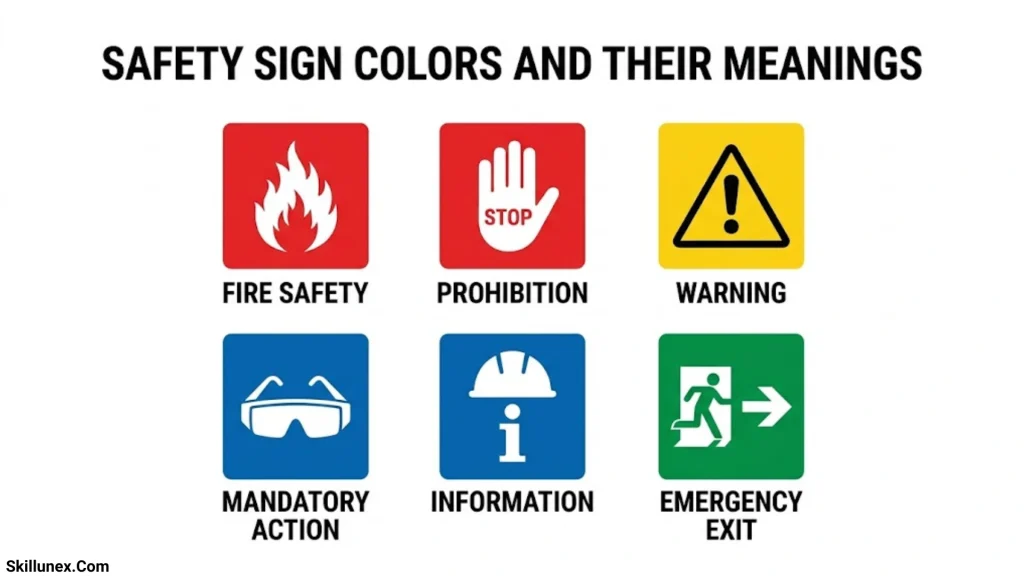
Colors provide an immediate visual clue about a sign’s purpose. However, a color should not be interpreted in isolation because the shape, pictogram, wording, and applicable standard also matter.
Red Safety Signs
Red is commonly used for prohibition signs and fire equipment signs.
Examples include no-smoking signs, no-open-flame signs, fire extinguisher signs, and fire alarm signs.
A red circular sign with a diagonal bar generally indicates a prohibited action. A red rectangular sign with a white fire equipment pictogram commonly identifies firefighting equipment.
Yellow or Amber Safety Signs
Yellow or amber commonly indicates a warning.
Examples include signs for high voltage, slippery surfaces, hot surfaces, falling objects, and flammable materials.
These signs should be placed where people can recognize the hazard and take appropriate precautions before entering the affected area.
Blue Safety Signs
Blue commonly indicates a mandatory action.
Examples include requirements to wear safety helmets, protective eyewear, hearing protection, or other specified equipment.
A mandatory sign communicates an instruction that must be followed within the scope of the sign and applicable safety procedures.
Green Safety Signs
Green commonly identifies safe conditions, emergency exits, escape routes, first-aid facilities, and other emergency-related locations.
Examples include emergency exit signs, first-aid signs, and assembly point signs.
Green signage is most useful when it accurately identifies an accessible route or facility.
Safety Sign Color and Shape Reference Table
| Category | Common color combination | Typical shape | Purpose |
| Prohibition | Red, white, and black | Circle with diagonal bar | Shows an action that is prohibited |
| Warning | Yellow or amber with black | Triangle | Alerts people to a hazard |
| Mandatory | Blue with white | Circle | Specifies an action that must be taken |
| Safe condition | Green with white | Rectangle or square | Identifies safe routes and emergency facilities |
| Fire equipment | Red with white | Rectangle or square | Identifies firefighting equipment |
These are widely used conventions, particularly in ISO-style workplace signage. Road traffic signs and some national safety systems use different rules, so always follow the applicable standard.
Common Safety Symbols and Their Meanings
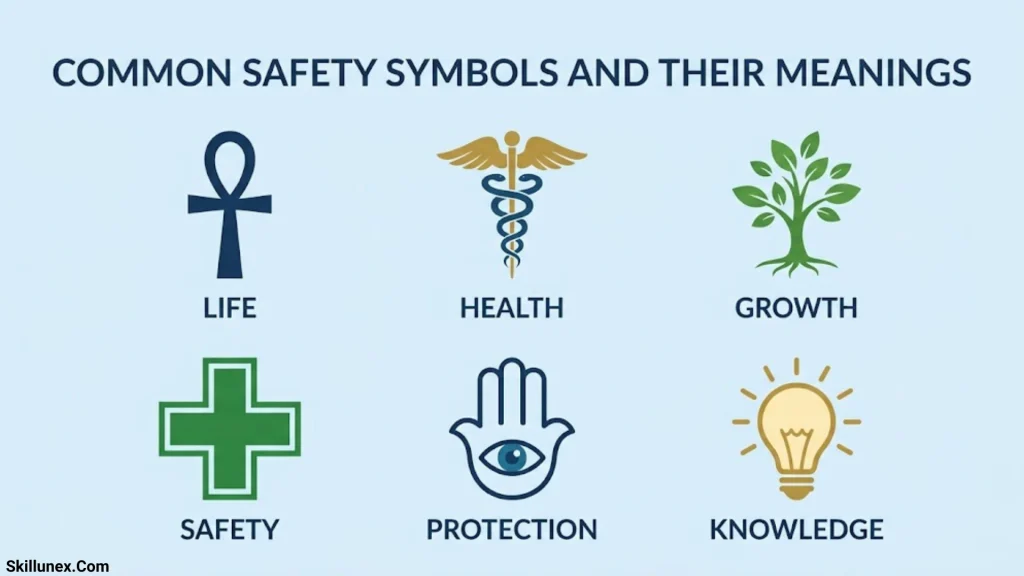
Individual safety symbols communicate specific hazards or instructions. Learning the most common symbols helps people understand signs more quickly.
Electrical Hazard Symbol
The electrical hazard symbol commonly features a lightning bolt and warns about dangerous electrical energy.
It may appear near switchboards, electrical panels, substations, high-voltage equipment, or other areas where electrical exposure is possible.
People should not touch electrical equipment based solely on the appearance of a sign. Appropriate isolation, lockout, and verification procedures must be followed before work begins.
Flammable Material Symbol
A flame symbol warns that a substance or material may catch fire under specified conditions.
It may be found on chemical containers, fuel storage areas, and other locations involving flammable materials.
Keep ignition sources away as required by the site’s procedures, and consult the relevant chemical label and safety data sheet when handling hazardous substances.
Corrosive Substance Symbol
A corrosive symbol may depict liquid damaging a hand and a metal surface. It indicates certain substances that can cause severe skin burns, serious eye damage, or corrosion of metals.
This symbol is commonly used on applicable chemical labels and may also appear in hazard communication materials.
Appropriate protective equipment, handling procedures, and emergency washing facilities should be selected according to the substance and the level of exposure risk.
Toxic Substance Symbol
A skull and crossbones symbol is used for certain substances that can cause acute toxicity.
It is particularly important on chemical labels where exposure may cause serious poisoning.
People should follow the chemical label, safety data sheet, and relevant handling instructions. The symbol alone does not describe every possible route or level of exposure.
Slippery Surface Symbol
A slipping-person symbol warns that a floor or surface may cause a slip.
It is commonly used around wet floors, cleaning areas, entrances, and surfaces affected by oil or other contaminants.
Remove the hazard where possible, keep affected areas appropriately controlled, and use temporary warning signs when necessary.
Biological Hazard Symbol
The biological hazard symbol identifies certain biological materials that may pose a risk to human health.
It can appear in laboratories, healthcare settings, research facilities, and areas handling potentially infectious material.
Access controls, appropriate protective equipment, training, and handling procedures should match the specific biological risk.
Emergency Exit Symbol
An emergency exit symbol identifies an exit or escape route intended for emergency use.
It may show a running person, a doorway, or a directional arrow, depending on the standard and sign design.
Follow the indicated route during an evacuation and do not block doors, corridors, or other designated escape paths.
Chemical Hazard Symbols and the GHS System
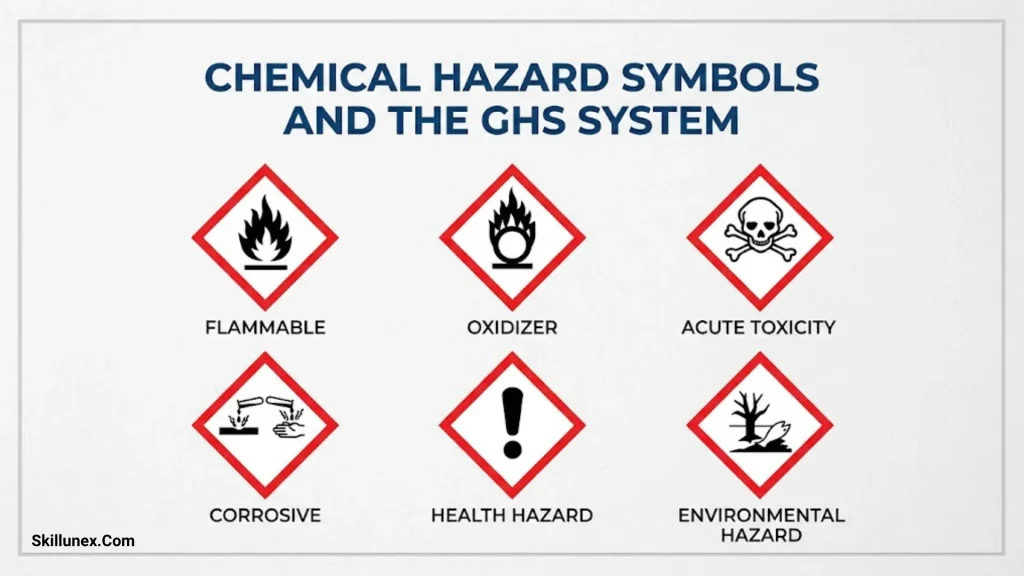
Chemical hazard pictograms are closely related to workplace safety communication, but they are not identical to the five main categories of safety signs.
The Globally Harmonized System of Classification and Labelling of Chemicals (GHS) uses standardized pictograms on applicable chemical labels. Under the GHS design, pictograms generally appear as black symbols inside white diamonds with red borders.
The exact labeling requirements depend on the chemical classification and the national or regional system implementing GHS.
Flame Pictogram
The flame pictogram identifies certain flammable substances and other hazards associated with ignition or self-reactive behavior.
It may apply to flammable gases, liquids, solids, and other categories specified by the relevant classification rules.
Flame Over Circle Pictogram
The flame-over-circle pictogram identifies oxidizing substances.
Oxidizers can cause or intensify a fire by supporting combustion. Their storage and handling requirements depend on the substance and the surrounding materials.
Corrosion Pictogram
The corrosion pictogram identifies certain substances that can cause severe skin burns, serious eye damage, or corrosion of metals.
The label and safety data sheet provide more specific information about the classified hazards and required precautions.
Skull and Crossbones Pictogram
The skull and crossbones pictogram identifies certain acute toxicity hazards.
It indicates that exposure can have serious harmful effects, depending on the substance and exposure conditions.
Exclamation Mark Pictogram
The exclamation mark is used for certain hazards, including some skin or eye irritation hazards and other classifications covered by the system.
It should not be interpreted as a complete description of the chemical’s risks.
Gas Cylinder Pictogram
The gas cylinder pictogram identifies gases under pressure, including relevant compressed, liquefied, or refrigerated gases.
Pressure-related risks and, in some cases, temperature-related hazards require appropriate storage and handling procedures.
Health Hazard Pictogram
The health hazard silhouette is used for certain serious health hazards, such as specified carcinogenicity, respiratory sensitization, reproductive toxicity, or target-organ toxicity classifications.
The precise hazard depends on the chemical’s classification and label information.
Exploding Bomb Pictogram
The exploding bomb pictogram identifies certain explosive or reactive hazards.
Only the classifications covered by the applicable GHS rules should carry this pictogram.
Environmental Hazard Pictogram
The environmental pictogram depicts a dead tree and fish and is used in systems that communicate certain aquatic environmental hazards.
Its use and legal status can vary by jurisdiction, so the relevant labeling rules should be consulted.
Workplace Safety Signs by Industry
Different industries need different combinations of safety signs because their hazards, equipment, and emergency procedures vary.
Construction Safety Signs
Construction sites commonly use warning signs, mandatory signs, prohibition signs, and traffic-related signs.
Typical examples include:
- Hard hat and safety footwear requirements
- Falling-object warnings
- Open excavation warnings
- Moving vehicle and heavy equipment warnings
- Restricted-entry notices
- Electrical hazard warnings
- Emergency assembly point signs
Signs should be visible from relevant access points and updated as construction activities and site conditions change.
Factory and Manufacturing Safety Signs
Factories may contain moving machinery, hot surfaces, electrical equipment, chemicals, and noisy production areas.
Common signs include machinery hazard warnings, mandatory protective equipment signs, high voltage warnings, no-entry signs, and hearing protection requirements.
Signs must support proper machine guarding, safe operating procedures, maintenance controls, and employee training.
Hospital and Healthcare Safety Signs
Hospitals use safety signs to identify emergency exits, fire equipment, first-aid facilities, restricted areas, and specific biological or chemical hazards.
Additional signs may communicate hand hygiene, protective equipment requirements, radiation hazards, or isolation precautions.
The signs and instructions must reflect the actual clinical or operational risk.
Laboratory Safety Signs
Laboratories may handle corrosive chemicals, toxic substances, biological materials, compressed gases, lasers, and other hazardous agents.
Signs should communicate relevant restrictions, protective equipment requirements, and emergency facilities.
Chemical labels and safety data sheets are especially important because a general laboratory warning sign cannot provide all the information needed for safe chemical handling.
Warehouse and Transport Safety Signs
Warehouses commonly use signs to separate pedestrians from vehicles, identify loading areas, communicate speed restrictions, and warn about falling goods or restricted access.
Clear signage should be supported by suitable pedestrian routes, traffic management, safe stacking practices, and vehicle operating procedures.
Road Safety Signs and Their Meanings
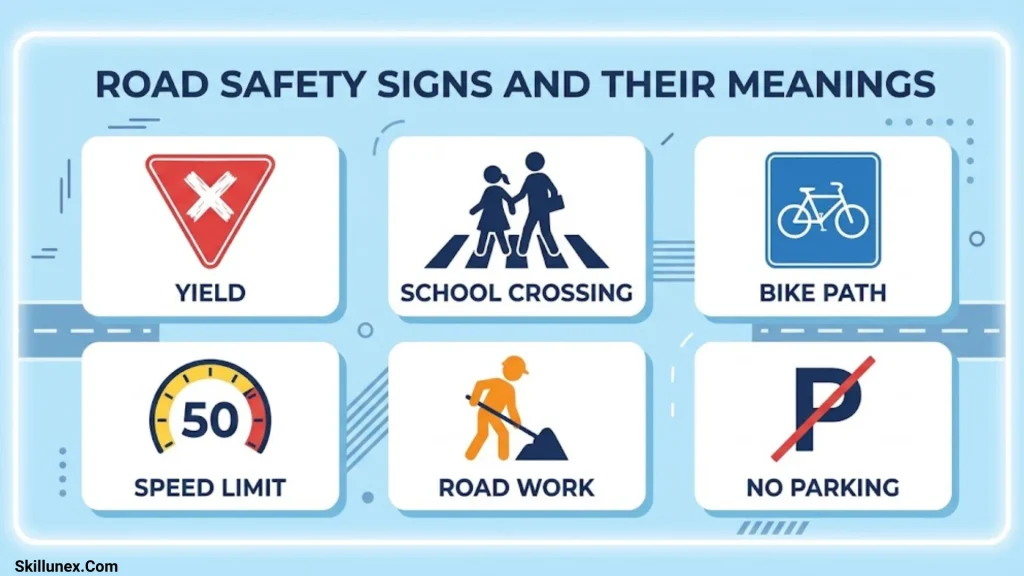
Road signs help drivers, cyclists, and pedestrians understand traffic regulations, recognize hazards, and navigate safely. They are related to safety signage but are generally governed by road traffic regulations rather than workplace sign standards.
Regulatory Road Signs
Regulatory signs communicate rules that road users must follow.
Examples include stop signs, speed limits, no-entry signs, and parking restrictions. Their exact appearance and legal meaning depend on the jurisdiction.
Warning Road Signs
Warning signs alert road users to hazards or changes in road conditions.
Examples include sharp bends, slippery roads, roadworks, pedestrian crossings, and intersections ahead.
These signs help road users anticipate changing conditions and respond appropriately.
Directional and Information Signs
Directional signs show routes, destinations, and facilities. Examples include hospital directions, parking information, and highway destinations.
Although not all informational signs are hazard warnings, they support safe navigation and traffic flow.
How to Read Safety Signs Correctly
Reading a safety sign correctly requires understanding its visual category, specific message, and location.
Identify the Sign’s Color and Shape
The color and shape provide an initial clue about the sign’s purpose. For example, a yellow triangle commonly indicates a warning, while a blue circle commonly indicates a mandatory action in ISO style workplace signage.
However, color and shape alone are not enough to identify every hazard.
Understand the Pictogram and Wording
Look carefully at the symbol and read any accompanying text. A general warning sign may not identify the exact hazard without additional information.
For chemicals, consult the container label and safety data sheet where appropriate.
Consider the Location and Context
The sign’s position helps explain what it applies to. A hearing protection sign at the entrance to a noisy production area indicates that the required hearing protection must be used in the designated area.
Similarly, an electrical warning beside a switchboard indicates a potential electrical hazard associated with that equipment or location.
Follow the Required Safety Action
If a sign prohibits an activity, do not perform it. If it requires protective equipment, use the appropriate equipment before beginning the relevant activity. If it identifies an emergency route, follow the evacuation procedure.
If a sign is unclear or appears inconsistent with the work activity, seek guidance from a supervisor or responsible safety professional.
How to Choose and Install Safety Signs
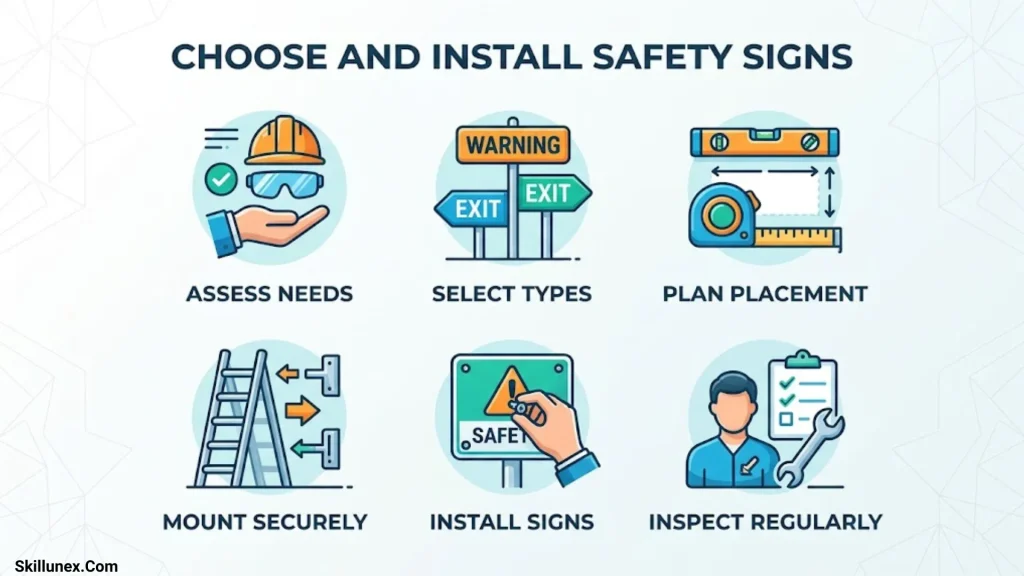
Effective safety signage requires the right sign, the correct location, suitable visibility, and ongoing maintenance.
Conduct a Hazard Assessment
Identify hazards, the people who may be exposed, and the information they need to work or move safely.
Consider routine activities, maintenance, cleaning, deliveries, visitors, and emergency situations.
Select Signs That Match the Hazard
Choose a recognized sign that communicates the actual hazard or required action. Use the relevant national or international standard and add concise wording where necessary.
Avoid generic warnings when a more specific and suitable sign is available.
Install Signs in Visible Locations
Place signs near hazards, at relevant entrances, along escape routes, or beside emergency equipment.
Consider viewing distance, lighting, obstructions, mounting height, and the direction from which people approach. A sign should be visible early enough for people to respond safely.
Maintain and Replace Damaged Signs
Replace signs that are faded, damaged, dirty, obscured, or outdated. Temporary signs should be removed when the hazard or restriction no longer exists.
Emergency exit signs and fire equipment signs must remain visible and consistent with the current building layout.
Train Workers and Visitors
Explain what important signs mean and what actions they require. Training is especially important for electrical hazards, hazardous chemicals, machinery, emergency procedures, and specialized protective equipment.
Common Mistakes When Using Safety Signs
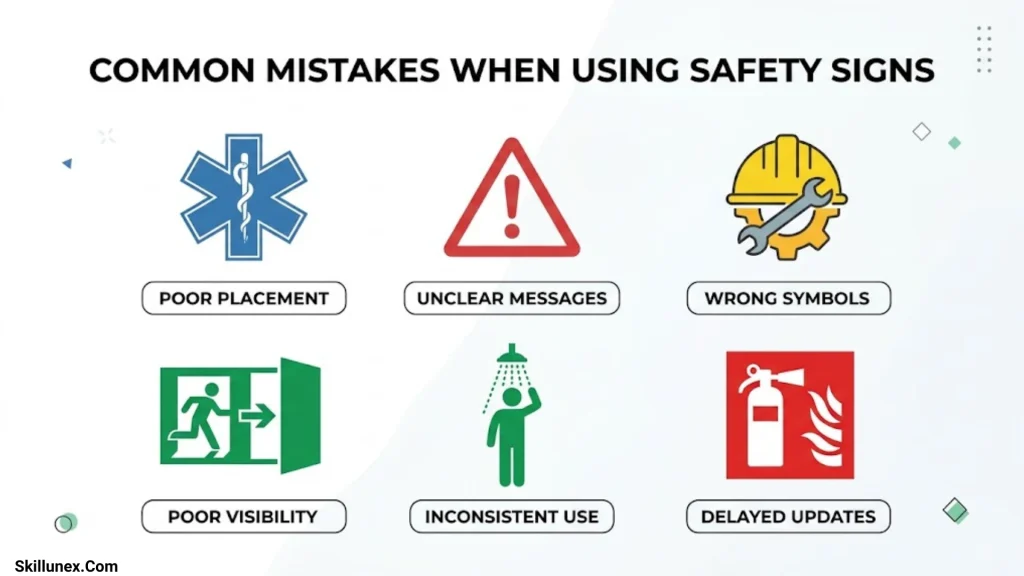
Incorrect sign selection or placement can reduce the effectiveness of safety communication.
Using the Wrong Sign Design
Using an unfamiliar or incorrectly designed sign can cause confusion. Select signs that follow the relevant standard rather than relying on improvised or decorative graphics.
Placing Signs Too Far From Hazards
A sign may not provide sufficient warning if it is hidden behind equipment or placed after a person has entered the dangerous area.
Position signs where people can recognize the hazard and respond before exposure occurs.
Using Too Many Signs
An excessive number of signs can make important messages harder to notice. Prioritize clear, relevant signs and remove obsolete notices.
Ignoring Language and Accessibility
Symbols can help people who speak different languages, but not every pictogram is universally understood. Add concise wording where needed and consider the needs of people with visual or other accessibility requirements.
Treating Signs as a Substitute for Hazard Controls
Safety signs do not eliminate the hazard. Organizations should prioritize appropriate hazard elimination, substitution, engineering controls, administrative measures, and personal protective equipment according to the applicable risk-control framework.
Frequently Asked Questions About Safety Signs Symbols
What are safety signs and symbols?
Safety signs and symbols are visual communication tools used to identify hazards, prohibit unsafe actions, specify required precautions, and show emergency routes or equipment locations. They commonly use standardized colors, shapes, and pictograms.
What are the five main types of safety signs?
The five commonly recognized workplace categories are prohibition signs, warning signs, mandatory signs, safe-condition signs, and fire safety signs. Their exact design depends on the applicable standard and jurisdiction.
What does a red safety sign mean?
Red is commonly used for prohibition signs and fire equipment signs. A red circle with a diagonal bar generally indicates a prohibited action, while a red rectangular sign with a white fire equipment pictogram commonly identifies firefighting equipment.
What does a yellow safety sign mean?
Yellow or amber commonly indicates a warning. It alerts people to hazards such as high voltage, slippery surfaces, hot equipment, flammable materials, or moving vehicles.
What does a blue safety sign mean?
Blue commonly indicates a mandatory instruction. A blue circular sign may require workers to wear safety helmets, protective eyewear, hearing protection, or other specified protective equipment.
What does a green safety sign mean?
Green commonly identifies safe conditions and emergency-related facilities, such as escape routes, emergency exits, first-aid facilities, and assembly points.
What is the difference between a warning sign and a mandatory sign?
A warning sign alerts people to a hazard, while a mandatory sign specifies an action that must be taken. For example, a warning sign may identify a hazardous machine, while a mandatory sign may require eye protection in the same area.
What are GHS chemical hazard symbols?
GHS chemical hazard pictograms are standardized symbols used on applicable chemical labels. They communicate classified hazards such as flammability, corrosion, acute toxicity, oxidizing properties, and certain serious health effects.
Why are safety signs important in the workplace?
Safety signs help workers and visitors recognize hazards, follow restrictions, use required protective equipment, and locate emergency facilities. They support safer behavior when combined with training, effective hazard controls, and emergency planning.
Which standard is used for safety signs?
ISO 7010 is an important international standard for registered safety signs and graphical symbols. Other requirements may apply under national regulations, workplace safety rules, road traffic standards, and industry-specific codes. Organizations should follow the requirements applicable to their location and activities.
Are safety signs the same in every country?
No. Many countries use similar international conventions, but sign designs, legal requirements, and road traffic symbols can differ. Always follow the applicable national or industry standard.
Can safety signs replace personal protective equipment?
No. Safety signs communicate hazards and instructions, but they do not replace appropriate protective equipment, machine guarding, safe operating procedures, training, or other required hazard controls.
Conclusion
Safety signs help people recognize hazards, follow instructions, and respond appropriately in workplaces, public buildings, construction sites, laboratories, and other environments. Understanding prohibition, warning, mandatory, safe condition, and fire safety signs makes it easier to identify risks and take the correct action.
Colors and shapes provide useful clues, but the pictogram, accompanying wording, location, and applicable standard must also be considered. Organizations should select suitable signs, install them where people can see them, maintain them in good condition, and train employees to understand their meanings.
Most importantly, safety signs should support a complete safety program rather than replace effective hazard controls. When signage is clear, accurate, and properly maintained, it helps create safer environments for employees, visitors, and the public.

Caleb Thornton
I’m Caleb Thornton, a researcher and content writer who loves exploring fascinating subjects and sharing what I learn with readers. My interests include natural places, lakes, symbols, culture, history, and the stories that make ordinary topics more meaningful.
When I write an article, I try to go beyond a basic answer. I look for useful facts, relevant context, and details that can help readers understand the subject more completely.
My purpose is simple: I want every article I contribute to provide genuine value, satisfy the reader’s curiosity, and make discovering new information enjoyable.
## Books by Caleb Thornton
* Symbols & Meanings: Exploring the Signs We See Every Day
* Lakes of the World: Nature, Beauty & Exploration