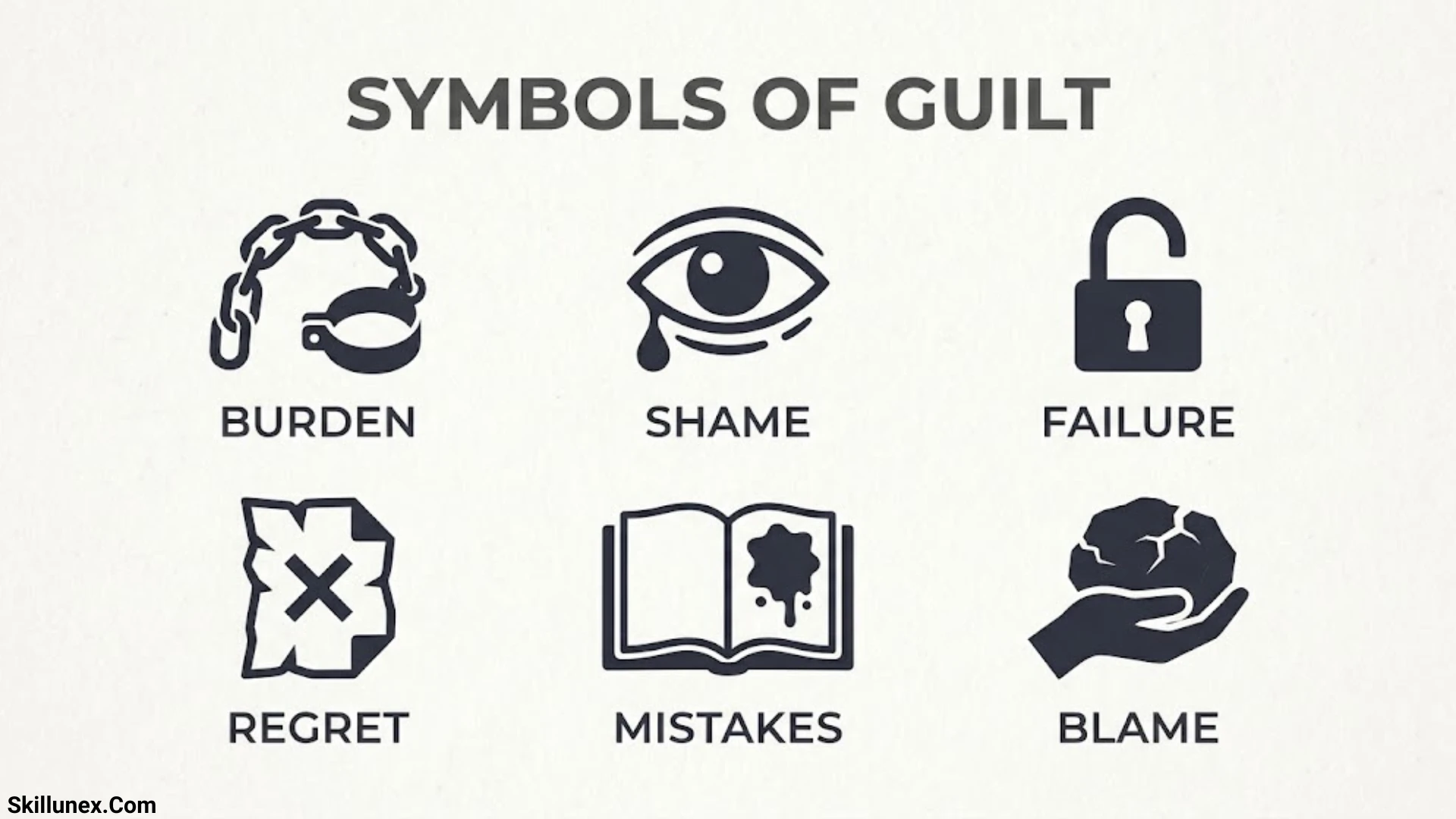
Symbols of guilt represent feelings of regret, shame, and remorse through meaningful images and objects. You can find these symbols in art, literature, movies, and everyday life. When I explore the meaning of guilt, I often see how simple images can express deep emotions and reveal the burden of past mistakes.
If you want to understand guilt more clearly, you can explore symbols such as broken mirrors, dark shadows, chains, and storms. These images often represent inner conflict, emotional pain, and the desire for forgiveness. I’ll help you understand how each symbol connects to guilt and why it carries a powerful emotional meaning.
In this guide, I’ll share some of the most meaningful symbols of guilt and explain what they represent. If you are writing a story, studying literature, creating artwork, or exploring your own ideas, you’ll discover how these symbols can help you express feelings of regret, shame, and the search for inner peace.
What Are Symbols of Guilt?
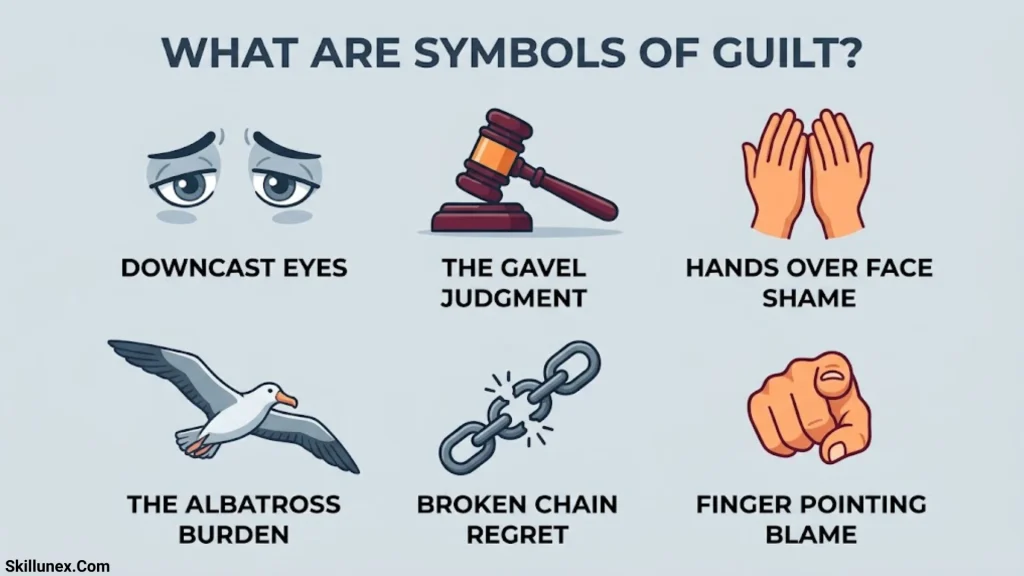
Symbols of guilt are objects, images, colors, animals, actions, or situations that represent the emotional consequences of believing that one has done something wrong. They allow writers and artists to communicate inner conflict without explaining every feeling directly.
For example, a character who repeatedly washes their hands after committing a crime may be trying to remove an imagined stain of guilt. The action represents a desire to erase responsibility, even when the character knows the past cannot be changed.
Symbols of guilt commonly communicate several related ideas:
- Remorse: Regret over an action that caused harm.
- Responsibility: Recognition that one’s choices contributed to a problem.
- Fear of exposure: Anxiety that a hidden truth will become known.
- Emotional suffering: The psychological weight of a troubling decision.
- Loss of innocence: A change in how someone views themselves after wrongdoing.
- The desire for forgiveness: Hope that a mistake can be acknowledged and its consequences addressed.
Guilt does not always mean that someone has committed a serious moral wrong. People may feel guilty even when they have limited responsibility for an event. In literary analysis, it is therefore important to distinguish between a character’s feelings of guilt and the actual circumstances of their actions.
Common Symbols of Guilt and Their Meanings
Many objects and images can symbolize guilt, but their meanings depend on how they are used in a particular story, artwork, or situation.
| Symbol | Common Interpretation | Why It Can Represent Guilt |
| Blood | Violence, responsibility, consequences | Connects a character to a harmful action |
| Shadows | Secrets, fear, inner conflict | Suggest that guilt follows a person |
| Broken mirrors | Damaged self-image, inner division | Reflect a changed view of oneself |
| Darkness | Concealment, uncertainty, fear | Creates an atmosphere of secrecy |
| Heavy burdens | Responsibility, remorse | Represent the emotional weight of wrongdoing |
| Chains | Restriction, imprisonment | Suggest feeling trapped by past choices |
| Stains | Lingering consequences | Symbolize attempts to hide or erase wrongdoing |
| Ghosts | Memories, unresolved conflict | Represent a past that continues to affect the present |
| Masks | Deception, hidden identity | Show the difference between public appearance and private feelings |
| Withered flowers | Loss, regret, damaged relationships | Suggest the consequences of neglect or betrayal |
| Tears | Sadness, remorse, emotional distress | Communicate a character’s reaction to wrongdoing |
| Locked doors | Secrets, avoidance, isolation | Represent something a character refuses to confront |
| Broken objects | Damage, separation, lost trust | Reflect the consequences of harmful decisions |
| Rain | Sorrow, cleansing, renewal | May represent emotional release or a fresh beginning |
| Empty rooms | Loneliness, absence, withdrawal | Show the emotional or social effects of guilt |
These associations are possibilities rather than universal rules. A locked door, for example, might represent privacy rather than guilt unless the story connects it to a concealed action.
Physical Objects That Symbolize Guilt
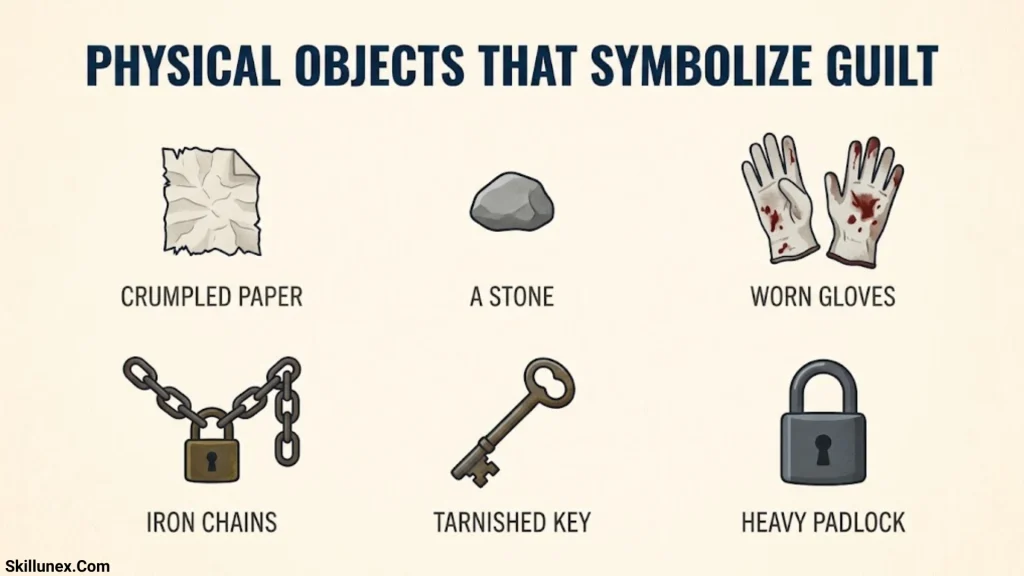
Physical objects can make an abstract emotion visible. When an object becomes associated with a harmful decision, it may serve as a recurring reminder of what happened.
Blood and Bloodstains
Blood is one of the most recognizable symbols of guilt in stories involving violence, betrayal, or serious wrongdoing. It can represent the consequences of an action that cannot be easily reversed.
A character may imagine blood on their hands even when their hands are physically clean. This image suggests that the character feels morally connected to an event and cannot escape the memory of it.
Blood can also symbolize responsibility that a person attempts to deny. The more a character tries to ignore the evidence of wrongdoing, the more significant the image may become.
Example: After causing a serious accident, a character repeatedly imagines red marks on their hands. The imagined stains represent their continuing sense of responsibility.
Broken Mirrors
A broken mirror can symbolize a damaged self-image, divided identity, or loss of innocence. Someone who once believed they were honest may struggle to recognize themselves after betraying another person.
The broken reflection can represent the difference between who a person believes they are and what their actions reveal about them.
However, broken mirrors also have associations with bad luck, separation, and change. The interpretation should be supported by the surrounding events.
Example: A character breaks a mirror after discovering that their dishonesty has destroyed a close friendship. The broken glass reflects their damaged self-respect.
Stains and Dirty Clothing
Stains can symbolize wrongdoing that remains difficult to hide. A character may clean an object repeatedly, hoping to remove a visible reminder of the past.
The image is especially effective when the stain remains despite repeated attempts to remove it. This can represent the difference between concealing evidence and accepting responsibility.
Example: A character scrubs a stained shirt after a confrontation, but the mark remains. The stain symbolizes a mistake that cannot be erased simply by pretending it never happened.
Letters, Photographs, and Personal Belongings
A letter, photograph, gift, or piece of jewelry can become a symbol of guilt when it reminds a character of someone they have hurt.
Unlike universal symbols such as darkness or blood, personal objects often acquire their meaning through the story. A photograph may initially represent happiness but later become a reminder of betrayal or loss.
Example: A character keeps an old letter from a friend they betrayed. Each time they read it, they remember the trust they damaged.
Broken Clocks and Stopped Watches
A stopped clock can represent a moment that continues to dominate someone’s thoughts. It may suggest that a character feels emotionally trapped in the instant when they made a harmful decision.
This symbol is particularly effective when the time shown on the clock corresponds to an important event.
Example: A character keeps a watch that stopped during an argument that permanently changed their family. The watch becomes a reminder of the moment they wish they could revisit.
Natural and Visual Symbols of Guilt
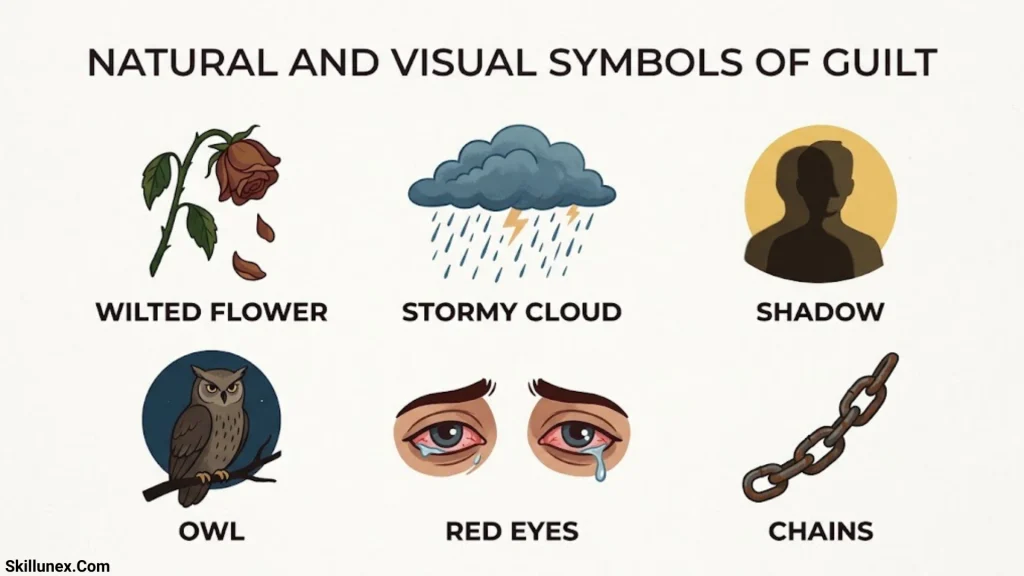
Nature, lighting, and visual imagery can communicate guilt without requiring a character to explain their feelings.
Shadows and Darkness
Shadows often represent hidden secrets, fear, or the parts of a person’s identity they do not want others to see. Because a shadow follows a person, it can suggest that guilt remains present even when someone tries to escape it.
Darkness may reinforce this idea by creating an atmosphere of concealment or emotional isolation.
Example: After betraying a business partner, a character becomes uncomfortable walking alone at night. The story repeatedly places the character’s shadow against a wall, connecting the image to their troubled conscience.
Darkness does not automatically indicate guilt. It can also symbolize safety, peace, mystery, or uncertainty.
Rain and Running Water
Rain may symbolize sadness, emotional release, purification, or renewal. In stories about guilt, it can accompany a confession or a moment when a character begins to confront the harm they caused.
Running water may suggest an attempt to cleanse the past, although symbolic cleansing does not necessarily mean that the consequences have disappeared.
Example: After admitting the truth to a family member, a character walks outside in the rain. The scene suggests emotional release and the possibility of rebuilding trust.
Withered Flowers and Dead Plants
Flowers commonly symbolize love, innocence, beauty, and growth. Withered flowers can represent damaged relationships, neglected responsibilities, or opportunities that have been lost.
A plant that gradually dies may also reflect the slow consequences of dishonesty or betrayal.
Example: A character returns to a garden they once maintained with a loved one and finds the flowers dead. The neglected garden reflects the relationship damaged by their actions.
Storms and Broken Weather Patterns
Storms can symbolize emotional turmoil, conflict, or a turning point in a character’s life. When a storm appears during a moment of guilt, it may reflect the character’s unsettled thoughts.
A storm clearing can suggest hope or the beginning of a new phase, but it should not automatically be interpreted as forgiveness.
Example: A storm intensifies while a character struggles to decide whether to confess a secret. The weather mirrors the tension of the character’s internal conflict.
Empty Rooms and Isolated Places
An empty room may represent loneliness, emotional withdrawal, or the absence of someone a character has harmed. A locked room can suggest avoidance or a secret that has not been confronted.
The setting becomes especially meaningful when the character repeatedly chooses isolation instead of addressing a problem.
Example: After betraying a friend, a character spends evenings alone in a room they once shared with that friend. The setting emphasizes the emotional consequences of their behavior.
Animals That May Symbolize Guilt
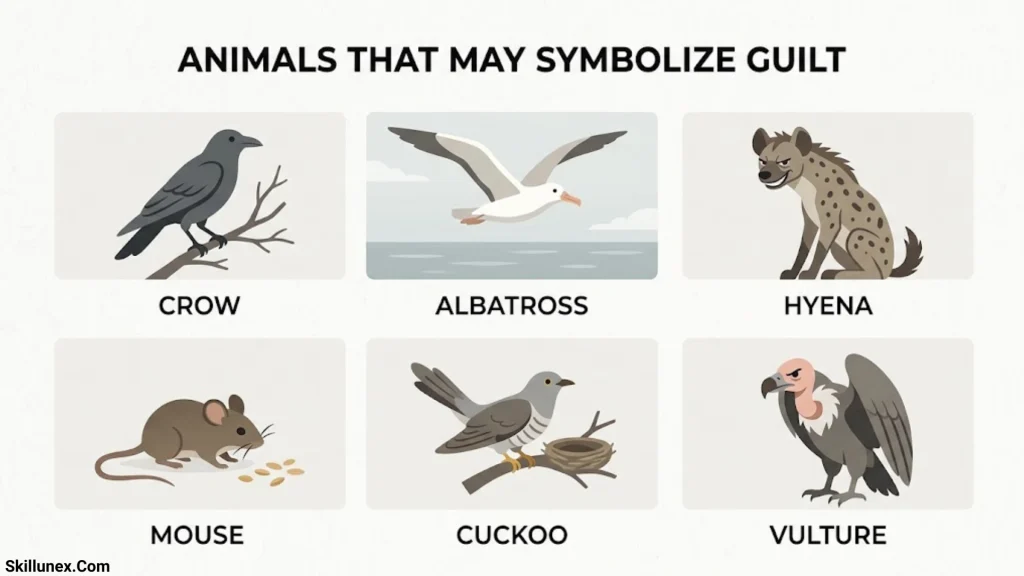
Animals can carry symbolic meanings in literature, mythology, folklore, and visual art. Their associations vary across cultures, so they should not be treated as universal representations of guilt.
Ravens and Crows
Ravens and crows are sometimes associated with death, ominous events, memory, or the consequences of wrongdoing. In a story about guilt, a crow repeatedly appearing near a character may create a sense that the past is following them.
Their presence alone does not prove that guilt is the intended meaning. The writer must establish a connection between the animal and the character’s actions.
Dogs
Dogs are often associated with loyalty, companionship, and trust. In a story about betrayal, a dog’s response to a character may emphasize the loss of trust or the character’s desire to make amends.
For example, a character who has betrayed a loyal companion may be reminded of their wrongdoing when they encounter a dog waiting faithfully for its owner.
Vultures
Vultures may symbolize decay, destruction, or the aftermath of a harmful event. They can create a sense of approaching consequences in stories where a character’s choices have caused serious damage.
Their symbolism is generally more indirect than that of bloodstains or burdens.
Moths
Moths may symbolize vulnerability, attraction to danger, or repeated destructive behavior in certain works. A writer might use a moth drawn toward a flame to represent a character who continues making harmful choices despite recognizing the risks.
This is a contextual interpretation, not a traditional universal symbol of guilt.
Colors That Can Represent Guilt
Color symbolism can establish mood and reinforce a story’s themes. The meaning of each color depends on its cultural associations and the way it is used in a particular scene.
| Color | Possible Symbolic Meaning | Example of Use |
| Black | Secrecy, fear, grief, uncertainty | A character hides in a dark room after wrongdoing |
| Red | Blood, danger, anger, responsibility | A red mark reminds a character of a violent event |
| Gray | Sadness, confusion, moral ambiguity | A gray landscape reflects a character’s uncertainty |
| White | Innocence, purity, cleansing | White clothing contrasts with a character’s secret |
| Blue | Sadness, reflection, emotional distance | A blue-lit room emphasizes loneliness |
| Brown | Decay, earthiness, heaviness | A neglected environment reflects damaged relationships |
| Green | Growth, renewal, envy, change | New growth suggests the possibility of personal change |
No color automatically means guilt. For example, white may symbolize innocence, but it can also emphasize emptiness or grief. Red can signify love or celebration as well as danger. The surrounding imagery determines the most reasonable interpretation.
Symbols of Guilt in Literature
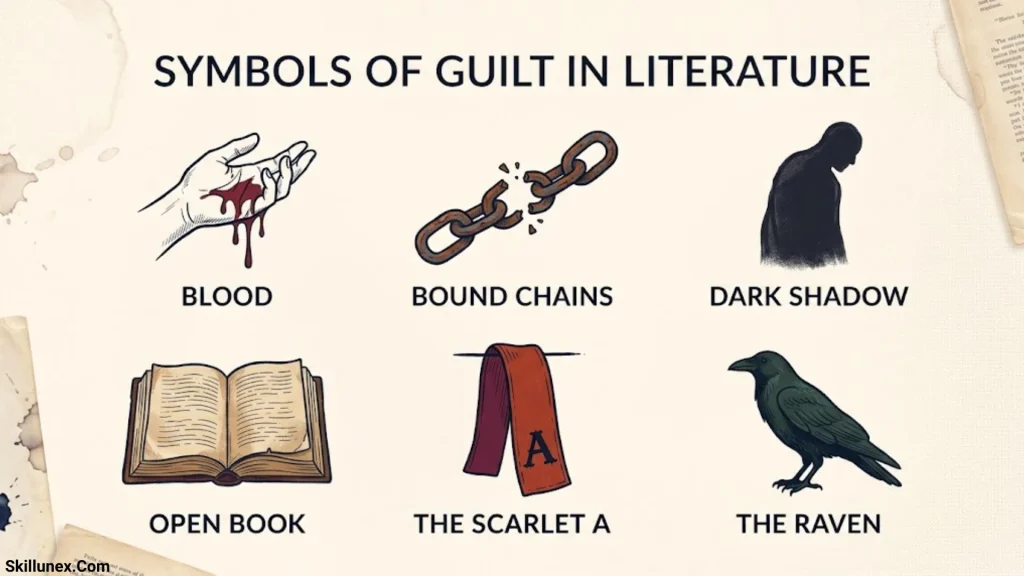
Writers use symbols to reveal internal conflict, develop themes, and show how characters respond to their actions. Three well-known literary works demonstrate different approaches to guilt.
Blood in William Shakespeare’s Macbeth
In William Shakespeare’s Macbeth, blood becomes a powerful symbol of murder, responsibility, and guilt. After Macbeth kills King Duncan, the blood associated with the crime becomes a reminder of the consequences of his ambition.
Lady Macbeth also becomes associated with the image of blood that cannot be washed away. Her attempts to cleanse her hands express the psychological burden of the crime and the impossibility of simply removing responsibility.
The blood imagery changes the meaning of an ordinary physical substance. It becomes a representation of a troubled conscience and the lasting effects of wrongdoing.
Key lesson: Blood can symbolize the connection between an action and its moral consequences.
The Letter in Nathaniel Hawthorne’s The Scarlet Letter
In Nathaniel Hawthorne’s The Scarlet Letter, the letter “A” is imposed on Hester Prynne as a visible sign of adultery and public punishment. It becomes a symbol of shame, social judgment, and the way a community labels an individual.
The novel also examines the difference between public punishment and private guilt. Characters respond differently to wrongdoing, and their outward appearances do not always reveal their internal struggles.
The letter’s meaning develops throughout the story, showing that symbols can change as characters and communities interpret them differently.
Key lesson: A symbol can represent both personal experience and society’s judgment of a person.
Psychological Guilt in Fyodor Dostoevsky’s Crime and Punishment
In Fyodor Dostoevsky’s Crime and Punishment, Raskolnikov experiences intense psychological conflict after committing murder. His isolation, anxiety, and repeated thoughts about the crime reveal the effects of his actions on his mind and relationships.
The novel relies heavily on psychological description rather than one single physical symbol. Memories, interactions, and changes in behavior help communicate the character’s growing inability to live comfortably with what he has done.
Key lesson: Guilt can be represented through behavior and mental conflict as well as physical objects.
Symbols of Guilt in Movies and Visual Art
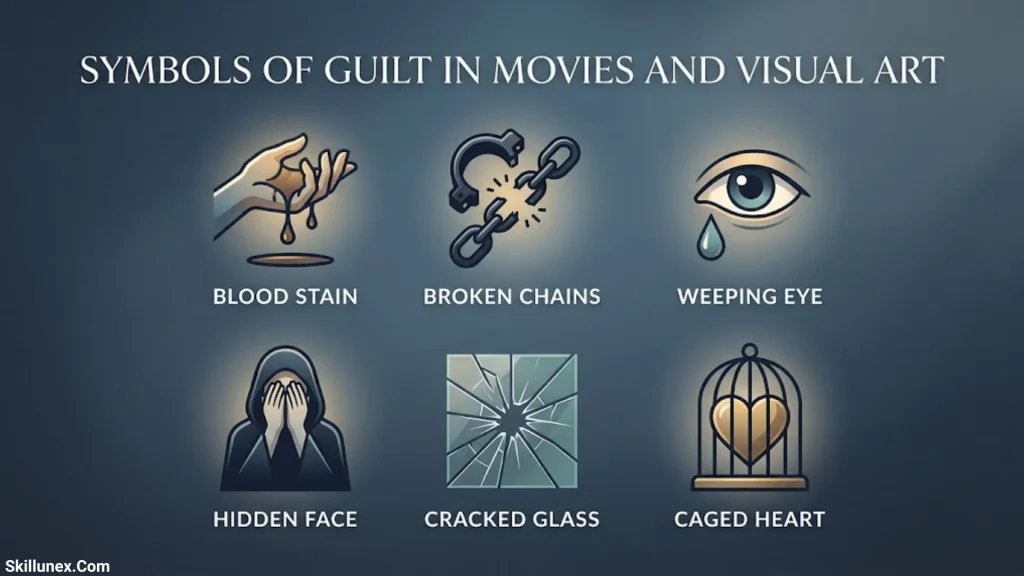
Film directors, painters, and illustrators can communicate guilt through images, composition, lighting, and repeated visual details.
Distorted Reflections
A character’s reflection in a mirror or window may suggest a conflict between their public identity and private actions. A distorted reflection can represent a damaged self-image or uncertainty about personal identity.
This technique works best when the character’s reaction to the reflection connects it to a specific event.
Low Lighting and Visual Isolation
A character shown alone in a dim room may appear emotionally distant or trapped by a secret. Shadows can conceal part of the face, visually reinforcing the idea that the character is hiding something.
However, lighting choices may also be used for suspense, atmosphere, or mystery. Their meaning should be considered alongside the story.
Recurring Objects
A photograph, letter, piece of jewelry, or damaged possession can become a visual reminder of a past action. Each time the object appears, viewers may recall the event associated with it.
For instance, a filmmaker may repeatedly show an empty chair after a character has caused a family separation. The chair becomes a symbol of absence and the consequences of the character’s behavior.
Color and Composition
A filmmaker may use red to recall a violent event or place a character at the edge of a frame to suggest isolation. An artist might position a figure behind bars or within a narrow space to suggest emotional confinement.
These visual techniques invite interpretation, but no single composition proves that a character feels guilty. The scene must support the connection.
The Difference Between Guilt and Shame
Guilt and shame are closely related, but they emphasize different aspects of a person’s experience. This distinction matters when interpreting symbols in literature or real-life situations.
| Feature | Guilt | Shame |
| Main focus | A specific action or failure | A negative judgment of oneself |
| Common thought | “I did something wrong.” | “I am a bad person.” |
| Typical response | Regret, confession, or making amends | Hiding, withdrawing, or fearing judgment |
| Possible symbols | Blood, stains, burdens, broken objects | Masks, exposure, darkness, distorted reflections |
| Main concern | Responsibility and consequences | Self worth and social acceptance |
| Possible constructive response | Acknowledging harm and repairing it | Developing self-understanding and reducing harmful self-judgment |
These emotions often overlap. A character may regret betraying a friend and also feel ashamed of being seen as untrustworthy. A single symbol can therefore represent both guilt and shame.
It is also important to remember that feeling guilty does not always mean someone is responsible for what happened. People may blame themselves for events outside their control. Symbolic interpretation should not replace careful consideration of the facts.
How to Identify Symbols of Guilt in a Story
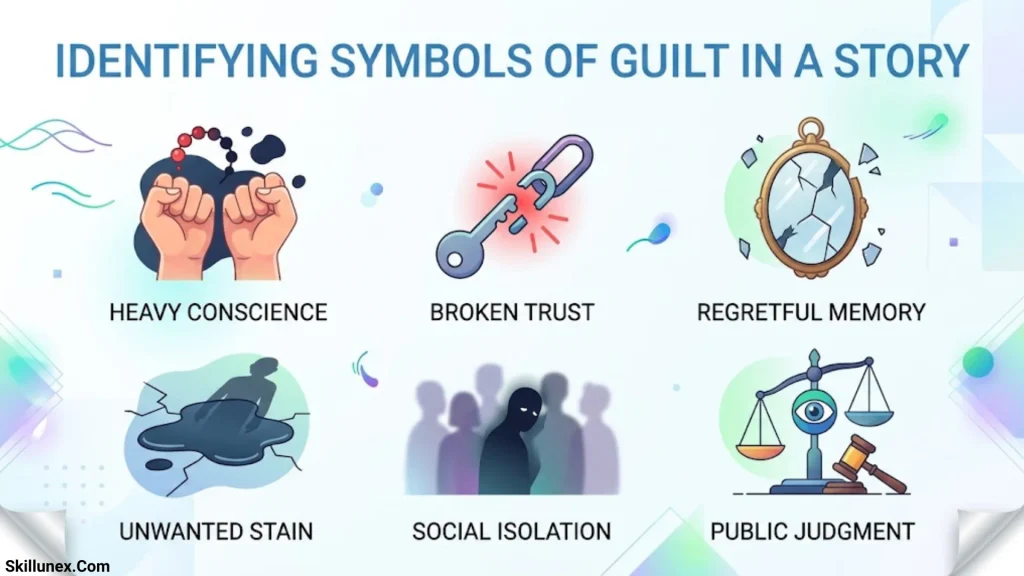
Identifying symbolism requires more than noticing a dark color or a sad image. Readers should connect the symbol to the character, the plot, and the themes of the work.
Look for Repeated Images
An object that appears at several important moments may carry symbolic meaning. If a character repeatedly encounters a bloodstain, a broken mirror, or a locked door after a harmful action, the repetition may connect the object to their conscience.
Examine the Character’s Reaction
Ask how the character responds to the symbol. Do they avoid it, hide it, destroy it, or return to it repeatedly? Their behavior may reveal what the object means to them.
Connect the Symbol to a Specific Event
A symbol often gains meaning through its relationship to an earlier action. A letter may represent guilt because it contains a confession, while an empty chair may represent the consequences of a betrayal.
Consider How the Meaning Changes
Symbols can develop throughout a story. A locked door may initially represent avoidance but later become a sign of the character’s willingness to confront the truth when they finally open it.
Consider Alternative Interpretations
A broken mirror might represent guilt, but it could also symbolize a fractured identity or a major life change. Strong analysis considers other plausible meanings before reaching a conclusion.
Support the Interpretation With Evidence
A clear literary analysis identifies the symbol, explains its possible meaning, and connects it to a scene, quotation, or character decision. Avoid claiming that an image always means guilt regardless of its context.
How Writers Can Use Symbols of Guilt Effectively
Writers can use symbolism to create emotional depth and help readers understand a character’s internal struggle. The most effective symbols are connected to the story rather than inserted simply because they are traditionally associated with guilt.
Introduce the Symbol During an Important Event
Give the object or image a clear connection to the character’s actions. A photograph taken before a betrayal, for example, may later become a reminder of the relationship that was damaged.
Repeat the Symbol With Purpose
Bring the symbol back at important moments. Repetition helps readers recognize the connection between the object and the character’s feelings.
Change the Character’s Reaction Over Time
At first, a character might ignore an object associated with wrongdoing. Later, they may hide it, destroy it, or finally face what it represents. The changing response can show the development of guilt.
Connect the Symbol to Consequences
Guilt becomes more meaningful when it affects choices and relationships. A symbol should help readers understand the consequences of wrongdoing, not simply make a scene appear sad or mysterious.
Avoid Overusing Familiar Images
Blood, darkness, and broken mirrors are recognizable symbols, but using them too frequently can make a story feel predictable. Personal objects, specific settings, and recurring actions may create a more original effect.
Use Symbolism Without Replacing Character Development
A symbol can suggest guilt, but it cannot fully explain a character’s motivations. Dialogue, decisions, relationships, and consequences should also help readers understand the character’s experience.
Can Symbols of Guilt Also Represent Forgiveness and Redemption?
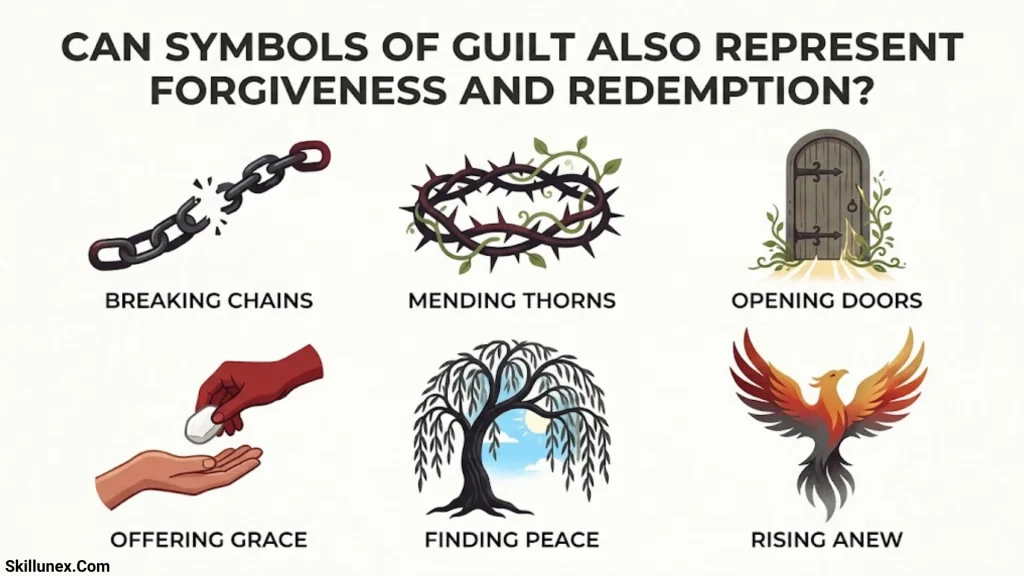
Yes. Some symbols can change from representing guilt to suggesting acceptance, forgiveness, or personal growth. This change can provide a meaningful ending to a story.
Clean Water and Washing
Washing can symbolize a desire to remove guilt or begin again. If a character moves from repeatedly washing their hands to openly acknowledging what happened, the action may show a shift from avoidance toward responsibility.
Repaired Objects
A repaired object may symbolize an attempt to restore trust. A broken cup that is carefully mended, for example, can represent a relationship that is damaged but not necessarily beyond repair.
The repair does not mean that the original harm has disappeared. It represents the effort required to address it.
New Growth
A plant beginning to grow after a period of neglect can symbolize hope, change, or a renewed commitment to doing better. This imagery works particularly well when the character takes practical steps to repair the consequences of their actions.
Light After Darkness
A character entering a bright room after a long period of isolation may symbolize greater honesty or willingness to confront the truth. The contrast between darkness and light can reflect a movement from concealment toward understanding.
These symbols are most convincing when the character’s actions support their hopeful meaning. Forgiveness and redemption generally involve more than feeling better; they may require honesty, accountability, and meaningful efforts to repair harm.
Frequently Asked Questions About Symbols of Guilt
What is the most common symbol of guilt?
Blood is one of the most recognizable symbols of guilt, particularly in literature involving violence or serious wrongdoing. Shadows, stains, burdens, ghosts, and broken mirrors are also commonly used to represent a troubled conscience.
What object represents guilt?
A bloodstained object, broken mirror, old letter, damaged photograph, or stopped watch can represent guilt. The best interpretation depends on the object’s connection to the character’s actions and memories.
What color symbolizes guilt?
Black, red, and gray may symbolize guilt, secrecy, danger, or emotional conflict. However, colors have different meanings across cultures and artistic traditions, so their significance depends on context.
What animal symbolizes guilt?
Crows, ravens, and other animals may be used to suggest ominous memories or the consequences of past actions. There is no single animal that universally represents guilt.
What symbolizes a guilty conscience?
A shadow that follows a character, a recurring stain, a haunting memory, or a heavy burden can symbolize a guilty conscience. These images suggest that a person cannot easily escape awareness of their actions.
How does blood symbolize guilt in Macbeth?
In Shakespeare’s Macbeth, blood represents the consequences of murder and the psychological burden associated with wrongdoing. The recurring imagery of blood emphasizes the difficulty of escaping responsibility for violent actions.
What is the difference between a symbol of guilt and a symbol of shame?
A symbol of guilt generally relates to responsibility for a specific action, while a symbol of shame may emphasize a person’s negative view of themselves or fear of social judgment. The two emotions can overlap.
Can an object symbolize guilt without the character saying anything?
Yes. Repeated attention to an object, changes in the character’s behavior, and the object’s connection to a past event can communicate guilt without direct explanation.
Can guilt be symbolized by nature?
Yes. Shadows, storms, rain, withered flowers, and neglected gardens may represent guilt, emotional turmoil, damaged relationships, or the possibility of renewal. Their meaning depends on how they are used in the work.
Can a symbol represent both guilt and hope?
Yes. Rain, repaired objects, new growth, and light after darkness can represent both the memory of wrongdoing and the possibility of change. The character’s actions help establish whether the symbol suggests genuine progress.
Why do writers use symbols of guilt?
Writers use symbols of guilt to reveal inner conflict, develop themes, create atmosphere, and show how past actions affect the present. Symbolism allows readers to interpret emotions and consequences without relying entirely on direct explanations.
How can I write a paragraph about a symbol of guilt?
Identify the symbol, explain its possible meaning, and connect it to a specific event or character reaction. For example, you might explain how a recurring bloodstain represents a character’s inability to escape responsibility for a violent act. Support your interpretation with evidence from the text.
Conclusion
Symbols of guilt provide a powerful way to represent remorse, responsibility, secrecy, and the lasting consequences of wrongdoing. Blood, shadows, broken mirrors, stains, chains, ghosts, and damaged objects can make a character’s internal conflict visible. In literature, works such as Macbeth, The Scarlet Letter, and Crime and Punishment demonstrate how guilt can be communicated through physical imagery, social symbols, and psychological experiences.
The meaning of a symbol depends on its context, cultural associations, and connection to the character’s choices. By examining recurring images, character reactions, and changes in symbolic meaning, readers can develop a deeper understanding of guilt and its effects. Symbols may also suggest a path toward forgiveness and redemption, but genuine change is most convincing when it is supported by honesty, accountability, and efforts to repair the harm caused.

Isla Kensington
I’m Isla Kensington, a writer with a passion for research, culture, nature, and the fascinating meanings behind everyday things. I enjoy taking topics that may seem simple at first and discovering the history, facts, and ideas that make them more interesting.
I write with readers in mind. My aim is to provide clear explanations, useful information, and interesting details without making a topic unnecessarily complicated.
I believe learning should feel like discovering something rather than simply reading facts. That philosophy guides the content I create and the topics I choose to explore.
## Books by Isla Kensington
* Symbols Around the World: A Guide to Meaning & Culture
* Nature’s Beautiful Places: Lakes, Landscapes & Natural Treasures