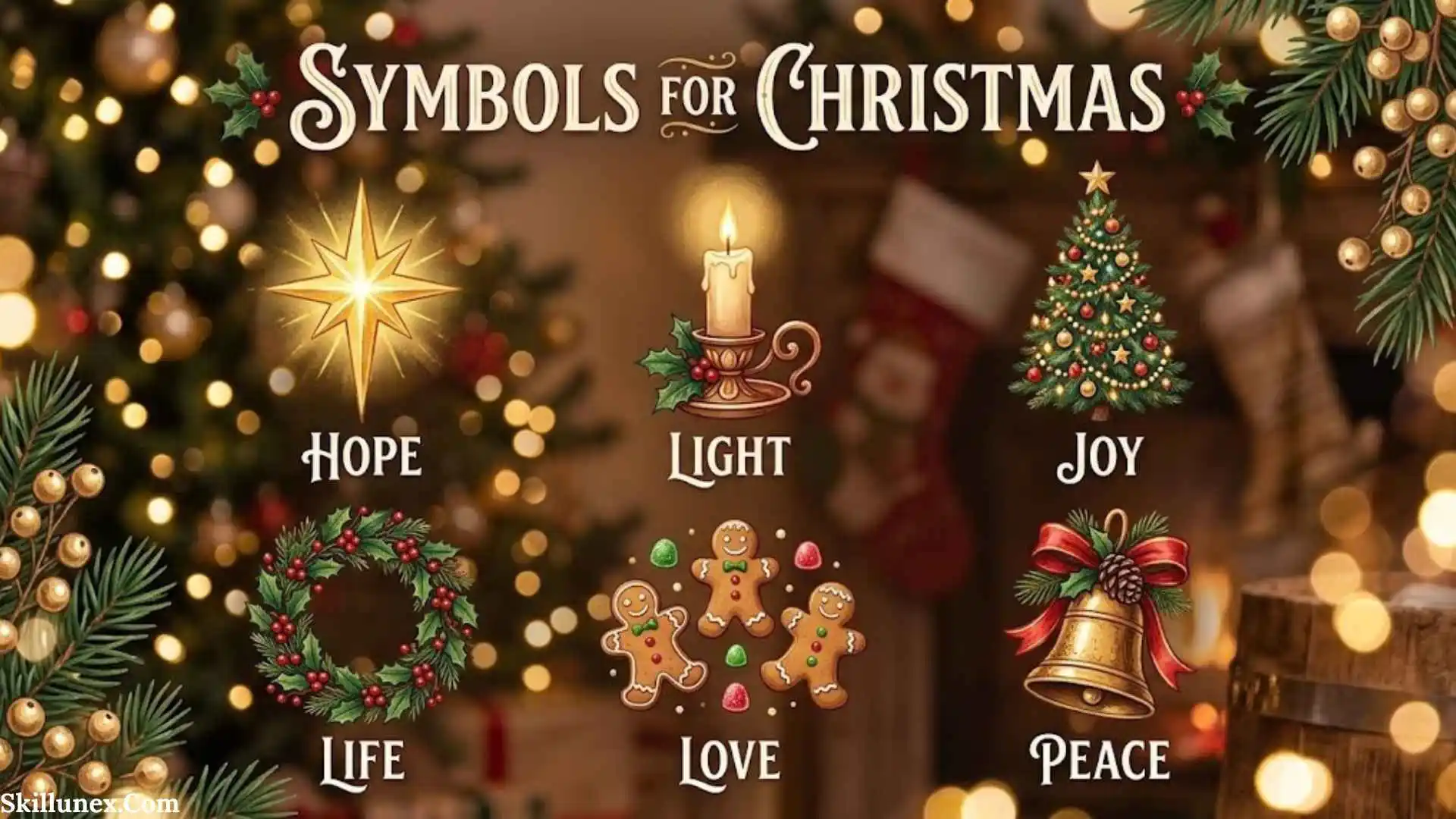
Christmas is a special time of year filled with beautiful decorations, meaningful traditions, and moments shared with family and friends. When you think about Christmas, you may picture a decorated tree, a shining star, colorful stockings, or a wreath hanging on the front door. These are some of the most popular symbols for Christmas, and each one has its own story and meaning. If you want to understand these symbols, decorate your home, or teach your children about Christmas traditions, this guide will help you discover what makes each symbol special.
I believe Christmas becomes even more meaningful when you understand the traditions behind its decorations. Some Christmas symbols remind Christians of the birth of Jesus Christ, while others represent hope, kindness, generosity, and togetherness. You may already use these symbols every year without knowing their history or cultural significance. Learning about them can help you choose decorations that reflect your beliefs, personal style, and the kind of holiday atmosphere you want to create.
In this article, you will explore popular Christmas symbols, their meanings, religious traditions, traditional colors, and uses in decorations and crafts. You will also find simple explanations for children, examples of Christmas symbols from around the world, and answers to common questions. Whether you celebrate Christmas for religious reasons, enjoy its cultural traditions, or simply love the festive season, you can use this guide to make your celebration more thoughtful and enjoyable.
What Are Christmas Symbols?
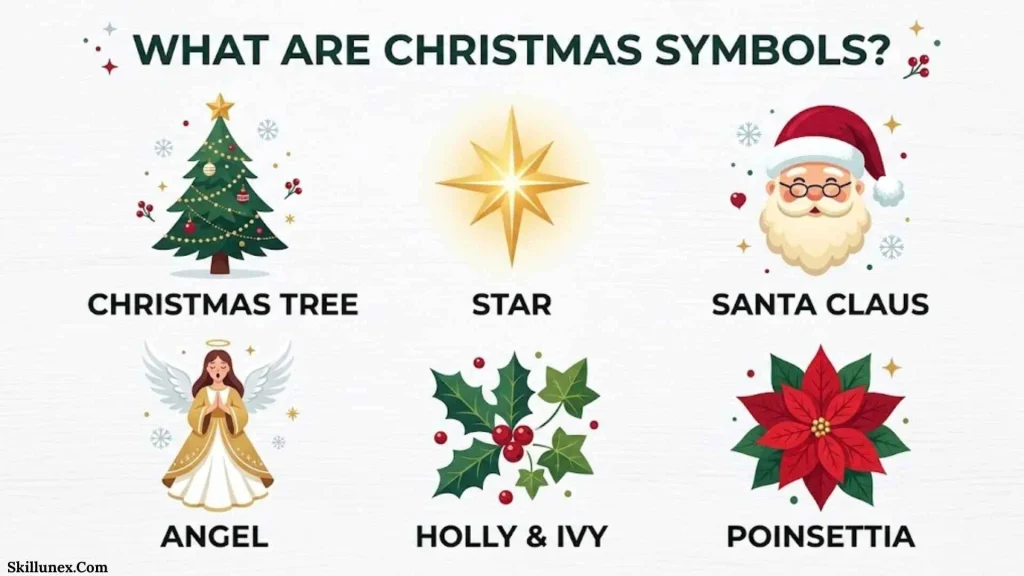
Christmas symbols are objects, images, colors, and characters that people associate with Christmas celebrations. You can see them in homes, churches, shopping centers, greeting cards, holiday advertisements, and public decorations. Each symbol communicates an idea or tradition, helping people express the spirit of the season.
Some symbols have direct connections to Christianity. For example, the Nativity scene represents the birth of Jesus Christ, while the Star of Bethlehem recalls the biblical story of the Wise Men. Other symbols, such as snowflakes, gingerbread figures, and Santa Claus, are associated with winter customs, folklore, and popular Christmas celebrations.
You do not have to celebrate Christmas in the same way as everyone else to appreciate its symbols. You can choose religious decorations, traditional ornaments, or simple festive designs that match your preferences. Understanding their meanings helps you decide which symbols are most suitable for your home, crafts, greeting cards, or holiday activities.
Most Popular Symbols for Christmas and Their Meanings
If you are looking for familiar Christmas symbols, several traditional decorations appear in celebrations around the world. Some have religious significance, while others are valued for their connection to family traditions and holiday fun.
1. Christmas Tree
The Christmas tree is one of the most recognizable symbols of the holiday season. Families decorate evergreen trees with lights, ornaments, ribbons, stars, and other festive decorations.
Because evergreen trees remain green throughout winter, they are commonly associated with life, hope, and renewal. The tradition of decorating Christmas trees became especially popular in German-speaking Europe before spreading to other countries.
You can decorate your Christmas tree with ornaments that reflect your family’s memories, favorite colors, or cultural traditions. For many people, decorating the tree is also an opportunity to spend time together and prepare for Christmas celebrations.
Meaning: Life, hope, renewal, family, and celebration.
2. Christmas Star
The Christmas star is associated with the Star of Bethlehem described in the Gospel of Matthew. According to the biblical account, the star guided the Wise Men toward Jesus.
For Christians, the star represents guidance, faith, and hope. You may recognize it as the decoration placed at the top of a Christmas tree or as a design used on greeting cards, windows, and ornaments.
If you want to create a traditional Christmas display, a star can be a simple yet meaningful choice. You can also use paper stars for handmade decorations or children’s craft projects.
Meaning: Guidance, faith, hope, and light.
3. Christmas Wreath
A Christmas wreath is a circular decoration commonly made from evergreen branches, leaves, berries, ribbons, or artificial greenery. People often hang wreaths on front doors, above fireplaces, or on interior walls.
The circular shape is frequently interpreted as a symbol of continuity and eternity, while evergreen branches are associated with life and renewal. A wreath can also make your home feel welcoming during the holiday season.
You can choose a traditional green wreath with red berries or create a modern design using gold ribbons, pine cones, or neutral colors. Remember that an ordinary decorative wreath and a Christian Advent wreath serve different purposes.
Meaning: Welcome, continuity, renewal, and celebration.
4. Christmas Bells
Christmas bells are popular decorations that appear on trees, wreaths, gift packages, and holiday arrangements. Their cheerful sound is also associated with Christmas music and church services.
In Christian traditions, church bells may announce worship services and celebrate the birth of Jesus. In general holiday celebrations, bells represent joy, excitement, and the welcoming spirit of Christmas.
You can use small bells to decorate handmade ornaments, gift tags, or table centerpieces. They are especially suitable if you want to add a traditional touch to your decorations.
Meaning: Joy, celebration, welcome, and festive announcements.
5. Christmas Candy Cane
The candy cane is a familiar Christmas treat recognized by its curved shape and red-and-white stripes. You can find candy canes in stockings, gift baskets, candy dishes, and Christmas tree decorations.
Candy canes are commonly associated with sweetness, generosity, and festive fun. Some Christian interpretations connect their shape and colors with religious ideas, but these explanations should not be treated as definitively established historical origins.
If you enjoy making Christmas treats, you can use candy canes to decorate desserts, prepare gift baskets, or create edible holiday gifts for friends and family.
Meaning: Sweetness, sharing, and holiday fun.
6. Christmas Angel
Angels have an important place in the Christian Christmas story. In the Gospel of Luke, an angel announces Jesus’ birth to shepherds and shares a message of joy.
Christmas angel decorations often feature wings, flowing robes, and a peaceful appearance. You may see them placed at the top of a tree, displayed on shelves, or included in Nativity scenes.
For some families, an angel also represents comfort, protection, or the memory of a loved one. These personal meanings can make an angel ornament especially meaningful.
Meaning: Divine messages, guidance, peace, and hope.
7. Christmas Stocking
Christmas stockings are decorative fabric bags or oversized socks traditionally filled with small gifts, sweets, and surprises. Children often hang them near a fireplace, beside a bed, or on a staircase before Christmas morning.
The custom is associated with stories about Saint Nicholas, a historical Christian bishop whose traditions helped influence the modern Santa Claus figure.
You can personalize stockings with names, favorite colors, or handmade decorations. For many families, opening stockings is a fun way to begin Christmas morning.
Meaning: Generosity, gifts, anticipation, and family traditions.
8. Nativity Scene
The Nativity scene represents the birth of Jesus Christ and is one of the most important religious symbols of Christmas. It commonly includes Mary, Joseph, baby Jesus in a manger, shepherds, and animals.
Some Nativity displays also include the Wise Men, although the biblical accounts describe different details surrounding Jesus’ birth. Traditional displays often combine these elements into one scene.
If you celebrate Christmas as a Christian holiday, a Nativity scene can help you focus on the religious meaning of the occasion. Churches and families often display one during the Christmas season.
Meaning: The birth of Jesus, humility, faith, and divine love.
9. Christmas Lights
Christmas lights brighten trees, homes, streets, gardens, and public spaces. They are among the most popular decorations because they create a warm and welcoming atmosphere.
In Christian traditions, light may symbolize Jesus as the light of the world. For other people, Christmas lights represent hope, happiness, warmth, and the beauty of the holiday season.
You can choose warm white lights for a traditional appearance or colorful lights for a playful display. If you decorate outdoors, make sure your lights are suitable for outdoor use.
Meaning: Hope, warmth, joy, and spiritual light.
10. Christmas Candle
Candles are used in many religious ceremonies and seasonal celebrations. During Christmas, they can symbolize hope, peace, light, and reflection.
In Christian traditions, candles appear in church services and Advent celebrations. Some families also use them during prayer or quiet moments together.
If you want the appearance of candlelight without an open flame, you can choose battery-operated candles for your decorations.
Meaning: Light, peace, hope, reflection, and faith.
Christian Christmas Symbols and Their Spiritual Meanings
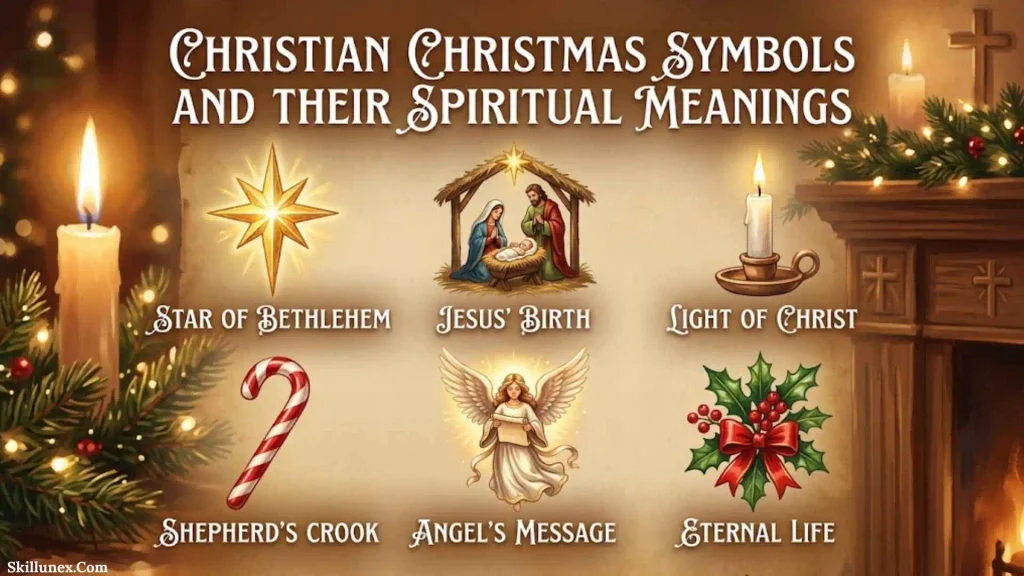
Christian Christmas symbols help people remember the biblical story of Jesus’ birth and reflect on the religious meaning of the holiday. If you want to understand the spiritual side of Christmas, these symbols provide a useful starting point.
The Cross
The cross is the central symbol of Christianity, representing the crucifixion and sacrifice of Jesus Christ. Although it is used throughout the Christian year rather than exclusively at Christmas, you may see it in church decorations and Christian holiday artwork.
Its presence during Christmas connects the celebration of Jesus’ birth with the broader Christian story of his life, death, and resurrection.
The Three Wise Men
The Three Wise Men, also called the Magi, appear in the Gospel of Matthew. They follow a star and bring Jesus gifts of gold, frankincense, and myrrh.
In Christian tradition, gold is often associated with kingship, frankincense with worship or divinity, and myrrh with mortality and burial. These are traditional interpretations of the gifts.
You may see the Wise Men in Nativity displays, Christmas artwork, and celebrations associated with Epiphany.
The Manger
A manger is a feeding trough for animals. The Gospel of Luke describes Jesus being placed in a manger after his birth, making it an important feature of traditional Nativity scenes.
The manager is commonly associated with humility and simplicity. It reminds Christians that the Christmas story begins in a modest setting rather than a royal palace.
The Dove
The dove is widely recognized as a Christian symbol of the Holy Spirit and is also associated with peace. Although it is not a central object in the biblical Nativity account, you may see it in Christmas artwork and religious decorations.
A dove can also be a meaningful choice for a greeting card or decoration when you want to share a message of peace and goodwill.
The Advent Wreath
The Advent wreath is used in many Christian traditions during the weeks leading up to Christmas. It usually contains evergreen branches and four candles, although some traditions add a fifth candle.
The candles are lit at different points during Advent. Many communities associate them with hope, peace, joy, and love, although the specific colors and themes vary.
If you attend an Advent service or follow this tradition at home, the wreath can help you mark the weeks leading up to Christmas.
Traditional Christmas Symbols From Nature
Nature provides many familiar Christmas decorations. Evergreen plants, berries, pine cones, and mistletoe help create the traditional appearance of the holiday season.
Holly and Ivy
Holly is known for its glossy green leaves and bright red berries, while ivy has trailing green leaves that work well in garlands and wreaths.
Both plants have a long history in European winter decorations. Because they can remain green during winter, they are often associated with life and continuity.
Some Christian interpretations connect holly’s pointed leaves and red berries with the suffering of Jesus. However, these are symbolic interpretations rather than the only historical explanation for their use.
Mistletoe
Mistletoe is associated with the Christmas custom of kissing beneath a hanging sprig. This practice developed through European folklore and became a popular holiday tradition.
Today, mistletoe is often associated with affection, romance, and playful celebrations. If you want to use real mistletoe in your home, keep it away from children and pets because its berries and other parts can be toxic if eaten.
Pine Cones and Evergreen Branches
Pine cones and evergreen branches are common decorations for wreaths, garlands, centerpieces, and handmade ornaments.
Evergreen branches are associated with life and renewal because they remain green during winter. Pine cones are mainly used for their natural appearance and seasonal charm rather than one fixed Christmas meaning.
You can combine pine cones with ribbons, artificial berries, or small lights to create simple decorations for your home.
Snowflakes
Snowflakes are popular in winter-themed Christmas decorations, particularly in places where snowfall is common during December.
They represent winter beauty, seasonal weather, and the delicate patterns found in nature. Some people also use snowflakes to represent individuality because snow crystals can develop different shapes.
You can use snowflake designs on greeting cards, windows, wrapping paper, and handmade ornaments. However, snow is not part of every Christmas celebration, especially in countries where December falls during summer.
Christmas Symbols for Kids and Their Simple Meanings
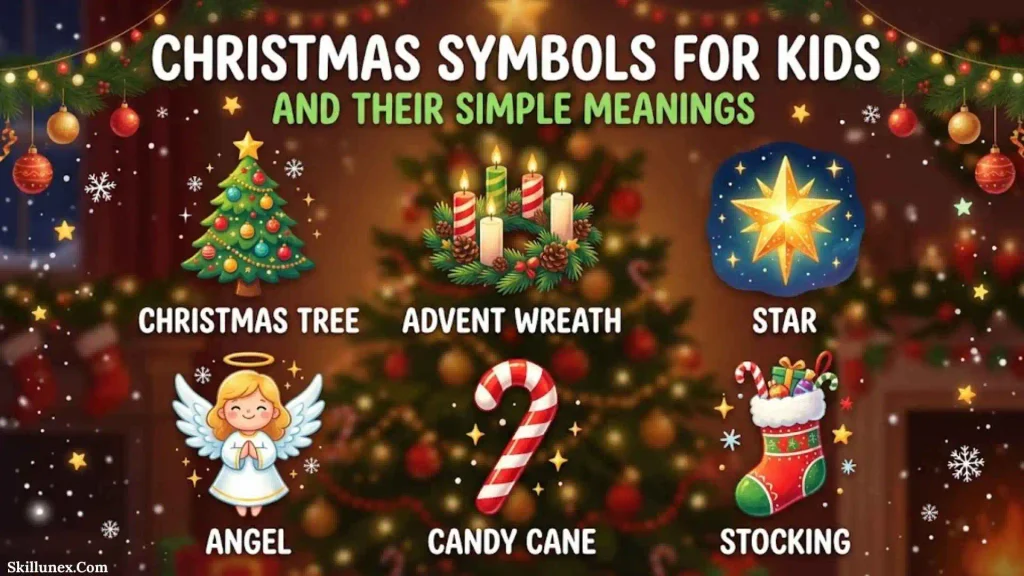
If you want to teach children about Christmas, symbols offer an easy way to introduce holiday traditions. You can use pictures, stories, coloring pages, and crafts to help children understand what each symbol represents.
Here are some simple explanations you can share with young learners:
- Christmas tree: A decorated tree that brings families together.
- Star: A symbol that reminds Christians of the Star of Bethlehem.
- Santa Claus: A traditional Christmas character associated with giving presents.
- Reindeer: Animals connected with Santa’s journey in popular Christmas stories.
- Snowman: A fun winter figure made from snow.
- Candy cane: A sweet striped treat enjoyed during the holidays.
- Stocking: A decoration used for small gifts and surprises.
- Christmas bell: A cheerful symbol associated with celebrations.
- Christmas gift: A way to show kindness and appreciation.
- Angel: A heavenly messenger in the Christian Christmas story.
- Snowflake: A beautiful shape formed from ice crystals.
- Gingerbread person: A festive cookie often decorated with icing.
- Wreath: A circular decoration used to welcome guests.
- Candle: A symbol of light and hope.
- Nativity scene: A display showing the birth of Jesus.
Easy Christmas Symbol Activities for Children
You can turn these symbols into enjoyable learning activities at home or in the classroom.
- Christmas coloring: Give children pictures of trees, stars, bells, and stockings to color.
- Symbol matching: Ask children to match each picture with its meaning.
- Paper ornaments: Help them make stars, snowflakes, and Christmas trees from paper.
- Christmas storytelling: Use Nativity figures to explain the biblical story in an age-appropriate way.
- Favorite symbol discussion: Invite children to choose their favorite symbol and explain why they like it.
These activities encourage creativity and help children explore the cultural or religious traditions that matter to their families.
Christmas Symbols and Their Traditional Colors
Christmas colors help create the familiar look of the holiday season. Red, green, gold, white, and silver appear in ornaments, ribbons, lights, wrapping paper, and holiday clothing.
Red Christmas Symbols
Red is commonly associated with warmth, love, generosity, and celebration. You can see it in Santa Claus clothing, holly berries, candy canes, stockings, and Christmas ribbons.
In Christian settings, red may also be connected with the sacrifice of Jesus, depending on the context.
Green Christmas Symbols
Green is associated with evergreen plants that remain green during winter. This connection makes it a popular color for symbols of life and renewal.
Christmas trees, holly, ivy, wreaths, and garlands are familiar examples of green holiday decorations.
Gold Christmas Symbols
Gold is often associated with light, celebration, precious gifts, and royalty. In Christian interpretations, it may recall the gold presented to Jesus by one of the Wise Men.
Gold stars, bells, ribbons, and ornaments add brightness to Christmas decorations.
White Christmas Symbols
White is commonly associated with snow, peace, purity, and simplicity. White candles, snowflakes, angels, and ornaments are popular in winter-themed decorations.
If you live in a place where Christmas takes place during warm weather, you can still use white decorations without connecting them to snow.
Silver Christmas Symbols
Silver is often used to create a sparkling winter appearance. Silver stars, bells, snowflakes, and tree ornaments work well with white, blue, and green decorations.
You can choose traditional colors or create your own combination to suit your home and personal style.
Christmas Symbols for Decorations, Crafts, and Greeting Cards
Christmas symbols give you plenty of ways to express your creativity. You can use them for home decorations, handmade gifts, greeting cards, classroom projects, and festive table settings.
Christmas Symbols for Home Decorations
You can use wreaths, evergreen garlands, stars, bells, and lights to create a traditional Christmas atmosphere. A Nativity scene may be suitable if you want to highlight the religious meaning of Christmas, while snowflakes and gift boxes work well for general holiday decorations.
To make your decorations look coordinated, choose two or three main colors and repeat them throughout the room. You can also combine natural materials, such as pine cones and evergreen branches, with ribbons or ornaments.
Christmas Symbols for Greeting Cards
Stars, angels, wreaths, candles, and Christmas trees are popular designs for holiday greeting cards. Choose a symbol that matches your message and the person receiving the card.
For a religious greeting, you might choose a Nativity scene or Star of Bethlehem. For a general seasonal greeting, a tree, snowflake, or gift illustration may be more appropriate.
Here are a few messages you can use:
- Wishing you peace, joy, and happiness this Christmas.
- May your holiday season be filled with love and warmth.
- Sending you Christmas cheer and beautiful memories.
- Wishing you and your family a peaceful holiday season.
- May your Christmas bring kindness, laughter, and togetherness.
Christmas Symbols for DIY Crafts
You can make Christmas ornaments from paper, felt, cardboard, and other craft materials. Stars, trees, candy canes, bells, and snowflakes are particularly suitable for beginner projects.
Try making a paper star garland, decorating pine cones, creating personalized gift tags, or designing a handmade wreath. If children join your project, choose age-appropriate materials and supervise the use of scissors or other tools.
Christmas Symbols Around the World
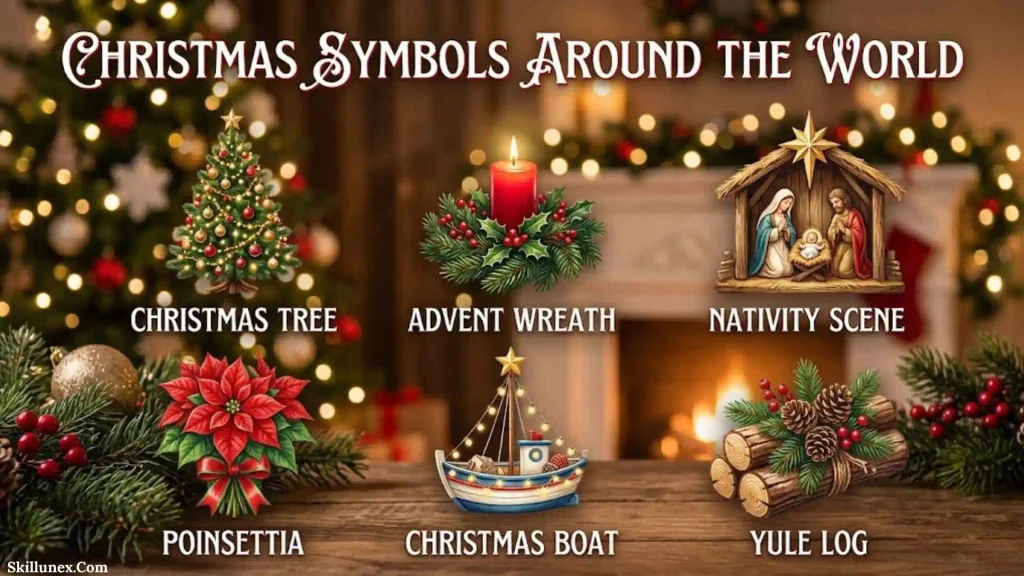
Christmas traditions differ across countries, communities, and families. Many celebrations include trees, lights, stars, and gifts, but local customs give the holiday its own character.
Christmas Symbols in the United States
Christmas trees, Santa Claus, stockings, wreaths, and outdoor light displays are widely recognized in the United States.
Many families decorate their homes, exchange gifts, bake seasonal treats, and collect ornaments over the years. Christian households may also display Nativity scenes or attend Christmas church services.
Christmas Symbols in the United Kingdom
Christmas trees, holly, ivy, wreaths, greeting cards, and Christmas crackers are familiar parts of British holiday celebrations.
Christmas crackers are decorative paper tubes that people pull apart during festive meals. They often contain small gifts, paper crowns, and jokes, making them a distinctive part of many British Christmas gatherings.
Christmas Symbols in Germany
Germany is associated with Christmas markets, Advent calendars, decorated trees, and traditional ornaments.
Advent calendars help people count the days leading up to Christmas, often using small doors or compartments containing pictures, chocolates, or other surprises. Christmas markets also feature seasonal crafts, decorations, food, and community activities.
Christmas Symbols in Mexico
Nativity scenes and Las Posadas are important Christmas traditions in many Mexican communities.
Las Posadas takes place over nine evenings before Christmas and recalls Mary and Joseph’s search for lodging. Celebrations may include processions, songs, food, and gatherings, although customs vary between communities and households.
Christmas Symbols in the Philippines
The parol, a star-shaped lantern, is one of the most recognizable Christmas decorations in the Philippines. Its design is associated with the Star of Bethlehem.
You can see parols displayed in homes, streets, churches, and public spaces. They may be made using traditional materials or modern illuminated designs.
Christmas Symbols in Italy
Nativity scenes, known as presepi, have a longstanding place in Italian Christmas traditions.
These displays may include the Holy Family, shepherds, animals, buildings, and detailed village scenes. Some families keep the tradition as part of their preparation for Christmas.
Christmas Symbols in Australia
Christmas takes place during summer in Australia, so celebrations may include outdoor gatherings and warm-weather activities.
Christmas trees, Santa Claus, lights, and traditional decorations remain popular. Some people also use beach-themed designs to reflect the local season and environment.
These examples show how Christmas symbols can adapt to different climates, cultures, and family traditions.
Modern Christmas Symbols and Emoji Meanings
If you enjoy sharing holiday greetings online, Christmas emojis can help you express festive feelings in a simple way. You can use them in social media captions, messages, invitations, and digital greeting cards.
| Symbol | Emoji | Common meaning |
| Christmas tree | 🎄 | Christmas celebrations and decorations |
| Star | ⭐ | Hope, brightness, and festive wishes |
| Gift | 🎁 | Presents and generosity |
| Snowflake | ❄️ | Winter and snowy weather |
| Bell | 🔔 | Celebration and Christmas music |
| Candle | 🕯️ | Light, peace, and reflection |
| Santa Claus | 🎅 | Gift-giving and holiday fun |
| Snowman | ☃️ | Winter activities |
| Sparkles | ✨ | Festive excitement |
| Heart | ❤️ | Love, care, and family |
| Dove | 🕊️ | Peace and goodwill |
| Cookie | 🍪 | Christmas baking and treats |
You can combine these emojis to create a friendly holiday message, such as: “Wishing you a Christmas filled with love, laughter, and beautiful memories 🎄✨❤️.”
If you are sharing a religious greeting, you can focus your message on faith, hope, and peace. For a general holiday post, you might choose trees, gifts, snowflakes, and festive lights.
Christmas Symbols: Quick Reference Table
If you need a quick explanation for a school assignment, blog post, craft project, or decoration, this table summarizes the main symbols and their common associations.
| Christmas symbol | Common meaning | Typical use |
| Christmas tree | Life, hope, and renewal | Home and public decorations |
| Star of Bethlehem | Guidance and faith | Tree toppers and Nativity displays |
| Wreath | Welcome and continuity | Doors and walls |
| Angel | Divine messages and peace | Ornaments and Nativity scenes |
| Nativity scene | Birth of Jesus | Churches and religious homes |
| Three Wise Men | Biblical visitors and gifts | Nativity displays |
| Manger | Humility and Jesus’ birth | Nativity scenes |
| Cross | Christian faith and sacrifice | Churches and religious artwork |
| Bells | Joy and celebration | Ornaments and music |
| Candy cane | Sweetness and festive fun | Treats and tree decorations |
| Stocking | Giving and surprises | Christmas morning traditions |
| Candle | Light and hope | Services and decorations |
| Holly | Evergreen life and winter tradition | Wreaths and garlands |
| Mistletoe | Affection and romance | Hanging decorations |
| Snowflake | Winter beauty | Crafts and ornaments |
| Santa Claus | Gift-giving and folklore | Stories and decorations |
| Reindeer | Santa’s journey | Children’s stories and ornaments |
| Gingerbread person | Holiday baking | Cookies and crafts |
| Parol | Star of Bethlehem | Filipino Christmas celebrations |
| Advent wreath | Preparation for Christmas | Christian worship |
Frequently Asked Questions About Symbols for Christmas
What is the main symbol of Christmas?
The Christmas tree is one of the most widely recognized symbols of Christmas. For Christians, the Nativity scene is especially important because it represents the birth of Jesus Christ. The main symbol depends on whether you mean popular holiday decorations or religious symbolism.
What are the five main symbols of Christmas?
Five familiar symbols are the Christmas tree, Christmas star, wreath, angel, and Nativity scene. They represent different ideas, including life, guidance, welcome, divine messages, and the birth of Jesus.
What does the Christmas star symbolize?
The Christmas star represents the Star of Bethlehem in the biblical account of the Wise Men visiting Jesus. It is commonly associated with guidance, faith, hope, and divine direction.
What do red and green symbolize at Christmas?
Red is often associated with love, warmth, generosity, and celebration. Green is associated with evergreen plants, life, and renewal. These are common interpretations rather than universal rules.
Is the Christmas tree a religious symbol?
The Christmas tree has both cultural and religious associations. Some Christians interpret it as a symbol of hope or everlasting life, while many people use it as a general holiday decoration and a focus for family traditions.
What Christmas symbols represent peace?
The dove is widely recognized as a symbol of peace. Candles, angels, and the phrase “peace on earth” are also associated with peaceful Christmas celebrations.
What are the most popular Christmas symbols for kids?
Christmas trees, stars, candy canes, stockings, snowflakes, bells, snowmen, gifts, and Santa Claus are popular choices for children’s activities. You can use them for coloring pages, crafts, storytelling, and matching games.
What are some traditional Christian Christmas symbols?
Traditional Christian Christmas symbols include the Nativity scene, Star of Bethlehem, manger, angels, Wise Men, cross, candles, and Advent wreath. Their specific meanings may vary across Christian denominations and traditions.
Are all Christmas symbols religious?
No. Some symbols have direct Christian connections, while others come from folklore, winter customs, popular stories, and modern celebrations. Santa Claus, snowmen, gingerbread figures, and decorative lights are commonly used in secular celebrations.
Why are evergreen plants used for Christmas decorations?
Evergreen plants remain green throughout winter, making them natural decorations during the season. They are commonly associated with life and renewal, and their use reflects a combination of older winter customs and later Christmas traditions.
What is the difference between a Christmas wreath and an Advent wreath?
A Christmas wreath is generally a decorative circle made from greenery or other seasonal materials. An Advent wreath is used in many Christian traditions during the weeks before Christmas and usually includes candles lit according to a particular schedule.
What is a parrot in Christmas traditions?
A parol is a star-shaped lantern associated with Christmas in the Philippines. It represents the Star of Bethlehem and is displayed in homes, streets, churches, and public spaces.
Can you use Christmas symbols in nonreligious decorations?
Yes. You can use trees, wreaths, bells, stars, snowflakes, lights, and gift boxes in secular holiday decorations. Choose symbols that reflect your personal preferences, traditions, and the atmosphere you want to create.
Conclusion
Symbols for Christmas bring together the religious meaning, cultural history, and personal traditions that make the holiday special. From the Christmas tree and Star of Bethlehem to angels, wreaths, candles, bells, and stockings, each symbol has its own associations and uses. Some remind Christians of the birth of Jesus Christ, while others represent hope, generosity, winter beauty, and family togetherness. When you understand these meanings, you can appreciate the traditions behind familiar decorations and decide which symbols are most meaningful to you.
As you prepare for Christmas, choose decorations and activities that reflect your beliefs, interests, and family traditions. You can display a Nativity scene to highlight the religious story, use evergreen branches and wreaths for a traditional atmosphere, or create festive crafts with stars, snowflakes, and colorful ornaments. Whether you are decorating your home, teaching children, preparing greeting cards, or sharing holiday messages online, Christmas symbols give you many ways to celebrate with creativity, kindness, and appreciation for the traditions that bring people together.

Caleb Thornton
I’m Caleb Thornton, a researcher and content writer who loves exploring fascinating subjects and sharing what I learn with readers. My interests include natural places, lakes, symbols, culture, history, and the stories that make ordinary topics more meaningful.
When I write an article, I try to go beyond a basic answer. I look for useful facts, relevant context, and details that can help readers understand the subject more completely.
My purpose is simple: I want every article I contribute to provide genuine value, satisfy the reader’s curiosity, and make discovering new information enjoyable.
## Books by Caleb Thornton
* Symbols & Meanings: Exploring the Signs We See Every Day
* Lakes of the World: Nature, Beauty & Exploration