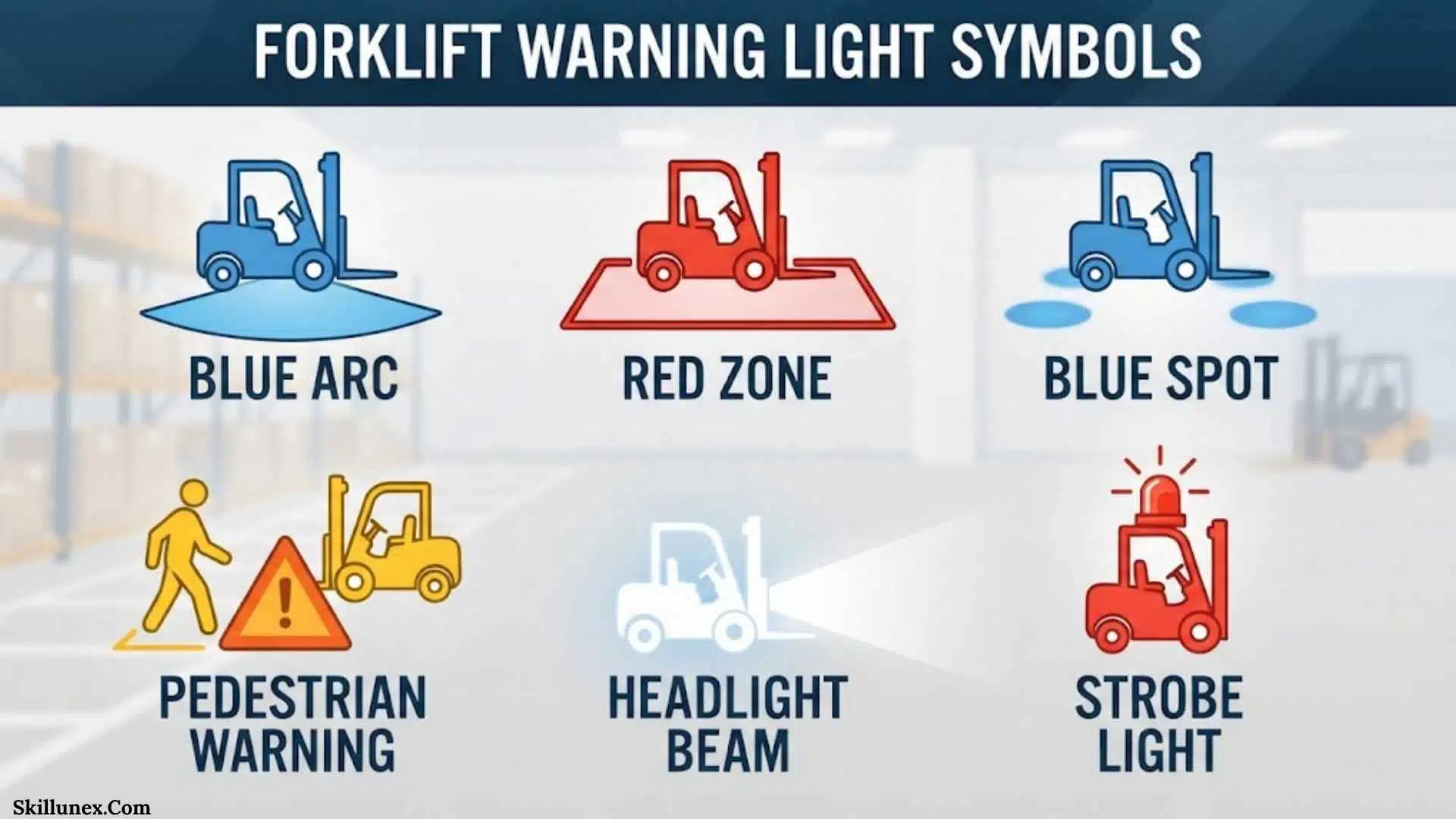
Forklift warning light symbols help operators understand what is happening with a machine and identify conditions that may require attention. From battery and engine warnings to brake, hydraulic, and temperature indicators, these symbols provide important information through the forklift’s dashboard or digital display.
Knowing what forklift warning light symbols mean can help operators respond to problems quickly, avoid unnecessary equipment damage, and maintain a safer workplace. However, warning symbols are not completely standardized. Their appearance and meaning can vary between forklift manufacturers and models.
This guide explains the most common forklift warning lights, what their colors generally mean, how electric and internal-combustion forklift indicators differ, and what to do when a warning appears.
What Are Forklift Warning Light Symbols?
Forklift warning light symbols are visual indicators found on the instrument panel or display of a forklift. They communicate information about the machine’s operating condition, safety systems, maintenance requirements, or potential faults.
Depending on the forklift, the dashboard may show indicators for:
- Engine oil pressure
- Engine temperature
- Battery charge
- Charging system
- Fuel level
- Brakes
- Parking brake
- Hydraulic system
- Transmission
- Steering
- Seat belt
- Operator presence
- Engine malfunction
- Glow plugs
- Emissions systems
- Maintenance requirements
- General system faults
Some newer forklifts use digital displays that combine symbols with text messages and diagnostic codes. These displays can provide more specific information than a traditional warning lamp.
Why Are Forklift Warning Symbols Important?
Warning indicators give operators an early indication that a machine condition needs attention. Recognizing a warning quickly can help prevent a minor issue from becoming a major mechanical failure.
They can also alert an operator to problems involving safety-critical systems such as brakes, steering, hydraulics, or lifting functions.
However, a warning light should never replace a proper pre-operation inspection or the manufacturer’s operating instructions.
Are Forklift Warning Symbols Universal?
No. There is no single dashboard design that applies to every forklift.
Manufacturers such as Toyota, Crown, Hyster, Yale, Komatsu, Mitsubishi, Linde, and Clark may use different symbols, colors, displays, and fault codes. Even two forklifts from the same manufacturer can have different indicators depending on their model and powertrain.
For this reason, the operator’s manual for the specific forklift should always be treated as the primary reference.
Forklift Warning Light Colors and Their Meanings
The color of an indicator can provide a general clue about its importance. However, color meanings can vary by manufacturer, so the symbol itself and the accompanying message are more important than color alone.
Green Forklift Lights
Green generally indicates a normal operating condition or that a particular function is active.
A green indicator is typically informational rather than a warning. For example, it may confirm that a function has been selected or activated.
Yellow or Amber Forklift Lights
Yellow or amber generally indicates caution or a condition requiring attention.
It can be associated with:
- A maintenance requirement
- A system fault
- A low fluid or battery condition
- A diagnostic alert
- An operating condition that needs monitoring
Whether the forklift can continue operating depends on the specific warning and manufacturer’s instructions.
Red Forklift Lights
Red commonly indicates a serious warning or potentially critical condition.
Red indicators may relate to systems such as:
- Engine oil pressure
- Engine temperature
- Brakes
- Charging system
- Hydraulic systems
- Other safety-critical components
If a serious red warning appears, the operator should safely stop the forklift when required and follow the manufacturer’s instructions.
Blue Forklift Lights
Blue indicators may identify a particular operating function or system. There is no universal meaning for every blue forklift indicator.
External blue safety lights are also used on some forklifts to alert pedestrians, so a blue light mounted outside the machine should not automatically be confused with a dashboard warning.
Common Forklift Warning Light Symbols and Their Meanings
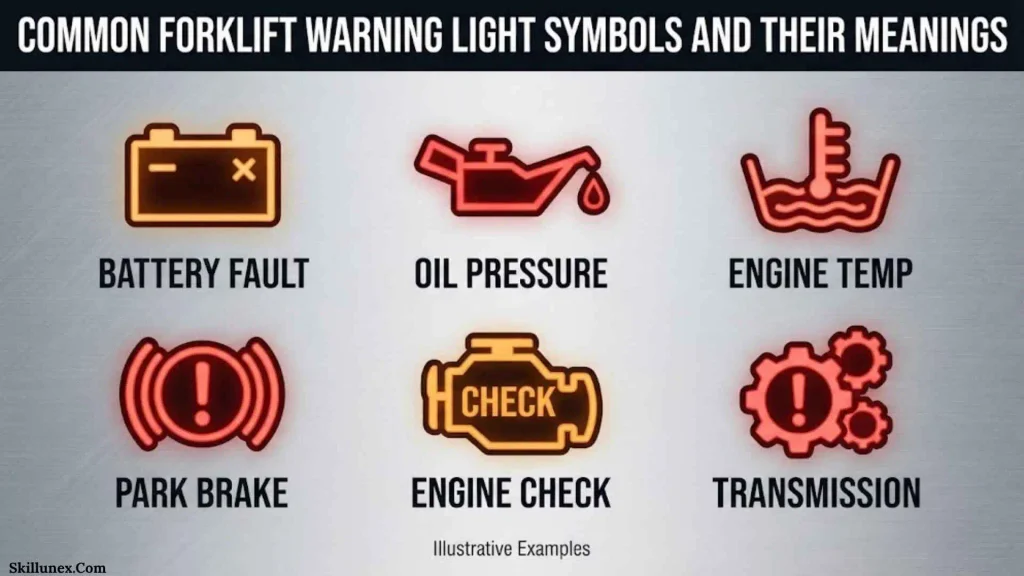
Understanding the most common symbols can make it easier to recognize potential problems quickly.
Engine Oil Pressure Symbol
The engine oil pressure symbol commonly resembles an oil can with a drop of oil.
It generally indicates low engine oil pressure. Possible causes include insufficient oil, an oil leak, a blocked filter, an oil-pump problem, or another engine fault.
If the oil-pressure warning appears while the engine is running, safely stop the forklift and follow the manufacturer’s instructions. Continuing to operate an engine with inadequate oil pressure can result in serious damage.
Engine Temperature Symbol
This symbol commonly resembles a thermometer, sometimes positioned over wavy lines.
It generally indicates that engine coolant temperature is too high or that the engine may be overheating.
Possible causes include:
- Low coolant
- Restricted airflow
- A blocked radiator
- Cooling-system problems
- Fan problems
- Excessive engine load
- A faulty temperature sensor
Safely stop the forklift and allow it to cool according to the manufacturer’s procedure. Do not open a hot pressurized cooling system because hot coolant can cause serious burns.
Battery Warning Symbol
The battery symbol generally looks like a rectangular battery with positive and negative terminals.
On an internal-combustion forklift, it may indicate a problem with the battery or charging system.
On an electric forklift, a battery-related indicator can provide information about battery charge, temperature, charging status, or another battery-management condition.
The exact meaning depends on the forklift model.
Low Battery Charge Symbol
Electric forklifts commonly display a battery gauge or low-charge warning.
This indicator means the battery’s state of charge has reached a level where charging or battery replacement may be required.
Some forklifts may reduce performance or limit certain functions when the battery becomes critically low.
Operators should follow the manufacturer’s recommended charging or battery-changing procedure rather than continuing to operate until the forklift stops.
Brake Warning Symbol
A brake warning may appear as an exclamation mark inside a circle or another brake-related icon.
It may indicate that:
- The parking brake is engaged
- There is a brake-system fault
- A brake-related fluid or pressure condition exists on applicable models
First check whether the parking brake is engaged. If the warning remains on or braking performance seems abnormal, stop using the forklift and report the issue.
A forklift with suspected brake problems should not be operated until the problem has been properly addressed.
Parking Brake Symbol
A parking-brake indicator may use a letter “P” or a brake-related symbol.
It generally means the parking brake is engaged.
The operator should release the parking brake according to the normal operating procedure before moving the forklift.
If the indicator stays illuminated unexpectedly, consult the operator’s manual.
Check Engine or Malfunction Symbol
A check-engine indicator commonly resembles an engine outline.
It generally means that the forklift’s monitoring system has detected a possible engine or related-system fault.
The problem could involve an electronic sensor, emissions system, fuel system, or another component.
If the forklift provides a fault code or text message, record it and follow the manufacturer’s instructions. Do not ignore a warning simply because the forklift still appears to operate normally.
Glow Plug Symbol
Diesel forklifts may have a glow-plug indicator that looks like a small coil.
This indicates that the glow plugs are preheating to assist with starting the diesel engine.
The operator should follow the manufacturer’s starting procedure and wait for the appropriate indication before starting if required.
A glow-plug indicator during startup is generally a normal operating indication rather than a fault.
Fuel Warning Symbol
A fuel-pump symbol or fuel gauge can indicate a low fuel level.
Internal-combustion forklifts may use diesel, gasoline, LPG, or another approved fuel depending on their design.
Operators should refuel only according to the manufacturer’s and workplace’s safety procedures and should use the correct fuel specified for the forklift.
Hydraulic Warning Symbol
Hydraulic-related indicators may warn of a problem with the hydraulic system.
The hydraulic system controls functions such as:
- Raising the mast
- Lowering the forks
- Tilting the mast
- Operating attachments
- Other hydraulic functions
A hydraulic warning may be associated with low fluid, excessive temperature, pressure problems, or another system fault.
If lifting or hydraulic functions behave abnormally, stop operating the forklift and report the problem.
Hydraulic Temperature Symbol
Some forklifts have a dedicated hydraulic-temperature indicator.
It generally means hydraulic fluid is becoming excessively hot.
Overheated hydraulic fluid can reduce system performance and potentially damage components.
The operator should safely stop the machine and follow the manufacturer’s cooling and inspection procedure.
Transmission Warning Symbol
Some internal-combustion forklifts have transmission-related warning indicators.
These may relate to:
- Transmission temperature
- Transmission pressure
- Gear selection
- Electronic controls
- Other drivetrain problems
If the forklift shifts abnormally, loses drive, or displays a serious transmission warning, follow the manufacturer’s instructions and have the machine inspected when necessary.
Steering Warning Symbol
A steering-wheel symbol or another steering indicator may appear on some forklifts.
It can indicate a problem with the steering system or steering assistance.
Because steering is essential to safe operation, unusual steering behavior should be treated seriously. Safely stop the forklift if steering becomes difficult, inconsistent, or abnormal.
Seat Belt Warning Symbol
The seat-belt symbol generally depicts a person wearing a seat belt.
It indicates that the operator’s seat belt or restraint system may not be fastened.
The operator should fasten the restraint before operating the forklift.
Safety interlocks should never be bypassed simply to keep the forklift operating.
Operator Presence Symbol
Some modern forklifts use operator-presence systems that detect whether the operator is correctly seated or positioned.
Depending on the forklift, the system may restrict certain functions when the operator is not in the proper position.
Operators should sit correctly and follow the manufacturer’s operating procedure. Operator-presence systems should never be defeated or bypassed.
General Warning Symbol
A triangle containing an exclamation mark is commonly used as a general warning symbol.
By itself, it may not identify the specific problem.
The display may provide another symbol, message, or fault code that explains the reason for the warning.
Operators should check the accompanying information and consult the operator’s manual rather than guessing.
Maintenance or Service Symbol
A wrench or spanner symbol may indicate that routine maintenance is due or that the machine has detected a service requirement.
The exact meaning varies by model.
Operators should check the maintenance schedule and report the indicator to the appropriate maintenance personnel.
Emissions Warning Symbol
Some modern diesel forklifts have emissions-related indicators.
Depending on the engine and emissions equipment, the warning may relate to:
- Exhaust-system conditions
- Diesel particulate filter operation
- Regeneration
- Emissions-system faults
- Exhaust temperature
Operators should follow the manufacturer’s instructions for the specific system.
Diesel Exhaust Fluid or AdBlue Symbol
Certain diesel-powered forklifts use diesel exhaust fluid as part of their emissions-control system.
A warning may indicate that the fluid level is low or that the emissions system requires attention.
Operators should use only the specified fluid and follow the manufacturer’s filling procedure. Diesel exhaust fluid should never be confused with diesel fuel.
Electric Forklift Warning Lights
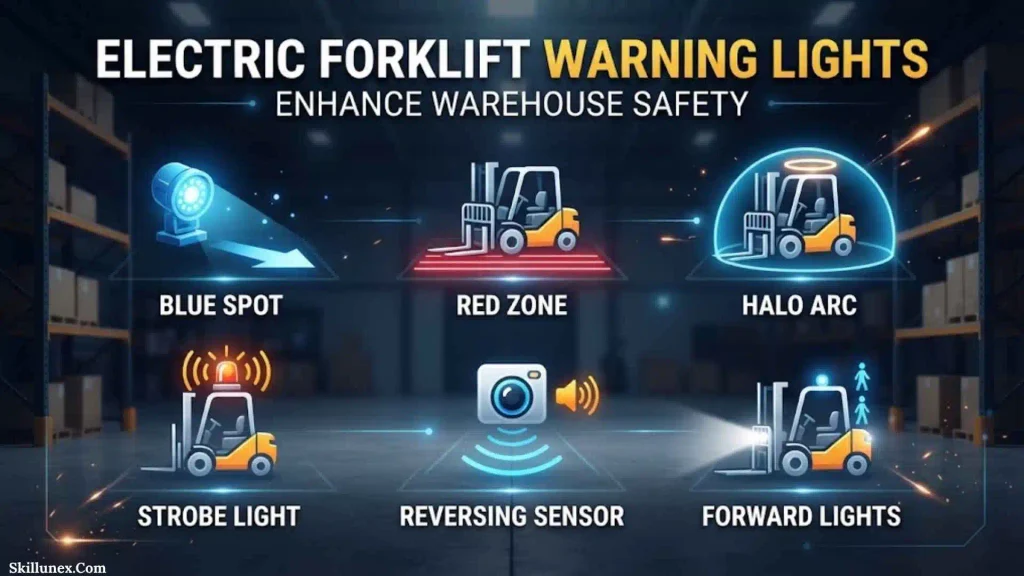
Electric forklifts use a different set of systems from internal-combustion forklifts, so their warning indicators can also be different.
Common Electric Forklift Indicators
An electric forklift may display warnings related to:
- Battery charge
- Battery temperature
- Charging status
- Electric motor
- Motor controller
- Electrical faults
- Hydraulic temperature
- Operator presence
- Maintenance
- Regenerative braking
- System diagnostics
Battery-related warnings are especially important because battery condition directly affects operating performance.
Electric Forklift Charging Warnings
An electric forklift may display a charging indicator when connected to a charger.
Depending on the model, the display may distinguish between charging, fully charged, low battery, charging faults, or battery temperature conditions.
Operators should always use the approved charger and follow the battery manufacturer’s and forklift manufacturer’s procedures.
Internal Combustion Forklift Warning Lights
Internal-combustion forklifts can have diesel, LPG, gasoline, or other engine-related systems.
Common IC Forklift Indicators
These forklifts may have warnings for:
- Engine oil pressure
- Engine temperature
- Fuel level
- Battery and alternator
- Glow plugs
- Transmission
- Engine malfunction
- Exhaust and emissions
- Hydraulic systems
- Brakes
The exact indicators depend on the engine and forklift configuration.
Dashboard Warning Lights vs. External Forklift Safety Lights
Forklifts can have two very different types of lights: dashboard indicators and external safety lights.
Dashboard indicators communicate information to the operator.
External safety lights are designed to increase the visibility of the forklift and help alert pedestrians.
Blue Spot Safety Lights
Some forklifts use a blue light that projects a spot onto the floor.
Its purpose is to make pedestrians aware that a forklift is approaching, particularly in areas where the machine may not be easily visible.
This is a safety aid, not a mechanical warning indicator.
Red Zone Safety Lights
Red-zone lights may project a line or illuminated area around the forklift.
They can help communicate the machine’s operating space and encourage pedestrians to maintain separation.
External warning lights should be considered an additional safety measure rather than a replacement for traffic controls, operator training, designated pedestrian routes, or physical barriers.
Beacons and Flashing Warning Lights
Forklifts may also be equipped with flashing beacons or other warning lights to improve visibility.
The exact use and color depend on the equipment, workplace, and applicable requirements.
What to Do When a Forklift Warning Light Comes On
When an unfamiliar warning appears, operators should avoid guessing.
Identify the Warning
Look carefully at the dashboard symbol and determine whether it is an informational indicator, caution warning, or serious fault.
Check the Display for Additional Information
Modern forklifts may provide:
- Fault codes
- Text messages
- Temperature readings
- Battery information
- Maintenance notifications
Record any relevant code when reporting the problem.
Look for Other Signs of a Problem
Pay attention to unusual:
- Sounds
- Smells
- Vibrations
- Fluid leaks
- Smoke
- Steering behavior
- Braking performance
- Lifting performance
- Engine operation
These signs can provide additional information about the warning.
Safely Stop When Necessary
If the warning indicates a serious or safety-critical condition, stop the forklift in a safe location according to the manufacturer’s procedure.
Do not keep operating simply because the machine still moves.
Consult the Operator’s Manual
Use the manual for the exact make and model to determine the meaning of the symbol and the required response.
Report the Fault
Follow your workplace’s defect-reporting process and notify the appropriate supervisor or maintenance personnel.
Do Not Operate an Unsafe Forklift
If the forklift has a safety-critical defect, it should not be returned to service until the appropriate inspection, repair, and authorization procedures have been completed.
Forklift Warning Lights and Pre Operation Inspections
Warning lights do not replace a forklift pre-operation inspection.
Before using a forklift, operators should perform the inspections required by the manufacturer and applicable workplace rules.
What Should Be Checked?
Depending on the forklift, an inspection may include:
- Forks
- Mast
- Lift chains
- Tires and wheels
- Hydraulic hoses
- Hydraulic fluid
- Brakes
- Steering
- Horn
- Lights
- Seat belt or restraint
- Battery
- Fuel system
- Warning devices
- Overhead guard
- Controls
- Fluid leaks
- Visible damage
Any defect that could affect safe operation should be reported according to workplace procedures.
Common Mistakes When Reading Forklift Warning Symbols
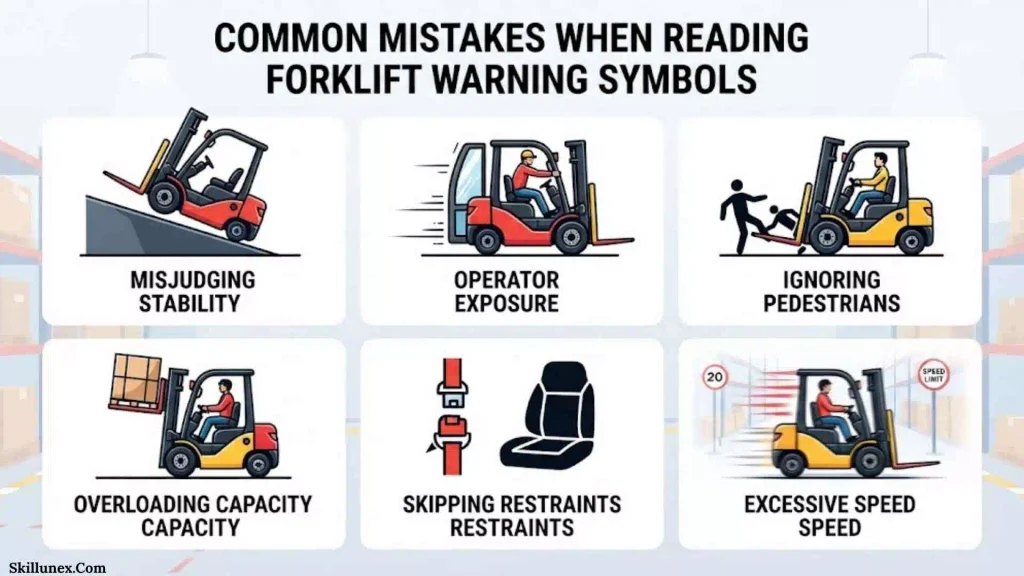
Ignoring a Warning Because the Forklift Still Works
A machine can continue operating even when a serious problem is developing.
Assuming Every Red Light Means the Same Thing
Red generally indicates a serious condition, but the actual meaning comes from the symbol and the manufacturer’s documentation.
Guessing an Unfamiliar Symbol
A symbol that looks familiar may have a different meaning on another forklift model.
Resetting a Warning Without Fixing the Cause
Clearing a warning does not necessarily repair the underlying problem.
Continuing to Operate With a Safety-Critical Fault
Warnings involving brakes, steering, lifting systems, or other critical components should be treated seriously.
Bypassing Safety Systems
Seat-belt systems, operator-presence systems, interlocks, and other safety features should not be bypassed.
Quick Reference Table for Forklift Warning Symbols
| Forklift Symbol or Indicator | General Meaning | Typical Operator Response |
| Oil can | Low engine oil pressure | Stop safely and investigate |
| Thermometer | High engine temperature | Stop and allow system to cool |
| Battery | Battery or charging warning | Check battery/charging information |
| Battery gauge | Low battery charge | Recharge or change battery as required |
| Fuel pump | Low fuel | Refuel using the correct procedure |
| Brake/exclamation | Brake-related warning | Check brakes and stop if fault remains |
| P/parking symbol | Parking brake engaged | Release before moving |
| Engine outline | Engine malfunction | Check fault message and report if necessary |
| Coil/glow plug | Diesel preheating | Follow starting procedure |
| Hydraulic symbol | Hydraulic-system warning | Stop and inspect according to instructions |
| Hydraulic thermometer | Hydraulic overheating | Stop and allow system to cool |
| Seat belt | Restraint not fastened | Fasten the restraint |
| Steering symbol | Steering-system warning | Stop if steering is abnormal |
| Transmission symbol | Transmission problem | Follow manufacturer’s procedure |
| Triangle/exclamation | General warning | Check accompanying information |
| Wrench/spanner | Service or maintenance required | Check maintenance requirements |
| Emissions symbol | Emissions-system condition | Follow manufacturer instructions |
Note: This table is a general guide. The exact symbol, color, and response can vary by forklift manufacturer and model.
Frequently Asked Questions About Forklift Warning Light Symbols
What does a red warning light mean on a forklift?
A red warning light generally indicates a serious condition that requires attention. The exact meaning depends on the symbol. If it relates to a critical system such as brakes, oil pressure, temperature, or hydraulics, the forklift may need to be stopped immediately according to the manufacturer’s instructions.
What does a yellow warning light mean on a forklift?
A yellow or amber light generally indicates caution, a fault, a maintenance requirement, or another condition requiring attention. The machine may or may not be safe to continue operating, depending on the specific warning.
What does the oil-can symbol mean on a forklift?
The oil-can symbol commonly indicates low engine oil pressure on an internal-combustion forklift. If it appears while the engine is operating, safely stop and follow the manufacturer’s instructions rather than continuing to operate the machine.
What does the battery symbol mean on an electric forklift?
It may indicate battery charge, charging status, battery temperature, or another battery-management condition. The exact meaning depends on the forklift model and its display system.
What does a thermometer symbol mean on a forklift?
A thermometer symbol generally indicates an excessive temperature condition. It may refer to engine coolant or hydraulic fluid depending on the symbol and forklift model.
What does the triangle with an exclamation mark mean?
A triangle with an exclamation mark is commonly a general warning indicator. It may require the operator to check another dashboard message, symbol, or diagnostic code to identify the specific issue.
Can you keep driving when a forklift warning light comes on?
It depends on the warning. Some indicators simply confirm that a normal function is active, while others indicate potentially serious faults. Identify the warning and follow the manufacturer’s instructions before continuing operation.
Are forklift warning symbols the same for every manufacturer?
No. Forklift manufacturers and models can use different symbols, colors, dashboard layouts, and fault-code systems. Always consult the documentation for the specific machine.
Where can I find the meaning of a forklift warning symbol?
The best source is the operator’s manual for the exact forklift make and model. Manufacturer documentation, service information, and qualified maintenance personnel can also help identify unfamiliar symbols.
Do electric forklifts have engine warning lights?
Electric forklifts do not have conventional internal-combustion engines, so they generally use different indicators. They can have warnings for electric motors, controllers, batteries, charging systems, hydraulics, and other electrical components.
Can a forklift warning light turn off by itself?
Some indicators disappear when the condition is corrected, while others may remain active until a service or reset procedure is completed. If a warning repeatedly returns, the underlying cause should be investigated rather than simply resetting the indicator.
Do warning lights replace forklift training?
No. Operators need appropriate training and familiarization with the specific forklift they are expected to operate. Understanding warning symbols is only one part of safe forklift operation.
Conclusion
Understanding forklift warning light symbols helps operators recognize important information about a machine’s condition and respond appropriately to potential problems. Common indicators can warn about low oil pressure, high temperature, battery conditions, brakes, hydraulics, fuel, transmission, steering, maintenance, and other systems.
However, forklift warning symbols are not completely universal. Different manufacturers and models can use different icons, colors, and diagnostic systems. The operator’s manual for the specific forklift should therefore always be the final reference.
Operators should never ignore a serious warning, bypass a safety system, or continue operating a forklift that appears unsafe. Combining knowledge of dashboard indicators with proper inspections, training, maintenance, and safe operating procedures can help protect operators, pedestrians, loads, and equipment.

Isla Kensington
I’m Isla Kensington, a writer with a passion for research, culture, nature, and the fascinating meanings behind everyday things. I enjoy taking topics that may seem simple at first and discovering the history, facts, and ideas that make them more interesting.
I write with readers in mind. My aim is to provide clear explanations, useful information, and interesting details without making a topic unnecessarily complicated.
I believe learning should feel like discovering something rather than simply reading facts. That philosophy guides the content I create and the topics I choose to explore.
## Books by Isla Kensington
* Symbols Around the World: A Guide to Meaning & Culture
* Nature’s Beautiful Places: Lakes, Landscapes & Natural Treasures