Symbols in night can represent mystery, fear, darkness, peace, death, dreams, and hope. Nighttime images appear in literature, mythology, art, and everyday life, where they often communicate deeper feelings and ideas. For example, darkness can represent uncertainty, while stars shining in the sky can symbolize hope during difficult times.
The meaning of night symbolism depends on the context. A quiet night may represent peace and reflection, while a dark and frightening setting may suggest danger or loneliness. Night also plays a central role in Elie Wiesel’s memoir Night, where it represents suffering, death, and spiritual struggle during the Holocaust.
In this article, you’ll discover the meanings of common nighttime symbols, their uses in literature and culture, and the important symbols in Night by Elie Wiesel. You’ll also learn how to identify and interpret these symbols without confusing general nighttime symbolism with the specific themes of the memoir.
What Do Symbols in Night Mean?
Symbols in night are images, objects, or ideas associated with nighttime that represent something beyond their literal meaning. Writers and artists use these symbols to communicate emotions, develop themes, and create a particular atmosphere.
Night can represent both positive and negative experiences. Darkness may suggest fear or uncertainty, but it can also provide privacy and peace. Similarly, the moon may symbolize change, while stars may represent hope and direction.
Common meanings of night symbols include:
- Mystery and the unknown
- Fear and uncertainty
- Death and loss
- Peace and relaxation
- Dreams and imagination
- Loneliness and sadness
- Change and transformation
- Hope and spiritual reflection
The meaning of a symbol isn’t always the same. To understand it, consider the story, culture, setting, and emotions connected with the image.
Common Symbols Associated With Night
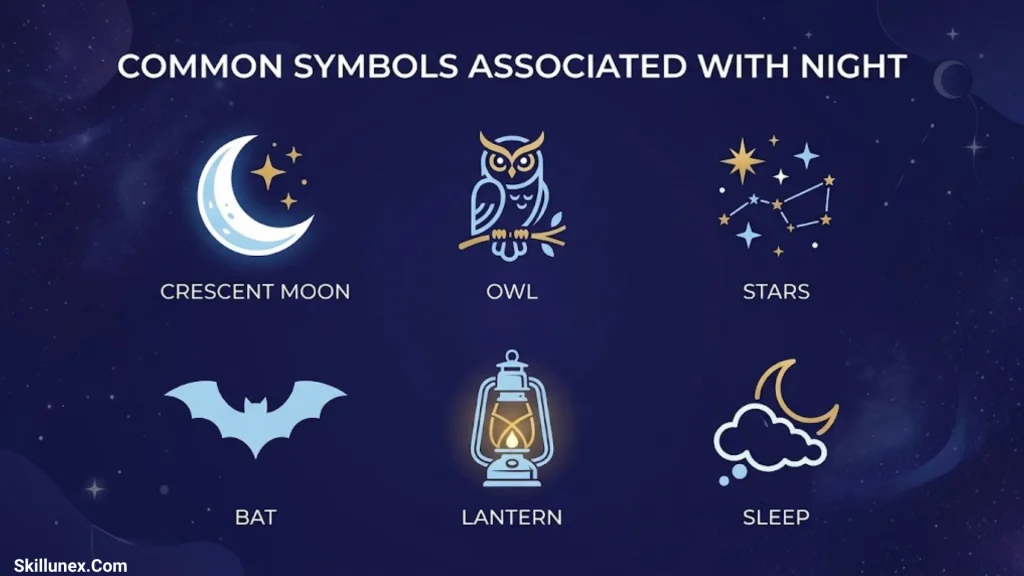
Darkness
Darkness is one of the most recognizable symbols of night. It often represents fear, mystery, confusion, and the unknown. In literature, a character walking through darkness may face uncertainty or struggle to understand what lies ahead.
Darkness can also represent emotional pain or a difficult period in someone’s life. However, it doesn’t always have a negative meaning. In some situations, darkness provides peace, privacy, and an opportunity for reflection.
The Moon
The moon symbolizes change, mystery, reflection, and the passage of time. Its changing phases make it a common symbol of growth, endings, and new beginnings.
A full moon may represent completeness or heightened emotion in a story. A crescent moon may suggest renewal or a fresh start. In romantic writing, moonlight can create a feeling of intimacy and longing.
Moon symbolism varies across cultures, so its meaning depends on the context in which it appears.
Stars
Stars commonly symbolize hope, guidance, dreams, and inspiration. Their light against a dark sky makes them powerful images of encouragement during difficult times.
Stars can also represent ambitions and future goals. For example, a character looking at the stars may be thinking about a better future or searching for direction.
In poetry and art, stars can create feelings of wonder and connection with the wider universe.
Night Sky
The night sky often represents mystery, freedom, wonder, and the vastness of the universe. Looking at the sky can inspire reflection about life, relationships, and personal goals.
A clear, star-filled sky may create a peaceful atmosphere. An empty or stormy sky may suggest loneliness, uncertainty, or emotional distance.
Shadows
Shadows can symbolize secrets, hidden emotions, fear, and uncertainty. In mystery and horror stories, shadows create suspense because they conceal details and make ordinary places seem unfamiliar.
Shadows may also represent the hidden parts of a person’s identity or the feelings they find difficult to express.
Dreams
Dreams symbolize imagination, desires, fears, and memories. Writers may use dreams to reveal a character’s hopes or unresolved emotional struggles.
A pleasant dream may represent a wish for happiness, while a nightmare may reflect fear or anxiety. However, dream symbols don’t have one universal meaning, and their interpretation depends on the individual and the situation.
Silence at Night
Silence can represent peace, loneliness, fear, or helplessness. A quiet night in a peaceful place may provide comfort, while silence in an empty house may create a feeling of isolation.
In literature, nighttime silence often encourages characters to examine their thoughts and emotions. In stories about suffering, it may also suggest the difficulty of speaking about painful experiences.
Fire at Night
Fire can symbolize warmth, safety, passion, destruction, or renewal. A campfire may represent friendship and comfort, while a destructive fire may symbolize danger and loss.
A small flame surrounded by darkness can also represent hope during a difficult period. Its meaning depends on whether the fire protects, comforts, or destroys the people and places around it.
Owls
Owls are often associated with wisdom, mystery, observation, and hidden knowledge. Their ability to move and see in low light makes them useful symbols in stories about secrets and discovery.
However, owl symbolism varies across cultures. Some traditions connect owls with wisdom, while others associate them with death, warnings, or supernatural forces.
The Night Journey
A journey through the night can symbolize struggle, uncertainty, survival, or personal change. The darkness represents obstacles that a character must face, while the journey represents the effort to move forward.
If the journey ends at sunrise, the ending may suggest relief, recovery, or a new beginning. The meaning depends on the events and outcome of the story.
Symbols in Night by Elie Wiesel
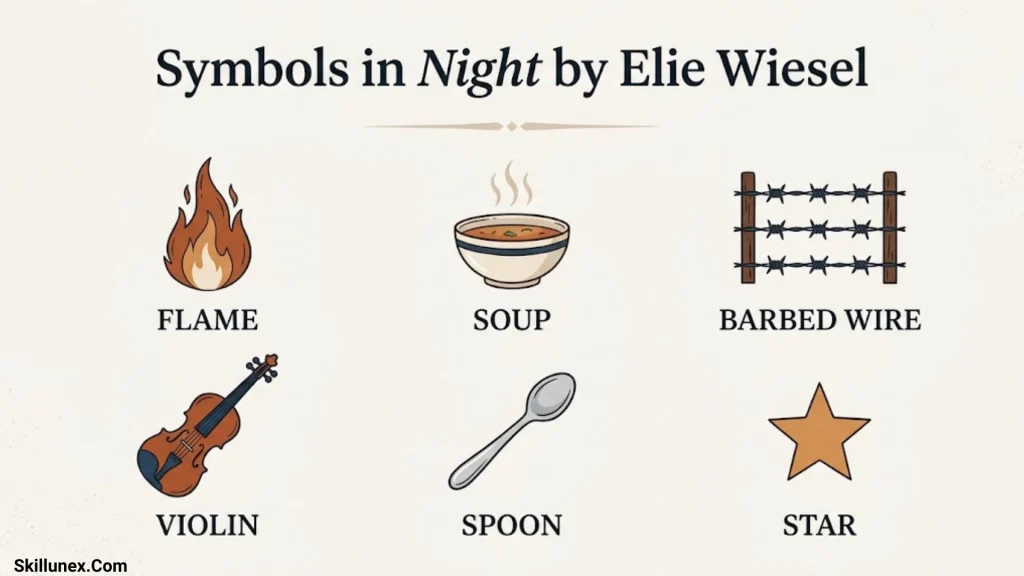
Night is a memoir by Holocaust survivor Elie Wiesel. It describes his experiences as a Jewish teenager during the Holocaust, including deportation, imprisonment, the loss of family members, and the brutality of Nazi concentration camps.
The memoir uses powerful images to communicate suffering, fear, the loss of innocence, and the struggle to maintain faith and human dignity. These symbols should be understood within the historical context of the Holocaust rather than treated as simple, universal signs of darkness.
Night as a Symbol of Suffering and Death
Night is the central symbol in Wiesel’s memoir. It represents suffering, fear, death, and the spiritual darkness that develops as Eliezer witnesses the horrors of the Holocaust.
As the story progresses, Eliezer’s experiences challenge his earlier beliefs about faith, justice, and humanity. Night becomes associated with the loss of innocence and the feeling that hope is disappearing.
The title also reflects the emotional darkness of the experiences described throughout the memoir. It helps communicate the lasting impact of persecution and extreme suffering.
Fire as a Symbol of Destruction
Fire is one of the most disturbing symbols in Night. The images of flames become associated with the horrors of the concentration camps and the destruction of innocent lives.
Fire also contributes to Eliezer’s spiritual crisis. What he witnesses challenges his earlier understanding of divine protection and justice.
Unlike fire as a symbol of warmth or renewal in other contexts, fire in this memoir is closely connected with destruction, terror, and the suffering of Jewish people during the Holocaust.
Music as a Symbol of Humanity
Music represents human dignity, emotional expression, and the persistence of personal identity. One of the memoir’s memorable moments involves Juliek playing his violin amid the suffering of the prisoners.
The performance provides a brief moment of beauty in an environment marked by cruelty and fear. It reminds readers that the prisoners retain their humanity even when their freedom and safety have been taken away.
Music doesn’t end their suffering, but it gives the scene a powerful emotional meaning.
Silence as a Symbol of Helplessness
Silence in Night can represent fear, shock, helplessness, and emotional isolation. The prisoners experience situations in which they have little power to change what is happening around them.
Silence can also highlight the difficulty of responding to cruelty and expressing the pain caused by traumatic experiences. Its meaning depends on the particular scene and the events surrounding it.
Loss of Faith as a Central Theme
Faith is an important theme in Night. At the beginning of the memoir, Eliezer is deeply interested in religious study. His experiences during the Holocaust challenge his beliefs and change his relationship with God.
His spiritual struggle reflects the difficulty of reconciling religious faith with extreme suffering. Wiesel presents this struggle through Eliezer’s changing thoughts and emotions rather than offering a simple answer.
Loss of faith is a central theme connected with the memoir’s symbols, especially night and darkness.
The Journey as a Symbol of Survival
Eliezer’s forced journey through ghettos, deportation, and concentration camps represents the loss of freedom and the struggle to survive. His movement from one place to another is controlled by persecution rather than personal choice.
The journey reveals the physical exhaustion, separation, fear, and emotional changes that prisoners experience. It also shows the terrible cost of survival under Nazi persecution.
Loss of Innocence
Loss of innocence is another important theme in Night. Eliezer begins the memoir as a young person with strong religious interests and expectations about the world.
The violence and suffering he witnesses force him to confront realities that change his understanding of humanity. This transformation connects with the memoir’s broader symbolism of darkness, suffering, and spiritual struggle.
Night Symbolism in Literature and Culture
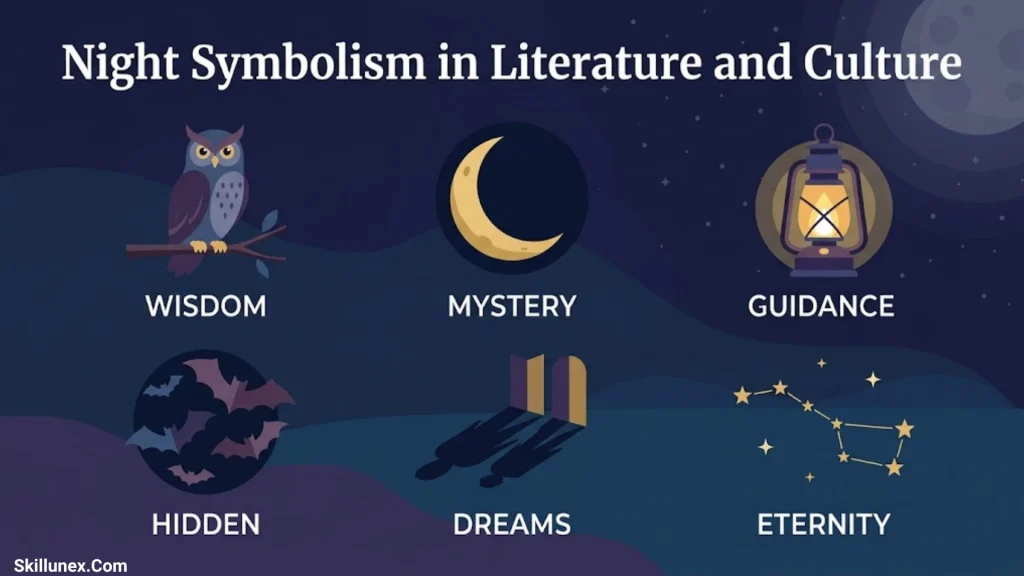
Night in Poetry and Literature
Writers use night to establish mood, reveal emotions, and develop themes. Its meaning changes according to the type of story and the experiences of the characters.
- In romance, night may represent intimacy, love, or longing.
- In horror, darkness may create fear and suspense.
- In poetry, night may symbolize loneliness or reflection.
- In survival stories, night may represent danger and uncertainty.
- In stories about recovery, the arrival of morning may suggest hope and renewal.
For example, a character sitting alone beneath the stars after a difficult experience may be reflecting on the past and thinking about the future.
Night in Mythology and Folklore
Night appears in many mythological traditions. In ancient Greek mythology, Nyx is the personification of night. Her presence reflects the importance of night in the ancient Greek understanding of the universe.
Folklore from different cultures also connects nighttime with spirits, mystery, protection, warnings, and supernatural events. These meanings vary widely, so it’s important to understand each tradition on its own terms.
Night in Spiritual Symbolism
In some spiritual traditions, night represents uncertainty, a period of testing, reflection, or a search for understanding. Darkness may symbolize a difficult period, while light appearing afterward may suggest hope or renewal.
Night can also be associated with prayer, meditation, and quiet reflection. These interpretations depend on specific religious and philosophical beliefs rather than a universal system of symbols.
Night in Art and Photography
Artists and photographers use lighting, shadows, colors, and nighttime settings to communicate different moods.
A warmly lit house against a dark sky may symbolize comfort and belonging. The same house surrounded by heavy shadows may appear lonely or threatening.
Blue and purple tones can create a calm or dreamlike atmosphere, while sharp contrasts between light and darkness can produce tension. These effects depend on the artist’s choices and the way viewers interpret the image.
Night in Dreams and Personal Reflection
Nighttime images in dreams may connect with personal memories, fears, wishes, and emotions. Darkness might feel frightening to one person but peaceful to another.
A dream about stars may remind someone of a goal or a loved one. A dream about getting lost at night may reflect uncertainty, but it doesn’t predict that something bad will happen.
Personal experiences are important when interpreting these images, and no single meaning applies to every dream.
Examples of Night Symbols and Their Meanings
| Symbol | Common Meaning | Example |
| Darkness | Fear or mystery | Walking through an unfamiliar dark street |
| Moon | Change or reflection | Watching the moon during a difficult time |
| Stars | Hope or guidance | Looking at stars while planning the future |
| Night sky | Wonder or freedom | Stargazing in a quiet place |
| Shadows | Secrets or uncertainty | A shadow concealing a character |
| Dreams | Desires or fears | Dreaming about an important goal |
| Silence | Peace or loneliness | Sitting alone in a quiet room |
| Fire | Warmth or destruction | A campfire or a destructive blaze |
| Owl | Wisdom or mystery | An owl watching from a tree |
| Night journey | Struggle or survival | Traveling through darkness toward safety |
| Sunrise | Hope or renewal | Beginning again after a difficult period |
| Music | Emotion and humanity | A violin performance during hardship |
These are common interpretations, not fixed definitions. The context determines which meaning best fits a particular scene.
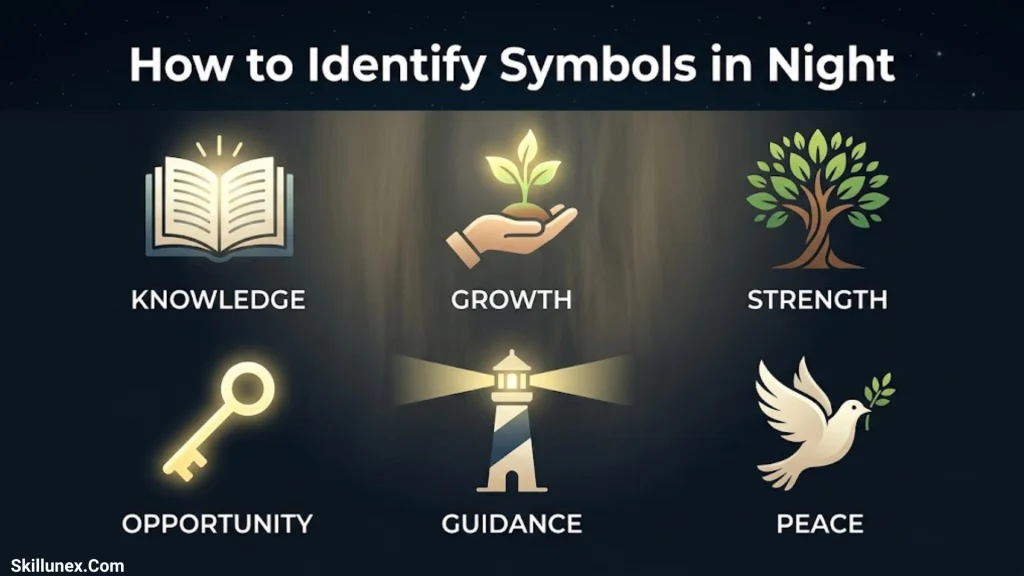
How to Identify Symbols in Night
Look for Repeated Images
Notice which images appear repeatedly, especially during important events. If darkness, fire, or silence appears at key moments, the writer may be using it to develop a theme.
Examine the Characters’ Emotions
Consider how characters respond when a symbol appears. Darkness might frighten one character but comfort another. Their reactions can help you understand the image’s meaning.
Connect Symbols to the Main Theme
Think about the larger message of the work. In a story about survival, night may represent danger or uncertainty. In a romantic poem, it may represent closeness and privacy.
When studying Night by Elie Wiesel, consider the historical context and the narrator’s experiences during the Holocaust.
Avoid Assuming Every Symbol Has One Meaning
A symbol can have different meanings in different works. Darkness may represent danger in a horror story and peaceful solitude in a poem. Use details from the text to support your interpretation.
Frequently Asked Questions
What Is the Main Symbol in Night by Elie Wiesel?
Night is the main symbol in Elie Wiesel’s memoir. It represents suffering, death, fear, and spiritual struggle during the Holocaust.
What Does Fire Symbolize in Night?
Fire symbolizes destruction, death, and the horrors experienced by Jewish people during the Holocaust. It also contributes to Eliezer’s struggle with his faith.
Why Is Music Important at Night?
Music represents humanity, dignity, and emotional expression. Juliek’s violin performance provides a moment of beauty amid the suffering described in the memoir.
What Does Silence Symbolize in Night?
Silence can represent fear, helplessness, emotional isolation, and the difficulty of responding to cruelty. Its meaning depends on the scene.
What Do Stars Symbolize at Night?
Stars commonly symbolize hope, guidance, inspiration, and dreams. Their light against a dark sky can represent hope during difficult times.
Does Night Always Symbolize Evil?
No. Night can represent fear, death, and uncertainty, but it can also symbolize peace, romance, rest, privacy, and reflection.
What Does the Moon Symbolize at Night?
The moon commonly symbolizes change, mystery, reflection, and the passage of time. In romantic writing, it may also represent love or longing.
Why Is Night Important in Literature?
Night helps writers establish mood, communicate emotions, and develop themes. It can represent mystery, fear, peace, loneliness, or transformation depending on the story.
Conclusion
Symbols at night have many meanings across literature, culture, art, and everyday life. Darkness can represent fear or mystery, the moon can symbolize change, and stars can suggest hope and guidance. Shadows, dreams, silence, and fire also communicate different emotions depending on the context. Understanding these symbols helps readers interpret stories and recognize the deeper ideas behind nighttime imagery.
In Elie Wiesel’s Night, symbolism has a specific historical meaning connected to the Holocaust. Night represents suffering and spiritual struggle, while fire, music, and silence help communicate destruction, humanity, and helplessness. By examining these symbols alongside the events of the memoir, readers can better understand its themes and the lasting impact of Wiesel’s experiences.

Caleb Thornton
I’m Caleb Thornton, a researcher and content writer who loves exploring fascinating subjects and sharing what I learn with readers. My interests include natural places, lakes, symbols, culture, history, and the stories that make ordinary topics more meaningful.
When I write an article, I try to go beyond a basic answer. I look for useful facts, relevant context, and details that can help readers understand the subject more completely.
My purpose is simple: I want every article I contribute to provide genuine value, satisfy the reader’s curiosity, and make discovering new information enjoyable.
## Books by Caleb Thornton
* Symbols & Meanings: Exploring the Signs We See Every Day
* Lakes of the World: Nature, Beauty & Exploration