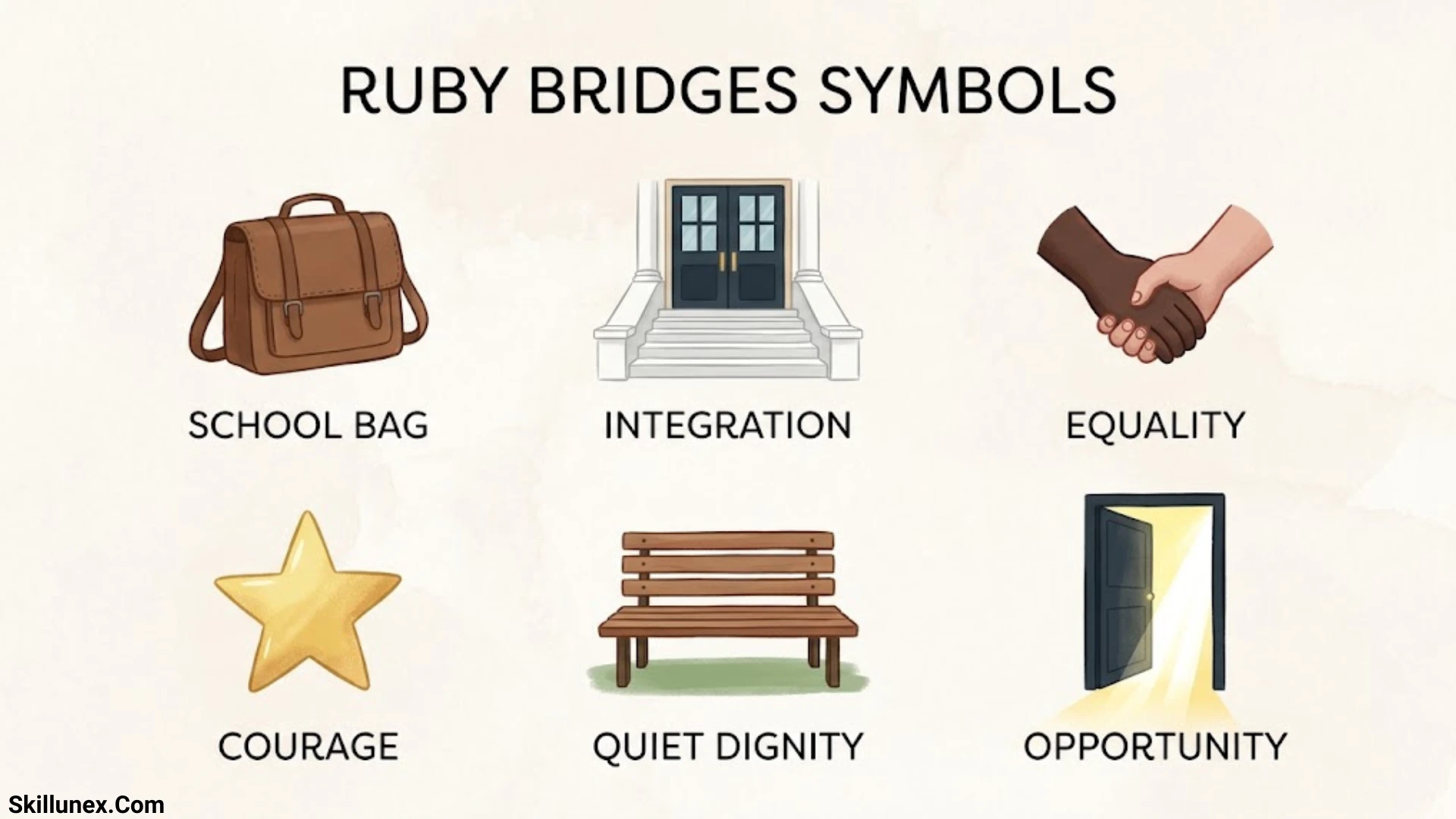
Ruby Bridges symbols represent courage, equality, hope, and the fight against racism. Ruby Bridges made history in 1960 when she became one of the first Black children to integrate an all white elementary school in New Orleans, Louisiana. When you learn about her story, you can understand how important symbols are in showing bravery and standing up for what is right.
Some important symbols associated with Ruby Bridges include the white dress she wore to school, the federal marshals who protected her, and Norman Rockwell’s famous painting The Problem We All Live With. Each symbol tells a powerful story about her journey and the challenges she faced as a young girl. If you explore these symbols, you can discover how they connect to civil rights, justice, and equal educational opportunities.
In this guide, you will learn about the most meaningful Ruby Bridges symbols and what they represent. Whether you are a student working on a school assignment or someone interested in American history, you can use these explanations to understand her legacy better. By exploring these symbols, you will see how one young girl’s courage helped inspire generations to believe in equality and a better future.
Who Was Ruby Bridges?
Ruby Bridges was born on September 8, 1954, in Tylertown, Mississippi. Her family later moved to New Orleans, Louisiana, where she became part of a historic effort to integrate public schools.
In 1960, Ruby became the first Black child to attend William Frantz Elementary School, an all-white public school in New Orleans. Federal marshals escorted her to school because of intense opposition to desegregation. Although she was only six, she faced a hostile environment simply because she wanted to receive an education.
Her experience became an enduring example of courage and perseverance. Ruby did not create the civil rights movement on her own, but her role helped people see the personal consequences of segregation and the importance of enforcing equal rights.
Today, Ruby Bridges is remembered as a civil rights pioneer whose story continues to inspire conversations about education, fairness, inclusion, and standing up against discrimination.
7 Important Ruby Bridges Symbols and Their Meanings
There is no official collection of symbols established by Ruby Bridges herself. Instead, people interpret objects from her historical experience and artistic representations of her journey. Each symbol offers a different way to understand her story.
1. The School Symbol: Equal Education and Opportunity
The school is one of the most important symbols associated with Ruby Bridges. William Frantz Elementary School represents the struggle to make public education accessible to children regardless of race.
Before school desegregation, discriminatory policies and practices prevented many Black children from attending the same schools as white children. Ruby’s attendance challenged that system and helped bring national attention to the fight for educational equality.
The school also represents the idea that every child deserves a safe learning environment. Education should help children develop their abilities, explore new ideas, and prepare for their future rather than reinforce racial divisions.
What the school symbolizes:
- Equal access to education
- The end of racial segregation
- Fairness and inclusion
- Opportunities for future generations
- The importance of challenging discrimination
For a school assignment, you can draw a schoolhouse to represent Ruby Bridges’ role in the fight for equal education. Explain that the building stands for the right to learn, not simply a place where students attend classes.
2. The White Dress Symbol: Innocence, Dignity, and Courage
The white dress is a recognizable part of the imagery associated with Ruby Bridges, particularly in Norman Rockwell’s painting The Problem We All Live With. The 1964 publication of this artwork helped bring her experience to a wider audience.
In the painting, Ruby wears a simple white dress as she walks toward school between federal marshals. The contrast between her childhood appearance and the hostility surrounding her makes the scene especially powerful.
The dress can be interpreted as a symbol of innocence because Ruby was a young child caught in a conflict created by adult prejudice. It can also represent dignity and the quiet courage required to continue attending school despite intimidation.
However, these meanings are interpretations of the artwork rather than official meanings assigned to the dress by Ruby Bridges.
What the white dress symbolizes:
- Childhood innocence
- Human dignity
- Courage in difficult circumstances
- Vulnerability in the face of prejudice
- Hope for a more equal society
When you analyze this symbol, consider the contrast between Ruby’s ordinary appearance as a student and the extraordinary circumstances she faced. That contrast helps explain why her story remains so memorable.
3. Books and School Supplies: Knowledge and Freedom
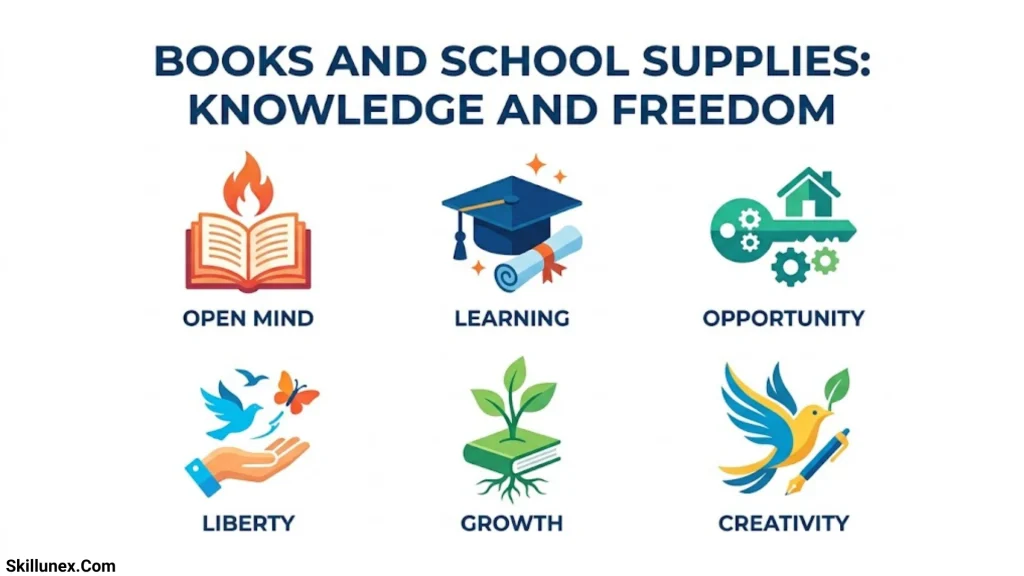
Books and school supplies represent learning, knowledge, and the opportunities education can create. They also remind us that Ruby was a student who wanted to attend school, just like other children.
In Rockwell’s painting, Ruby carries school materials during her walk to William Frantz Elementary School. These ordinary objects become meaningful because of the discrimination she encountered while trying to receive an education.
Books can also represent the power of knowledge to help people understand injustice. Through history, reading, and education, students can learn how discrimination develops and how individuals and communities have worked to challenge it.
What books and school supplies symbolize:
- Knowledge and learning
- Equal educational opportunities
- Personal growth
- Freedom to pursue a better future
- The importance of education in social progress
For your classroom poster, consider using a book, pencil, or schoolbag alongside Ruby Bridges’ name. Add a short explanation about how access to education should never depend on a child’s race or background.
4. U.S. Marshals: Protection, Justice, and the Law
Federal U.S. marshals escorted Ruby Bridges to William Frantz Elementary School in November 1960. Their presence was necessary because she faced threats and intense opposition from people who resisted school integration.
The marshals symbolize the role of government in protecting people and enforcing the law. Their involvement also demonstrates that recognizing equal rights is not always enough; public institutions must take action to protect those rights.
Their presence in photographs and artwork adds another layer to Ruby’s story. While Ruby represents a child’s determination to receive an education, the marshals represent the protection needed to help her exercise that right.
What the U.S. marshals symbolize:
- Protection from threats and intimidation
- The enforcement of civil rights
- Justice and legal responsibility
- The importance of public institutions
- Support for equal educational access
For a history project, you can use a shield as a simple visual representation of protection. Explain that the shield is your symbolic interpretation of the marshals’ role, not an official Ruby Bridges emblem.
5. The School Door: Breaking Barriers and Opening Opportunities
A school door offers a powerful way to explain Ruby Bridges’ historic journey. Although the door is not an officially designated symbol of her life, it represents the barriers she challenged when she entered a school that had previously served white children.
Walking through the entrance meant more than beginning another school day. It represented a challenge to racial segregation and a step toward greater educational equality.
A doorway also provides a useful metaphor for future opportunities. When schools welcome students without racial discrimination, they open doors to learning, friendships, personal development, and future careers.
What the school door symbolizes:
- Breaking down racial barriers
- Opening educational opportunities
- Inclusion and acceptance
- Progress toward equality
- The courage to enter unfamiliar spaces
You can use an open doorway in a classroom display to illustrate Ruby Bridges’ contribution to school integration. The image becomes especially meaningful when paired with a brief explanation of the barriers Black students faced during segregation.
6. The Red Tomato: Racial Hostility and Intimidation
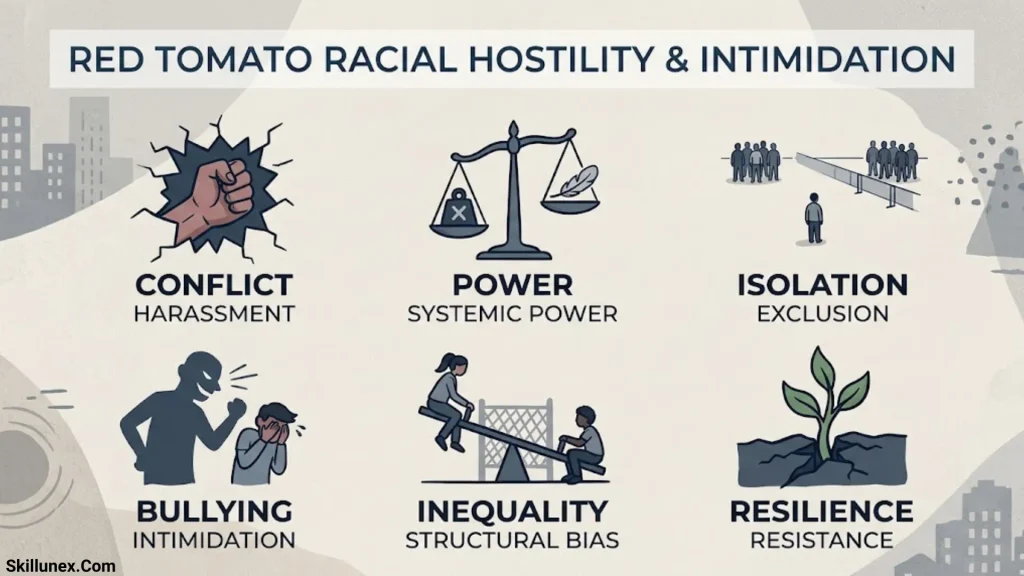
The red tomato is a distinctive detail in Norman Rockwell’s The Problem We All Live With. In the painting, a smashed tomato has left a red mark on the wall behind Ruby Bridges as she walks with federal marshals.
This detail helps communicate the hostility surrounding Ruby’s school integration. Rather than symbolizing hope or peace, the tomato represents the prejudice and intimidation that made an ordinary school journey dangerous and difficult.
Its presence also creates a contrast with Ruby’s calm, forward-facing walk. The scene encourages viewers to consider the difference between the determination of a young child and the hostility directed toward her.
What the red tomato symbolizes:
- Racial prejudice and hostility
- Intimidation and threats
- The obstacles faced by civil rights pioneers
- The harmful consequences of discrimination
- Persistence despite opposition
When interpreting this symbol, remember that it belongs to the imagery of Rockwell’s painting. It is not a separate symbol officially adopted by Ruby Bridges.
7. Norman Rockwell’s Painting: The Struggle for Civil Rights
Artwork: The Problem We All Live With by Norman Rockwell
Norman Rockwell’s The Problem We All Live With is one of the most widely recognized artistic representations of Ruby Bridges’ experience. Created in 1963 and published in Look magazine in January 1964, the painting depicts Ruby walking toward school while federal marshals escort her.
The artwork presents an ordinary school journey in an extraordinary setting. Rockwell focuses on Ruby and the marshals while including details that suggest the racial hostility surrounding them. This approach encourages viewers to confront the reality of discrimination rather than treat school integration as an abstract political issue.
The painting is especially important because it connects Ruby’s individual experience with the broader civil rights movement. It reminds viewers that the struggle for equal rights affected real children, families, and communities.
What the painting symbolizes:
- The struggle against racial segregation
- Courage in the face of prejudice
- The importance of equal education
- The responsibility to confront injustice
- The lasting impact of civil rights activism
For an art or history assignment, analyze the painting’s people, objects, and setting together. The white dress, school materials, marshals, and hostile markings on the wall each contribute to the overall message.
Other Themes Represented by Ruby Bridges Symbols
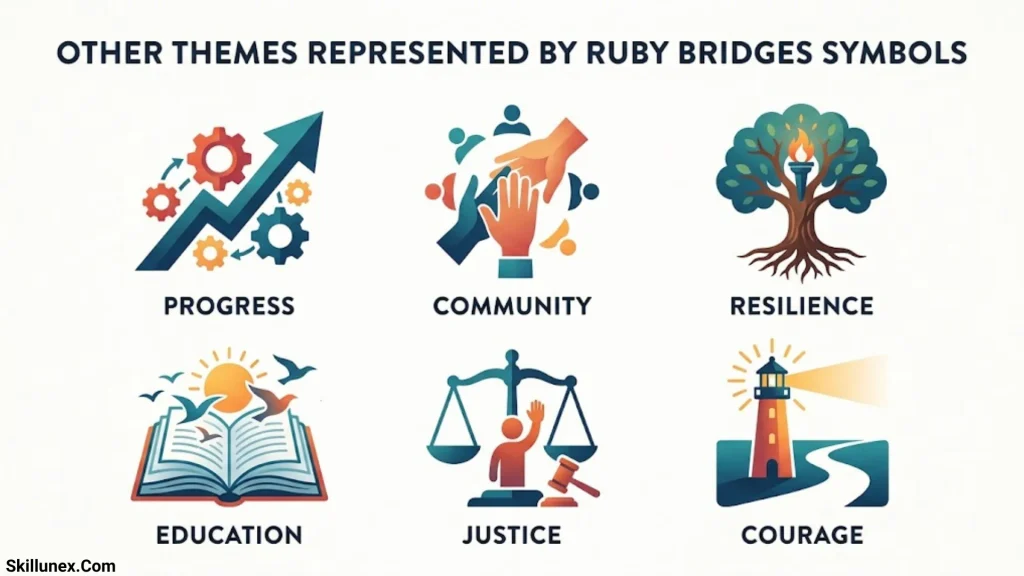
The objects associated with Ruby Bridges tell different parts of her story, but they connect to several broader themes. Understanding these themes helps you explain why her legacy remains relevant.
Courage and Perseverance
Ruby’s courage is central to her story. At six years old, she faced hostility that no child should have to experience, yet she continued attending school.
Her perseverance demonstrates that courage does not always involve dramatic speeches or physical strength. Sometimes, courage means continuing to do what is right despite fear, pressure, or opposition.
The school, the doorway, and the painting can all help illustrate this theme. Together, they show how a young student’s determination challenged an unfair system.
Equality and Inclusion
Ruby Bridges’ experience highlights the importance of treating children fairly and providing equal opportunities. Her attendance at William Frantz Elementary School challenged a system that separated students by race.
Equality means that people should receive fair treatment and have access to the opportunities and protections they deserve. Inclusion takes this principle further by ensuring that people can participate in schools and communities without facing discrimination.
The school and books are particularly useful symbols for explaining these ideas because they connect civil rights with everyday experiences.
Justice and Responsibility
The federal marshals in Ruby’s story represent the importance of protecting legal rights. Their role reminds us that institutions have responsibilities when people face threats or discrimination.
Justice involves more than recognizing that something is unfair. It also requires laws, policies, and actions that protect people and address unequal treatment.
The marshals therefore provide an important connection between Ruby’s personal courage and the broader legal struggle for civil rights.
Hope and Social Change
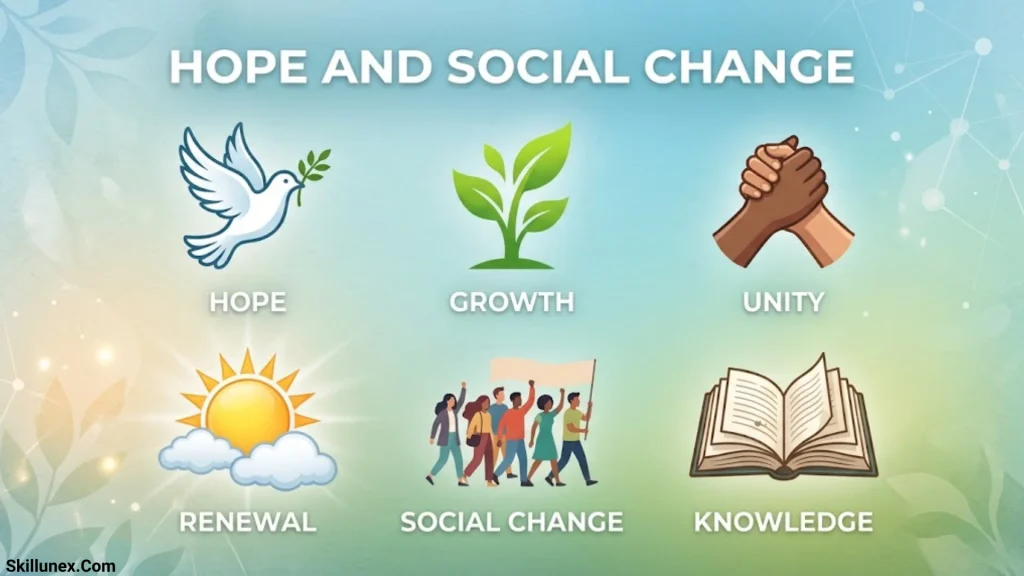
Ruby Bridges’ story shows how a single person’s experience can help people understand a larger social problem. Her attendance at an integrated school did not end racism, but it became an important part of the continuing struggle for educational equality.
The white dress, books, school, and doorway can all be interpreted as symbols of hope. They remind us that progress is possible when people challenge discrimination and work toward fairer institutions.
Her legacy encourages students to recognize injustice, respect others, and contribute to positive change in their own communities.
Ruby Bridges Symbols for School Projects and Presentations
If you’re preparing a school project, you can use these symbols to make Ruby Bridges’ story easier to understand. Choose images that support your main point, then explain their historical connection.
| Symbol or image | Main idea | How to use it in a project |
| School building | Equal education | Show the importance of school integration |
| White dress | Innocence and dignity | Explain Ruby’s experience as a young child |
| Books | Knowledge and opportunity | Discuss the right to learn |
| Shield | Protection and justice | Explain the marshals’ protective role |
| Open door | Breaking barriers | Illustrate access to opportunities |
| Red tomato | Hostility and prejudice | Analyze the details in Rockwell’s painting |
| Rockwell’s painting | Civil rights | Connect Ruby’s experience with the wider movement |
These are educational interpretations, not a collection of official symbols. If you use the original painting in your project, identify Norman Rockwell as the artist and explain the historical context.
How to Explain Ruby Bridges Symbols in a Short Paragraph
Ruby Bridges symbols represent courage, equal education, justice, and the fight against racial discrimination. The school symbolizes access to education, while books represent knowledge and opportunity. Her white dress can represent innocence and dignity, and the federal marshals represent protection under the law. Norman Rockwell’s painting brings these ideas together by showing Ruby’s historic walk to an integrated school. These symbols help us understand why her experience remains an important part of American civil rights history.
Frequently Asked Questions About Ruby Bridges Symbols
What is the main symbol of Ruby Bridges?
There is no single official symbol of Ruby Bridges. Her historic walk to William Frantz Elementary School and Norman Rockwell’s painting The Problem We All Live With are among the best-known representations of her experience. The school, white dress, and books are often used to explain her connection to courage and educational equality.
What does Ruby Bridges’ white dress symbolize?
Ruby’s white dress in Rockwell’s painting can be interpreted as a symbol of childhood innocence, dignity, and vulnerability. Its appearance contrasts with the hostile environment surrounding her, highlighting the injustice of directing racial discrimination toward a young child.
Why is the school important in Ruby Bridges’ story?
William Frantz Elementary School is important because Ruby became its first Black student in 1960. Her attendance challenged racial segregation and helped draw attention to the fight for equal educational opportunities.
What do books symbolize in Ruby Bridges’ story?
Books represent knowledge, learning, and educational opportunity. They remind us that Ruby was a student who wanted to learn and that every child deserves access to education regardless of race.
What does Norman Rockwell’s painting represent?
The Problem We All Live With represents the struggle against racial segregation and the challenges Ruby Bridges faced while attending an integrated school. The painting uses Ruby, the federal marshals, and details in the surrounding environment to communicate the effects of prejudice and the importance of civil rights.
What do the federal marshals symbolize?
The federal marshals symbolize protection, legal authority, and the enforcement of civil rights. They escorted Ruby to school in response to the threats and opposition she faced during school integration.
Why are Ruby Bridges symbols still important today?
Ruby Bridges symbols remain important because they help students understand the history of school segregation and the fight for equal rights. They also encourage conversations about fairness, inclusion, courage, and the responsibility to challenge discrimination.
Conclusion
Ruby Bridges symbols help explain the historical importance of a young girl who challenged racial segregation through her attendance at an all-white public school. The school represents equal education, books symbolize knowledge, the white dress suggests innocence and dignity, and the federal marshals represent protection and justice. Norman Rockwell’s painting brings these elements together in a powerful representation of the civil rights struggle.
When you explore these symbols, you can better understand the personal challenges behind the fight for equality. Ruby’s story reminds us that children deserve fair treatment, schools should welcome students from every background, and people can make a difference by standing against injustice. Her legacy continues to inspire students, teachers, and communities to protect equal opportunities for everyone.

Caleb Thornton
I’m Caleb Thornton, a researcher and content writer who loves exploring fascinating subjects and sharing what I learn with readers. My interests include natural places, lakes, symbols, culture, history, and the stories that make ordinary topics more meaningful.
When I write an article, I try to go beyond a basic answer. I look for useful facts, relevant context, and details that can help readers understand the subject more completely.
My purpose is simple: I want every article I contribute to provide genuine value, satisfy the reader’s curiosity, and make discovering new information enjoyable.
## Books by Caleb Thornton
* Symbols & Meanings: Exploring the Signs We See Every Day
* Lakes of the World: Nature, Beauty & Exploration